
How To Read An Electrical Meter
Ever opened your electricity bill and felt that familiar little shiver? You know, the one that makes you wonder if your toaster secretly has a side hustle powering a small village? Or if your refrigerator is actually a portal to another dimension, sucking up energy for intergalactic travel?
Well, what if I told you there’s a way to become a super sleuth in your own home, cracking the mystery of your energy usage and maybe even saving a few pennies? It all starts with a little chat with your electrical meter. And don't worry, it's not as intimidating as it looks!
Why Bother Befriending Your Electrical Meter?
You might be thinking, "That big grey box? Why on earth would I want to get acquainted with that?" Good question! But trust me, understanding your meter is like having a secret superpower. Here's why you should care, in a fun, accessible way:
Must Read
1. No More Bill Shock! Imagine knowing exactly how many cookies you've eaten from the jar before your mom asks. That's what reading your meter does for your electricity bill! You can track your usage and see trends, avoiding those unpleasant surprises.
2. Spot the Energy Hogs: Is that ancient fridge in the garage really worth it? Or maybe your gaming setup is guzzling power like a thirsty camel? Your meter helps you pinpoint those energy-hungry appliances. It's like finding the leaky faucet of your energy budget.
3. Be the Boss of Your Budget: Knowing is power, right? When you understand your usage, you can make informed decisions. Turn off lights, unplug unused chargers, maybe even convince the kids that real-life adventures are more fun than screen time (good luck with that one!). You'll be able to tell your energy company, "Hey, I know what's going on!"
4. Peace of Mind: There's a certain satisfaction in knowing you're in control. It's like finally understanding that complicated recipe your grandma always made – empowering!
Digital vs. Analog: A Quick Peek
Before we dive in, let's acknowledge that there are two main types of meters you might encounter:
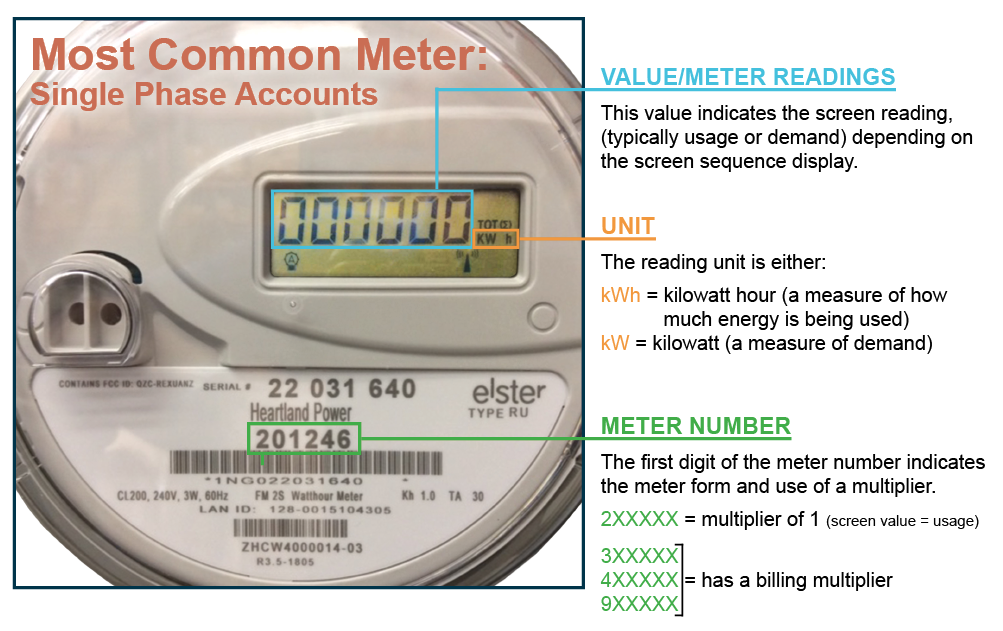
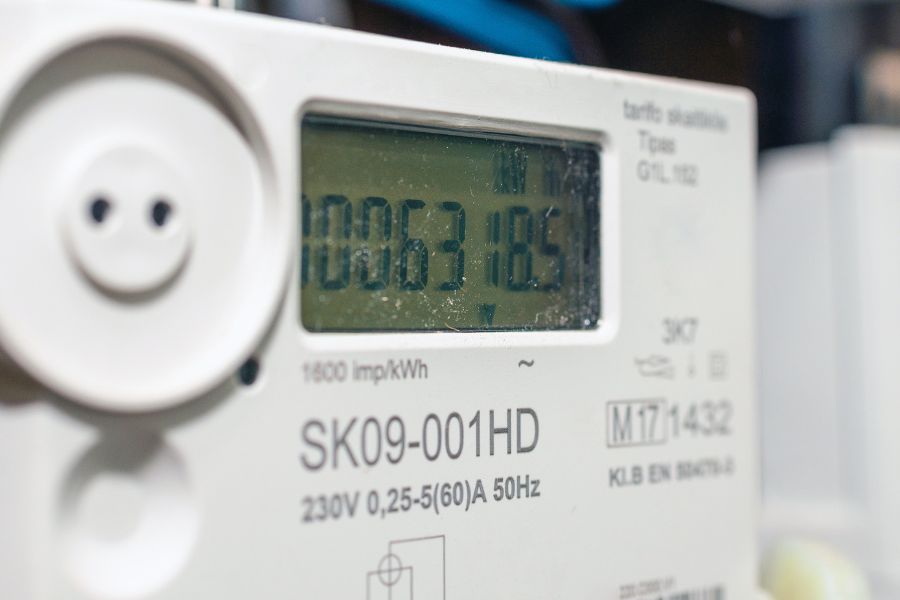
Digital Meters: These are the easiest. They'll have a clear digital display, just like a clock or calculator. You just read the numbers from left to right. Phew! If you have one of these, you can probably grab a cup of tea, you're all set!
Analog (Dial) Meters: Ah, the charmingly retro ones. These have a series of small dials, each with a pointer. They look a little more complicated, but once you get the hang of it, they're quite fun. This is where our detective skills really shine!
Cracking the Code: How to Read an Analog Meter
Alright, grab a pen and paper (or your phone's notepad) and let's go on an adventure to that grey box outside. Most analog meters have four or five dials arranged in a line. Each dial represents a digit in your total electricity consumption (measured in kilowatt-hours, or kWh).
Here’s the super simple secret:
1. Read Left to Right: Start with the leftmost dial and move towards the right. Just like reading a book.
2. The Magic Rule: Always Take the Lower Number! This is the golden rule, the secret sauce, the whole enchilada! When a pointer is between two numbers, you always record the lower number. Think of it like this: a car's odometer doesn't show 100,000 miles until it has fully passed 99,999. It's not the next number until it's completely past the current one.
Let's break down each dial:
-
Dial 1 (Far Left): Look at the pointer. If it's between 2 and 3, write down 2. If it's pointing directly at a number, say 5, write down 5. Easy peasy!
-
Dial 2: This one usually spins counter-clockwise. So, if the pointer is between 8 and 9, you still write down 8! Even though it looks like it's "past" 8 in a clockwise sense, remember our golden rule: always take the lower number. This is where most people get tripped up, but you're too smart for that!
-
Dial 3: Often spins clockwise again. Between 4 and 5? Write down 4.
How to read a smart electric meter | HomeServe -
Dial 4: Back to counter-clockwise. Between 0 and 1? Write down 0. (Yes, you can write a zero!)
-
Dial 5 (Far Right - if you have one): Clockwise. Between 7 and 8? Write down 7.
So, you'll end up with a series of digits that makes up your current meter reading. For example, if your dials read 2, 8, 4, 0, 7, your reading is 28407 kWh.
Putting It All Together: Your Energy Story
Now you have a number. What do you do with it? Simple!
1. Take a baseline reading today. Write it down, maybe snap a picture for good measure. Let's call it "Reading A."

2. Wait a week or a month. (A week is great for seeing quick impact; a month mirrors your billing cycle.)
3. Take another reading. This is "Reading B."
4. Subtract Reading A from Reading B. The difference is how much electricity you've used in that time period! Voilà! You've just calculated your own consumption. It's like seeing how many steps you walked between two points on a map!
Your Superpower Unlocked!
Congratulations, you've just unlocked a new level of home management! You can now compare your calculated usage with your bill, understand when you're using the most power, and identify areas to save.
So, the next time you look at that grey box, give it a friendly nod. It's not just a meter; it's your personal energy assistant, ready to help you become a savvy, smart-spending homeowner. Go on, give it a try – you've got this!