
How To Read A Meter Electric

Ever gazed at that box on the side of your house and thought, "What secrets does that thing hold?" We’re talking about your electric meter! Most people just… ignore it. But guess what? Learning to read it is actually seriously fun!
Forget boring utility bills. We’re about to unlock a mini-mystery. You’ll be deciphering energy codes. You’ll become a home energy wizard. And you might even level up your neighborly small talk. Ready for your new superpower?
Meter Mystery Solved!
Let's dive in! There are two main types: digital and analog. Digital meters are, well, easy. They just spit out numbers. Yawn. But the old-school analog meters? Now those are where the magic happens! They’re like tiny, vintage riddles, just waiting for you to solve them.
Must Read
Picture this: a few miniature clock faces, usually five of them, lined up like little soldiers. Each has a pointer. These pointers are constantly ticking away, reflecting every bit of electricity you’re zapping. From your morning coffee to your late-night Netflix binge, they're logging it all!
Old School Cool: The Analog Meter!
This is where the fun begins. Most analog meters have four or five dials. Each dial represents a digit in your electricity usage. Think of it like a five-digit number. From left to right, you'll read thousands, hundreds, tens, and ones (and sometimes ten thousands). But here’s the quirky bit...

Dialing In: Your Reading Adventure Begins!
You need to read these dials from left to right. Easy, right? Well, there's a trick! Prepare to have your mind a little bit boggled. The hands on these dials don't all spin in the same direction!
The Big Secret: Direction Matters!
Yes, you heard that right! The first dial spins clockwise. The second? Counter-clockwise! The third? Back to clockwise! It alternates! It’s like a tiny, mechanical dance-off, and you're the conductor. This is the true test of your meter-reading prowess!
-
Dial 1 (Far Left): This one typically spins clockwise. Read the number that the pointer has just passed. If it's between 2 and 3, your number is 2. Even if it looks super close to 3, if it hasn't quite hit it, go with the smaller number.

How to Read an Electric Meter: 7 Steps (with Pictures) - wikiHow -
Dial 2: Ah, the rebel! This dial usually spins counter-clockwise. Same rule applies: read the number the pointer has just passed. If it’s between 7 and 6 (going counter-clockwise), you read 7. Confusing? A little! Fun? Absolutely!
-
Dial 3: Back to clockwise! You're getting the hang of this alternating pattern now, aren't you? It's like a secret handshake with your meter.
-
Dial 4: Counter-clockwise, our old friend!

How to Read an Electric Meter: 7 Steps (with Pictures) - wikiHow -
Dial 5 (Far Right): Often clockwise again. Sometimes you only have four dials, which makes it slightly less thrilling, but still a hoot!
Once you’ve read all the dials, string those numbers together. Bam! You’ve got your current meter reading. Compare this to last month's reading (you can usually find it on your bill), and you'll know exactly how much electricity you've used!
"Wait, What About The Spinning Disk?"
Oh, you’ve noticed that mesmerizing, whirring metal disk on some older meters? That’s called a kilowatt-hour (kWh) disk! It’s the meter’s unsung hero. The faster that disk spins, the more electricity you're currently using. Seriously! Go turn on all your lights and the toaster and watch it whizz! It's a fantastic visual reminder of your energy consumption, making the invisible world of electricity truly tangible. How cool is that?
Digital Dreams: The Easy Way Out (But Less Fun)!
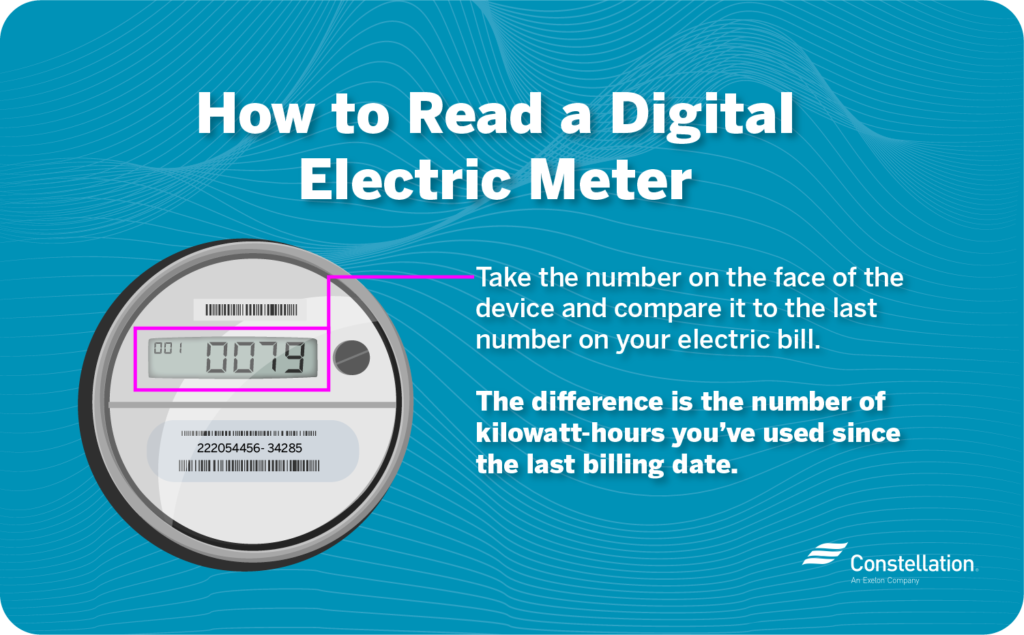
Modern homes often have digital meters. These are pretty straightforward. They usually display your reading directly on a screen. Sometimes they cycle through a few numbers (like current usage, peak usage, etc.), but your actual reading is usually obvious. Easy peasy, right? Yes. But where's the detective work? Where's the alternating dial drama? Digital meters are convenient, but they just don't have the same pizzazz as their analog ancestors.
Why Bother? Beyond Just Bills!
So, why go through all this delightful effort? Because knowledge is power – literally! Knowing how to read your meter empowers you to:
- Understand Your Usage: See exactly how your habits translate to numbers.
- Spot Discrepancies: Catch a sneaky overcharge or an estimated bill that seems way off. You’re now the detective!
- Track Your Energy Savings: Trying to cut down? Read your meter daily for a week and see the impact of turning off lights or unplugging devices. It’s like a personal energy game!
- Impress Your Friends: "Oh, that old thing? I speak its language." Instant cool points!
Your New Superpower!
Reading an electric meter might seem like a dull chore at first glance, but it’s actually a little window into the fascinating world of your home’s energy. It’s a chance to connect with something you usually take for granted. So, next time you’re near your electric meter, take a moment. Decode those dials. Watch that disk spin. You’re not just reading a number; you’re understanding your home, and that, my friend, is pretty darn awesome!