
How To Program A Cnc Machine
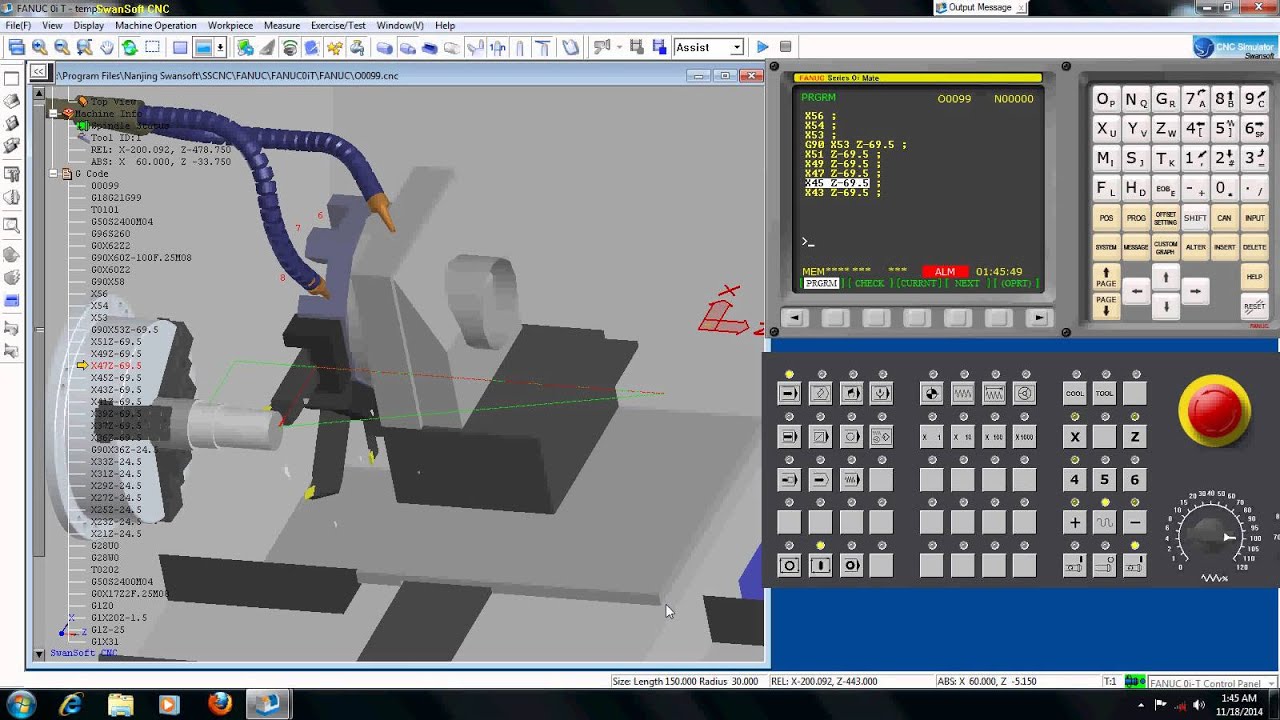
Imagine giving a robot its marching orders. Not for world domination, thankfully! But for making stuff. Cool stuff. Precise stuff. We're talking about CNC machines, and programming them is surprisingly less like rocket science and more like a super-fun game of digital LEGOs.
What Even Is a CNC?
Think of a CNC machine as a super-precise robot artisan. CNC stands for Computer Numerical Control. Basically, it's a machine that takes instructions from a computer and then cuts, drills, or shapes materials with incredible accuracy. Wood, metal, plastic – you name it. It's like having a wizard with a tiny, super-sharp wand, guided by your every whim. Remember those massive, clunky machines from old factories? Well, today's CNCs are descendants of those, but they've gotten smart. Way smarter.
The Secret Language of Machines
How do you talk to a robot artisan? You don't yell. You use its language! For CNCs, this is mostly G-code and M-code. Sounds intimidating, right? It's not! Think of it like giving directions to a friend. "Go straight," "Turn left," "Stop here." G-code handles the "geometry" – where to move, how fast to go, what path to take. M-code handles the "miscellaneous" stuff – turn the spindle on, change a tool, squirt some coolant. It's like the boss telling the worker, "Okay, start cutting now and keep it cool!"
Must Read
It's a beautiful, logical language. Each line of code is a tiny, specific command. Put them all together, and you get a masterpiece. Or, if you mess up, a very expensive paperweight! (Just kidding... mostly.) The beauty is in its simplicity: a series of short, direct commands stacked up to create complex actions. It's less like writing a novel and more like jotting down a perfect recipe.
Giving Orders Like a Boss!
So, what do these codes look like? They're often just a letter followed by numbers. For example, G00 means "move as fast as possible without cutting." Think of it as the machine zipping into position. Then there's G01: "move at a controlled speed, cutting as you go." This is where the magic happens! You also tell it where to go using coordinates, like on a treasure map: "Go to X10 Y5 Z-2." X, Y, and Z define its position in 3D space.
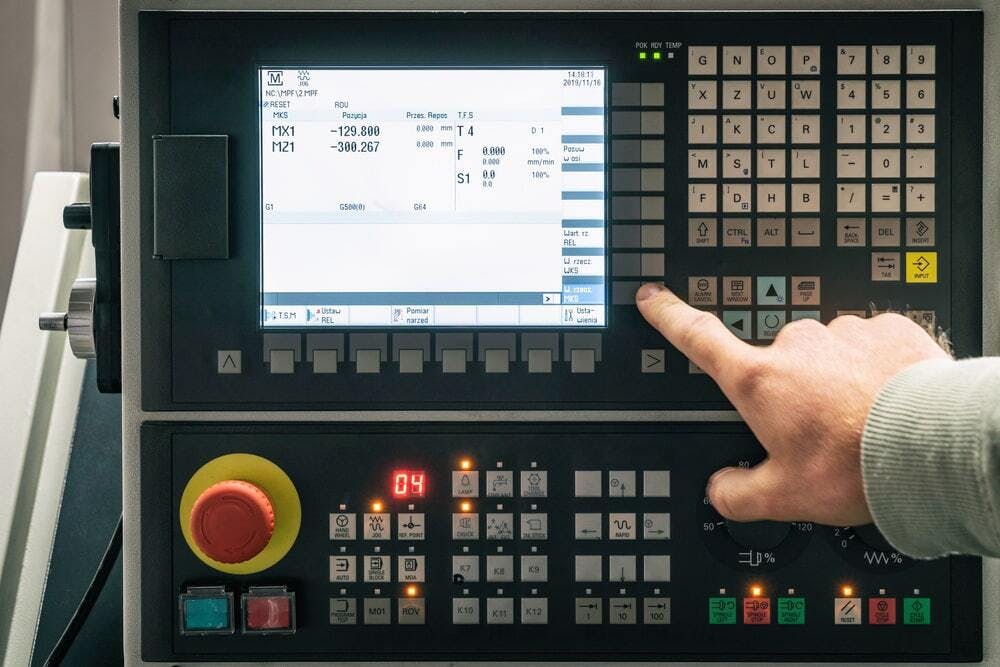
Want to draw a perfect circle? Easy! You'd use G02 (clockwise arc) or G03 (counter-clockwise arc). You just tell it the starting point, the ending point, and the radius. The machine figures out the rest. It's like telling a sculptor, "Draw me a circle from here to here with this much curve," and it just does it. No wobbly lines, no shaky hands. Pure, unadulterated precision.
From Code to Creation – The Magic!
Now, you could write all this G-code by hand. Some old-school pros still do! But for most of us, there's CAM software (Computer-Aided Manufacturing). You design your cool widget in 3D, tell the software what material you're using and what tools you have, and voila! The software generates all the G-code for you. It's like having a super-smart translator.

Then, a quirky little thing called a post-processor steps in. This converts the general CAM instructions into the specific dialect your particular CNC machine understands. Because not all robots speak exactly the same! It's the final, crucial step before you hit "start." Imagine pressing a button, hearing the whirring of motors, the satisfying crunch of material being shaped, and watching your digital dream become a tangible reality. It's pure alchemy!
Why It's Just So Darn Fun!
Why is programming a CNC machine so much fun? For starters, you're bringing ideas to life. You sketch something, design it, tell a machine exactly how to make it, and then bam! It's real. That's a powerful feeling. It's like being a digital sculptor, a robotic architect, or even a mad scientist (the good kind!).
There's also a wonderful sense of problem-solving. Debugging a bit of code, optimizing a cut path, figuring out the perfect feed rate – it's a constant puzzle. And when you crack it? Pure elation! The sheer precision is also mesmerizing. Watching a machine carve details finer than a human hair is genuinely awe-inspiring. Plus, the sounds! The hum, the whir, the rhythmic cutting – it’s a symphony of creation. It's not just a technical skill; it's a creative outlet, a mechanical ballet where you're the choreographer. It truly is a blast!
![How to Learn CNC Programming [Best Resources] - Machinist Guides](https://www.machinistguides.com/wp-content/uploads/2022/07/Steps-to-make-a-CNC-program-2.png)
