How To Produce Power From Water
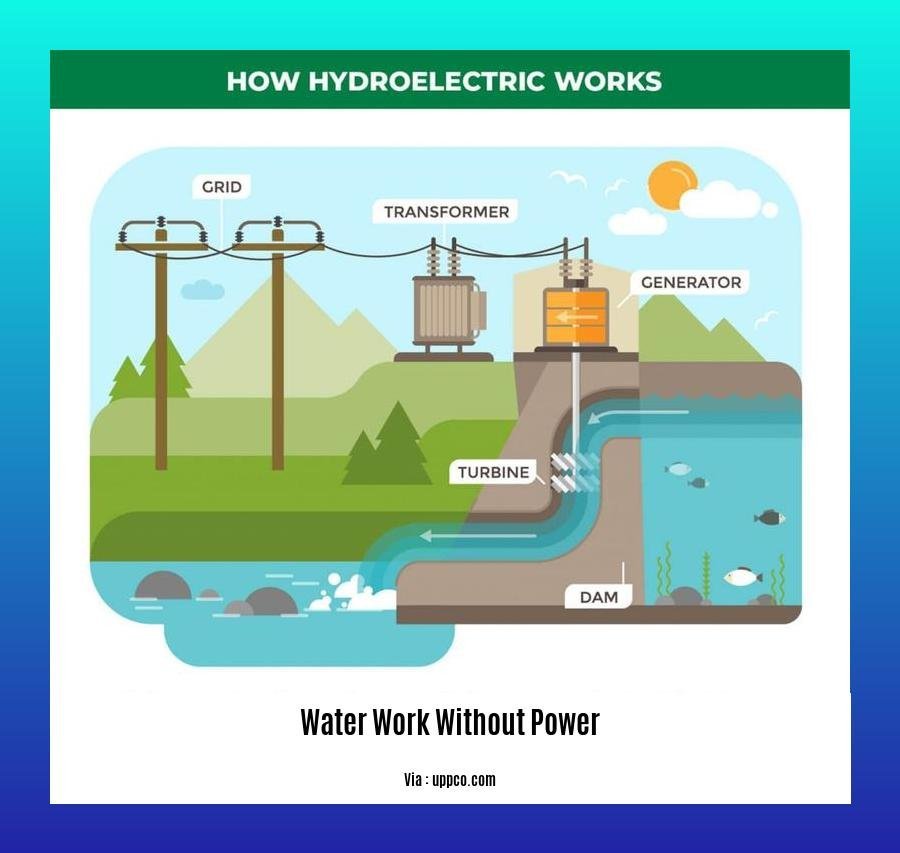
Ever watched a cheerful stream gurgle by, or a playful faucet run, and wondered what else that moving water could do? Beyond quenching thirst or powering a shower, water holds a fascinating secret: it’s an incredible source of energy, just waiting for a little ingenuity to unlock it. Harnessing the simple power of a flowing current isn't just for massive hydroelectric dams anymore; it’s a delightful, hands-on pursuit that’s gaining popularity among anyone with a spark of curiosity and a love for creative problem-solving. Think of it as nature's own mini-generator, and you, the ingenious conductor!
The beauty of learning to produce power from water lies in its multifaceted benefits, making it an ideal pursuit for a diverse range of enthusiasts. For the artists among us, imagine kinetic sculptures that subtly glow or gently move, powered entirely by a hidden, trickling water source. Picture installations where the very act of a stream flowing creates ambient sounds or illuminates a delicate display. For the dedicated hobbyists, it’s an exhilarating dive into practical engineering, allowing you to build miniature hydro-turbines that can power anything from a garden light to a small charging station for your phone on a camping trip. And for the ever-curious casual learners, it’s an unparalleled, hands-on lesson in renewable energy, basic physics, and environmental science, transforming abstract concepts into tangible, working models right before your eyes. It’s an empowering way to understand the world around us.
The variations in how you can explore this concept are as fluid as water itself. You could design a rustic, old-fashioned water wheel reminiscent of historical mills, or a sleek, modern turbine crafted from recycled plastics. Consider the purpose: perhaps a small setup to keep a pond aerated, or a whimsical fountain that doubles as a mood lamp in your backyard. Some enthusiasts create "pico-hydro" systems so tiny they fit into a bucket, while others build slightly larger "micro-hydro" projects using a garden hose and a small creek. The subjects range from purely aesthetic (a decorative spinning element) to surprisingly functional (charging low-power devices). Each project offers a unique set of challenges and triumphs, pushing the boundaries of what you thought possible with everyday materials.
Must Read
Ready to dip your toes in? Here are a few tips for trying your hand at home. Safety first! Always work with adult supervision, especially if involving any tools or outdoor water sources, and focus on low-voltage projects like powering an LED. Start simple: you’ll need a source of flowing water (a garden hose, a small bucket with a hole, or even a running tap), a small DC motor (easily salvaged from old toys like remote-control cars or electric toothbrushes), some wires, and an LED light. The motor will act as a generator. Craft some simple turbine blades – cut-up plastic spoons or soda bottle halves glued onto a central shaft work wonderfully. When the water hits your blades, it should spin the motor’s shaft, generating a tiny current that can light up your LED. Experiment with different blade shapes, angles, and water flow rates. You’ll be amazed at the delicate balance required to maximize your tiny energy output!
Ultimately, the joy of producing power from water isn’t just about the electricity generated, but the profound sense of accomplishment. It’s the thrill of seeing a simple stream transformed into a source of light or motion through your own creativity. It’s a tangible connection to nature's forces, a playful exploration of sustainable energy, and a rewarding way to bring a little bit of ingenious magic into your everyday life. So go on, let your imagination flow; the power of water awaits!
![Untitled [theenergyofwater.weebly.com]](https://theenergyofwater.weebly.com/uploads/2/9/4/5/29455093/2373830_orig.jpg)