
How To Know What Btu You Need
Ever walked into a room and immediately thought, "Is it just me, or is this place battling an invisible heat monster/arctic chill?" Or perhaps you’ve shivered under a blast of air conditioning that felt more like a freezer than a comfort zone?
You, my friend, are experiencing the delightful (or not-so-delightful) dance of BTUs. And guess what? Learning a little about them can utterly transform your home comfort, save you money, and frankly, make life a whole lot more pleasant. Ready to dive into the world of perfect climate control with a smile? Let's do this!
What in the World is a BTU, Anyway? (Don't Worry, It's Not Scary!)
Okay, let's demystify this fancy acronym. BTU stands for British Thermal Unit. Sounds very official, right? But all it really means is a measure of heat energy. Think of it like this:
Must Read
- If you have a candle, it puts out a certain amount of heat.
- If you have a bonfire, it puts out a lot more heat.
Similarly, a BTU tells you how much heat an air conditioner can remove from a room in an hour, or how much heat a heater can add to a room in an hour. So, when you see an AC unit advertised as "10,000 BTU," it means it has the muscle to move 10,000 BTUs of heat out of your space every 60 minutes.
In simple terms, BTUs are the power rating for your comfort system. More BTUs mean more cooling or heating oomph! Pretty neat, huh?
Why Should You Care About Your BTU Number? (Beyond Just Being Smart!)
"Okay," you might be thinking, "that's cool, but why does this matter to me when I just want to be cozy?" Oh, my friend, it matters for so many wonderful reasons!
First and foremost: Pure, unadulterated comfort. Imagine movie nights where you're not sweating through the couch, or waking up feeling refreshed instead of sticky. Knowing your BTU needs means getting that "just right" temperature every single time. No more Goldilocks struggles!
Second, and this is a big one: Saving money! A unit that's perfectly sized for your space runs efficiently. It won't have to work overtime, straining and guzzling electricity, or cycle on and off too frequently, wasting energy. The right BTU means lower utility bills – more money for fun stuff!
Third, a little bonus: Your unit will last longer. When a system isn't constantly over- or under-working, it experiences less wear and tear. That means fewer repairs and a longer lifespan for your appliance. That's a win-win-win!
The Goldilocks Principle: Not Too Much, Not Too Little
This is where the magic (and potential for misery) really happens. Getting the BTU number wrong can lead to some surprisingly uncomfortable situations.

Too Few BTUs?
Imagine trying to cool a swimming pool with an ice cube. That's what happens if your unit has too few BTUs. It will run constantly, struggling to reach the desired temperature, never quite getting there. You'll be hot, the unit will be overworked, and your energy bill will be shockingly high. Not cool!
Too Many BTUs?
Now, imagine using a giant fire hose to water a tiny houseplant. This is the scenario with too many BTUs. A super-powerful unit will cool the room down very quickly, but then it'll shut off. The problem? It hasn't run long enough to effectively remove humidity from the air. You're left with a clammy, damp chill that feels much colder than it actually is, and might even encourage mold growth. Plus, the constant on-and-off cycling (known as "short cycling") is inefficient and hard on the unit. Also not cool!
Just Right BTUs?
Ah, the sweet spot! A unit with just the right amount of BTUs will cool (or heat) your room evenly, remove humidity effectively, run efficiently, and give you that perfect, crisp comfort. It's the ultimate happy medium!
So, How Do You Find Your Magic BTU Number? (It's Easier Than You Think!)
Ready for the fun part? Here's how to calculate your personal comfort number. Don't worry, no complex math degrees required!

1. Measure Your Room's Square Footage
This is the biggest factor. Grab a tape measure!
- Measure the length of the room.
- Measure the width of the room.
- Multiply length x width to get your square footage.
2. Use This Handy Rule of Thumb Guide:
Once you have your square footage, here's a general BTU range to aim for:
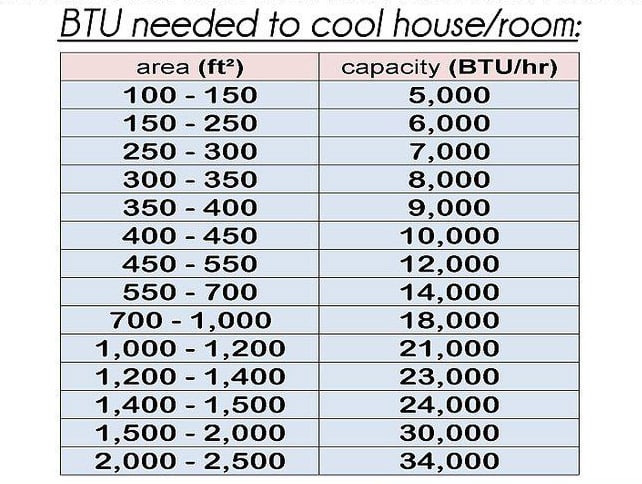
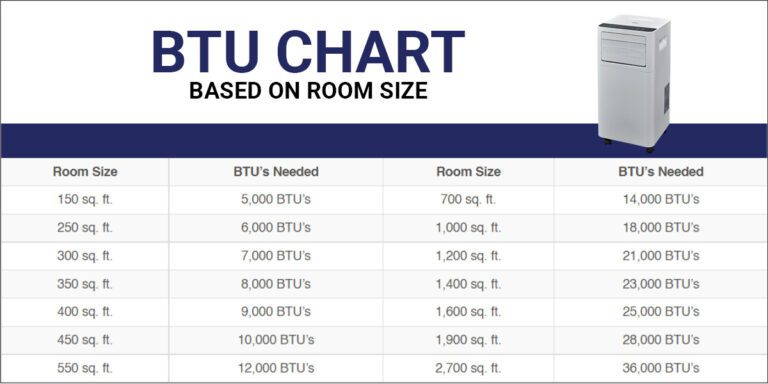
- 100 - 150 sq ft: 5,000 BTUs
- 150 - 250 sq ft: 6,000 BTUs
- 250 - 300 sq ft: 7,000 BTUs
- 300 - 350 sq ft: 8,000 BTUs
- 350 - 400 sq ft: 9,000 BTUs
- 400 - 450 sq ft: 10,000 BTUs
- 450 - 550 sq ft: 12,000 BTUs
- 550 - 700 sq ft: 14,000 BTUs
- 700 - 1,000 sq ft: 18,000 BTUs (often requires central AC or multiple units)
3. Adjust for Other Factors (The "Personality" of Your Room)
Your room isn't just a box; it has unique characteristics! These can slightly increase or decrease your BTU needs:
- Lots of Sunlight? If your room gets a lot of direct sun, especially through many windows, add 10% to your base BTU number. Think of that glorious, but warming, sunshine!
- Shady or Infrequently Used? If your room is generally shady or you don't use it often (like a guest room), you might be able to reduce by 10%.
- High Ceilings? For ceilings taller than 8 feet, you have more air to cool. Consider adding 10-20% to your BTU needs.
- Kitchens or Busy Spaces? Rooms with heat-generating appliances (stoves, computers, lots of lights) or more than two regular occupants will need more cooling power. Add 600 BTUs per additional person/heat source. Your cozy movie night with friends just got even cozier!
- Poor Insulation or Old Windows? If your home isn't well-insulated, or has older, less efficient windows, you might lean towards the higher end of the BTU range for your square footage.
Putting It All Together: A Quick Example!
Let's say you have a 300 sq ft bedroom that gets lots of afternoon sun, and it's just for you and your partner.
- Base BTU for 300 sq ft: 7,000 BTUs.
- Add 10% for direct sun: 7,000 * 0.10 = 700 BTUs. So, 7,000 + 700 = 7,700 BTUs.
- Number of people (2) is accounted for in the base estimate. No extra adjustment needed for the first two.
So, you'd be looking for an AC unit around 7,500 - 8,000 BTUs. See? Not so scary after all!
Go Forth and Be Comfortable!
Congratulations! You're no longer just a consumer; you're an informed comfort curator! Understanding BTUs empowers you to make smarter choices for your home, your wallet, and your overall well-being.
Take a moment right now. Look at your current living space. What's its personality? Measure a room. Jot down some notes. You've got the tools to create a perfectly comfortable environment, whether it's a cozy nook or an expansive living room.
So go on, embrace this newfound knowledge! Empower yourself to create the perfect climate in every corner of your home. Your future, comfortable self will thank you for it. Happy cooling (and heating)!