How To Know If You Have A Carbon Monoxide Leak
Let's talk about something super exciting: carbon monoxide (CO)! Okay, maybe not exciting like winning the lottery, but definitely exciting in the sense of "understanding this could literally save your life!" Think of it as being a detective, but instead of solving a crime, you're solving the mystery of whether or not a silent, invisible killer is lurking in your home. It's a crucial topic, and honestly, a little bit empowering to understand.
So, why should you care? Well, for beginners, knowing the basics of CO leaks and how to spot them is just good common sense. It's like knowing how to change a tire – you hope you never need to, but you're glad you know how if you do. For families, especially those with young children or elderly relatives, a CO leak can be particularly dangerous. These groups are often more susceptible to the effects of CO poisoning. And for the hobbyist, maybe you're into renovating old houses or tinkering with gas-powered tools. Knowing the signs of a CO leak is absolutely essential to keep yourself safe while you're pursuing your passions.
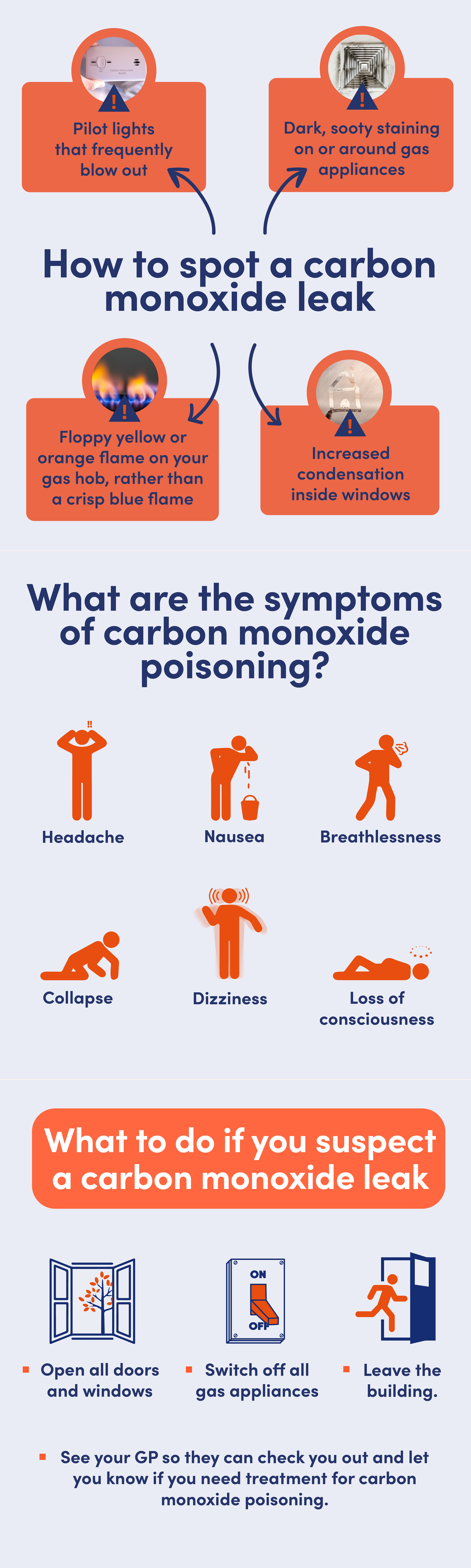
What are we looking for exactly? Carbon monoxide is a colorless, odorless, tasteless gas. That's the scary part! You can't see it, smell it, or taste it. That's why a CO detector is your best friend. Think of it as a smoke detector's less famous, but equally important, cousin. But even with a detector, it's good to be aware. Common sources of CO include fuel-burning appliances like furnaces, stoves, water heaters, fireplaces, and even running cars in attached garages. If you use any of these, you're potentially at risk.
Must Read
Beyond the detector, there are some symptoms you should be aware of. These can be easily mistaken for the flu, which is why CO poisoning is often missed. Look out for things like: headache, dizziness, weakness, nausea, vomiting, chest pain, and confusion. In severe cases, it can lead to loss of consciousness and even death. The key is that multiple people in the same location experiencing similar symptoms at the same time could point to a CO leak.

Okay, so how do you get started protecting yourself? Here are some simple, practical tips:
- Install CO detectors: Place them on every level of your home, especially near sleeping areas.
- Test your detectors regularly: Most detectors have a test button. Push it monthly!
- Replace batteries annually: Change the batteries when you change your clocks for daylight saving time.
- Have fuel-burning appliances inspected annually: A qualified technician can identify potential problems before they become dangerous.
- Never use gas-powered appliances indoors: This includes generators, grills, and camping stoves.
- Never run a car in an attached garage, even with the garage door open.
Learning about carbon monoxide and how to detect it isn't about instilling fear; it's about empowering yourself with knowledge and taking simple steps to protect yourself and your loved ones. Think of it as adding another tool to your life's toolbox – a tool that could literally save lives. And that's something to feel good about.