
How To Hook Up Ac To Generator

Hey there, buddy! So, you’re sitting there, maybe the power’s out, or you’re camping in the wilderness, and you’re thinking, "Man, this heat is no joke. I need my AC!" And then, a little light bulb flashes above your head: "I have a generator!" Bingo! But how do you actually get that frosty air flowing? Let’s chat about it over a virtual cup of coffee, shall we?
Know Your Numbers, My Friend!
First things first, before you even think about plugging anything in, we gotta play a little game called "Match the Watts." Your AC unit, bless its heart, needs power. And your generator, bless its heart, provides power. But are they a match made in heaven, or a recipe for a sad, overloaded generator?
You need to find two crucial numbers for your AC: its starting watts (also called surge watts) and its running watts. The starting watts are like that big gulp of energy your AC takes when it first kicks on – it’s a momentary spike, but a significant one. The running watts are what it sips happily once it's up and humming. Where do you find these? Usually on a sticker right on the AC unit itself, or in its manual.
Must Read
Now, look at your generator. What’s its maximum wattage? Its continuous wattage? You want your generator's capacity to be comfortably higher than your AC's starting watts. If your AC needs, say, 3000 starting watts, and your generator only puts out 2500, you’re gonna have a bad time. The generator will probably just trip its breaker, or worse, struggle and die. We don't want a struggling generator, do we? It's like asking a mini-poodle to pull a sleigh.
The Generator Type: Is Yours a Gentle Giant or a Roaring Beast?
This is where things get a smidge technical, but don't worry, it's quick. There are generally two types of generators: conventional and inverter. Conventional generators are often louder and produce power that can be a bit "dirtier," meaning it's not as smooth. Inverter generators, on the other hand, are like the sophisticated cousins. They’re quieter, more fuel-efficient, and produce much "cleaner" power.
Why does this matter for your AC? Well, modern ACs, especially window units with digital controls, are often considered "sensitive electronics." They prefer that clean, stable power. If you have an inverter generator, you're usually golden. If you have a conventional generator, it's still often doable, but just be aware that some sensitive electronics might complain a bit or even get damaged over time if the power isn't super stable. But for a simple window unit, it's usually fine for temporary use. Just something to keep in the back of your mind!
The Hookup: Let's Get Plugging!
Alright, numbers checked, generator type understood. Now for the exciting part!
First, and this is non-negotiable: your generator needs to be OUTSIDE. Like, way outside. At least 20 feet from your house, or any open windows or doors. Why? Carbon monoxide, my friend. It's an invisible, odorless killer, and we are not playing games with that. Ever. Got it? Good.

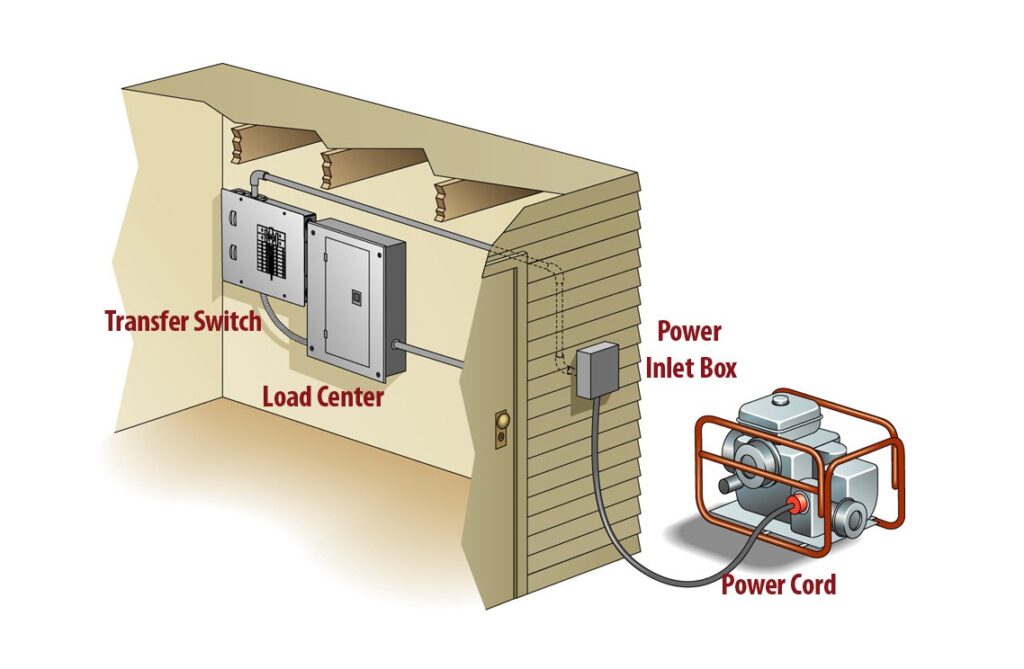
Next, the magic link: the extension cord. Please, for the love of all that is cool and comfortable, do not grab that flimsy lamp cord. You need a heavy-gauge extension cord. We're talking 10- or 12-gauge, outdoor-rated. The thicker the wire (meaning the lower the gauge number), the more power it can safely carry without overheating. Overheated cords? Bad news. Fires? Even worse news. So, heavy-duty cord, check.
Make sure the cord is in good condition – no frayed bits, no exposed wires. And keep it as short as possible while still allowing your generator to be safely far away.
Now, here’s the sequence:
- Plug your heavy-duty extension cord into your generator's appropriate outlet.
- Run the cord safely into your house (maybe through a window that you can then mostly close around the cord, or a doggy door, whatever works).
- Plug your AC unit directly into the other end of that extension cord. Avoid power strips if you can, especially for high-draw appliances like ACs. Direct connection is always best.

The Moment of Truth: Fire It Up!
Okay, everything's plugged in. Generator's outside. You've got your safety hat on.
First, start your generator. Let it run for a minute or two to warm up and stabilize its output. You want it purring nicely.
Then, turn on your AC unit. Listen. Does it hum to life confidently? Or does the generator suddenly sound like it's trying to bench press a car? If the generator starts choking or the AC doesn't kick on, it might mean you've overloaded it, or the starting watts were just too much for your particular setup.
If all goes well, congratulations! You are now the proud owner of a generator-powered oasis. Go on, bask in that glorious, cool air. You earned it.
A Few Last Nudges
* Don't overload your generator! Be mindful of what else you're plugging in. An AC unit can often take up a significant chunk of your generator's capacity. Maybe skip the microwave and the hair dryer at the same time, yeah? * Keep an eye on fuel levels. Generators are thirsty beasts, especially under load. * Check your cords regularly. Make sure they're not getting warm to the touch. If they are, something's wrong, and you should unplug things immediately.
Hooking up an AC to a generator really isn't rocket science, but it does require a bit of common sense and a healthy respect for electricity and carbon monoxide. Do it right, and you'll be chillin' like a villain, no matter what the grid throws at you. Stay cool out there!