
How To Fix Your Air Conditioner
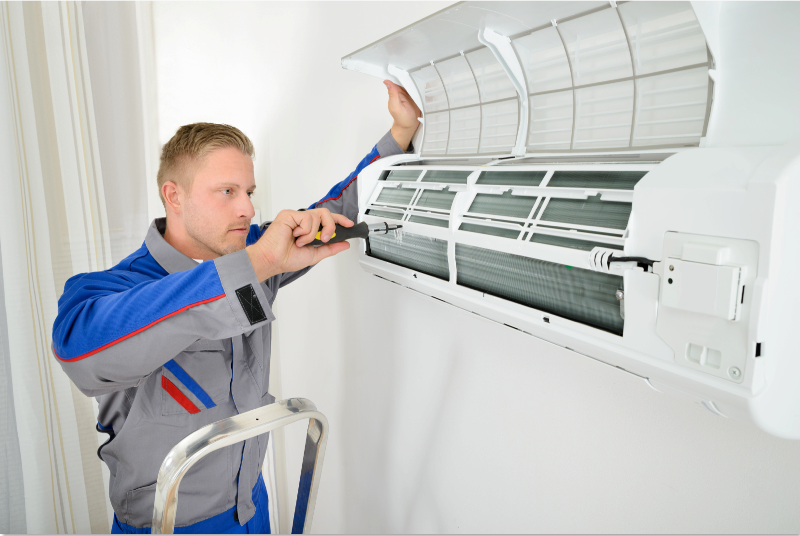
Alright, gather 'round, my fellow sufferers of summer's relentless embrace! Picture this: It's August, the sun is blazing down like a tyrannical overlord, and you've just walked in after battling the inferno outside. All you want is that sweet, sweet arctic blast from your air conditioner. You hit the thermostat, anticipation building… and… nothing. Just the sound of your own exasperated sigh, probably echoing in the humid silence of your un-cooled home. Your AC has decided to throw a dramatic tantrum, and suddenly, you're living in a giant, expensive convection oven.
Before you succumb to the primal urge to offer it as a sacrifice to the heat gods or declare war on your wallet by calling an HVAC professional (who, let's be honest, might arrive next week, by which time you'll have melted into a puddle), let's channel our inner MacGyver. We’re going to fix this beast ourselves. Or, at the very least, figure out if it's just being a diva or if it needs a serious intervention.
First, a quick, humorous, but important safety note: We're not doing anything that requires dismantling your unit or playing with refrigerant. Think of this as a gentle persuasion session, not open-heart surgery. If you're uncomfortable, or it involves anything more complex than what we discuss, please call a pro. Your life (and your fingers) are worth more than a cool breeze!
Must Read
The Obvious Culprits (aka, Did You Even Turn It On?)
Let's start with the basics, because sometimes the most frustrating problems have the simplest solutions. And sometimes, you just feel a bit silly afterwards.
Is your thermostat set correctly? I know, I know, it sounds patronizing. But hear me out! Is it set to Cool? Is the fan set to Auto (not just 'On', which will blow air, but not cold air)? And is the temperature setting lower than the current room temperature? You’d be surprised how often a mischievous toddler, a curious pet, or even your own forgetfulness is the real villain here. Give it five minutes after adjusting. Sometimes it just needs a moment to ponder its life choices.
Did you know the first modern air conditioner wasn't even invented for human comfort? Willis Carrier invented it in 1902 to control humidity in a Brooklyn printing plant! Who knew humidity was such a buzzkill for ink?

The Smelly Gym Sock of Your AC: The Filter
Okay, this is probably the single most common reason your AC acts like it's got a personal vendetta against cold air. Your air filter is like the lungs of your entire HVAC system. When it gets clogged, your unit can't breathe. It chokes. It sweats. It might even freeze up, which is ironic for a cooling device.
Locate your air filter. It's usually in your return air vent (a big grille in the wall or ceiling), or sometimes in the furnace/air handler unit itself. Pull it out. What do you see? Is it a pristine white rectangle? Or is it a fuzzy, greyish-brown relic that looks like it's been collecting dust bunnies since the Mesozoic Era? If it's the latter, bingo. You've found your problem.
A dirty filter restricts airflow, making your unit work harder, cost you more money, and eventually, just give up. Replace it! Most recommend changing them every 1-3 months, especially if you have pets or allergies. This is a task so simple, even your goldfish could do it (if it had opposable thumbs and an understanding of HVAC systems).

The "Oops" Moment: Your Circuit Breaker
Sometimes your AC isn't broken; it's just a bit… dramatic. Like a diva who gets overwhelmed and decides to take a nap. Your AC unit draws a lot of power, and occasionally, it can trip a circuit breaker.
Head to your electrical panel (usually in your basement, garage, or a utility closet). Look for a breaker that's in the OFF position or halfway between ON and OFF. It might be labeled "AC," "Furnace," or "HVAC." Flip it firmly to OFF, then firmly back to ON. Give your unit a good 15-30 minutes before trying it again. Sometimes, a hard reset is all it needs, like a grumpy computer. Just don't forget to check the outdoor unit's dedicated breaker too, if it has one.
Outside, Outside, Everywhere the Debris
Now, let's venture outside to the unsung hero of your cooling system: the outdoor unit, also known as the condenser. This is where the magic (and the heat rejection) happens. But it's also a magnet for all sorts of natural shenanigans.
Inspect the condenser unit. Is it surrounded by overgrown bushes, tall grass, or a surprise collection of leaves, twigs, and maybe even a stray frisbee? All that junk acts like a suffocating blanket, preventing the unit from dissipating heat effectively. Imagine trying to run a marathon while wearing a winter coat and a snorkel that's full of lint. Not effective, right?

Carefully clear away any debris from at least two feet around the unit. For good measure, you can gently rinse the coils (the metal fins on the outside) with a garden hose. Make sure to spray downwards, not directly into the fan motor. Just a light shower, not a power-washing onslaught! You'd be amazed how much gunk accumulates and how much better your AC performs once it can breathe freely again.
Did you know air conditioners are responsible for about 6% of all the electricity produced in the U.S. each year? That's about $29 billion in energy costs! Keeping yours clean means keeping more money in your pocket.
The Clogged Artery: Your Condensate Drain Line
Your AC doesn't just make cold air; it also removes humidity, which creates a surprising amount of water. This water needs to go somewhere, and it does so via a condensate drain line, usually a PVC pipe that leads outdoors or to a drain. If this line gets clogged with algae, mold, or just general gunk, the water backs up, and a safety switch often shuts down your unit to prevent an overflow.

Look for a small PVC pipe, usually 3/4 inch in diameter, near your indoor air handler unit. If you see standing water in the drain pan or a clogged opening, that’s your culprit. You can try to clear a minor clog by gently sucking it out with a wet/dry vac (trust me, it sounds gross, but it works!). Or, if accessible and safe, pour a cup of distilled vinegar (not bleach!) down the line to kill algae. Wait about 30 minutes, then flush with some water.
When to Wave the White Flag (and Call a Pro)
If you've checked all these things and your AC is still giving you the cold shoulder (or, rather, the hot shoulder), it's probably time to call in the big guns. Things like low refrigerant levels, a broken compressor, or electrical issues inside the unit are beyond the scope of a casual DIY fix. These require specialized tools, knowledge, and sometimes, a license.
But hey, look at you! You've just performed several common AC troubleshooting steps, potentially saving yourself a hefty service call fee and the agonizing wait for a technician. Give yourself a pat on the back, grab a celebratory (now chilled) beverage, and enjoy that glorious, hard-earned cool air.
You’ve conquered the beast, tamed the heat, and proven that with a little patience and a dash of brave curiosity, you can fix more than you think. Now go forth and enjoy your air-conditioned paradise!