How To Find Toughness From Stress Strain Curve
Alright folks, gather 'round, because today we're diving headfirst into the surprisingly thrilling world of Stress-Strain Curves! I know, I know, it sounds like something only a nerdy engineer could love, but trust me, this is like understanding the superhero origin story of your favorite materials. We're talking about figuring out how tough something really is. Forget flexing your biceps; we're flexing our brains!
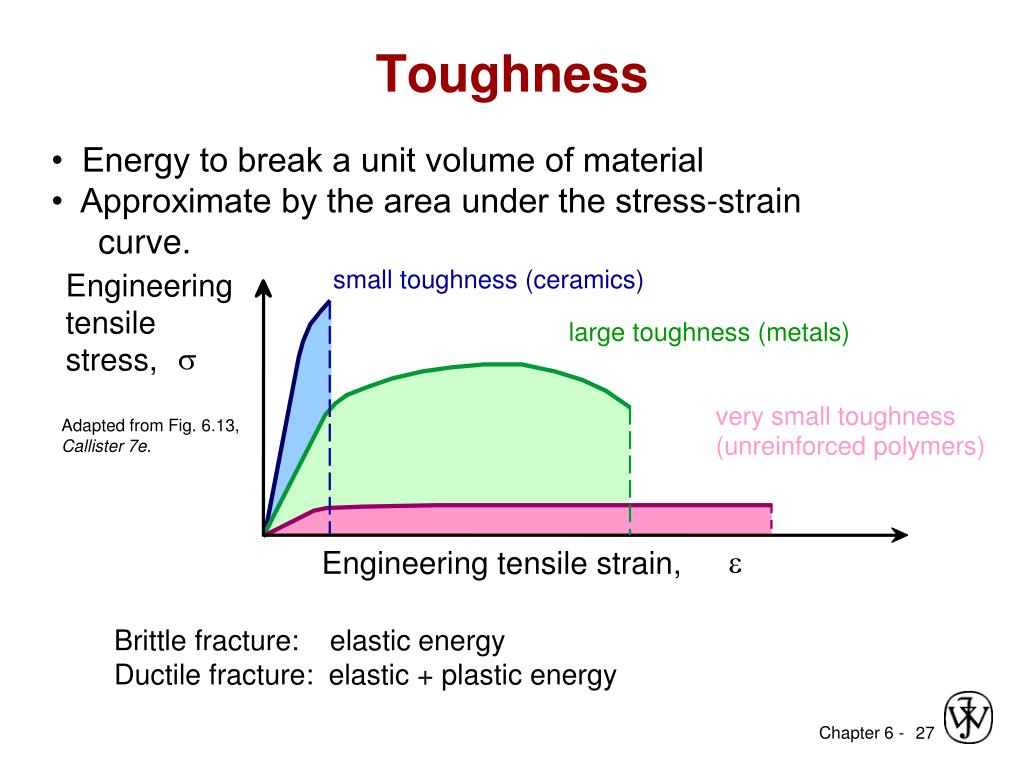
So, you want to know how to find "toughness" from this mystical curve? Well, toughness, my friends, isn't just about being buff and resistant to break down, it's about energy absorption. Think of it like this: Batman’s suit isn't just hard; it can take a punch (or several) and keep Batman in one piece. That's toughness, baby!
The Stress-Strain Curve: Your Roadmap to Toughness
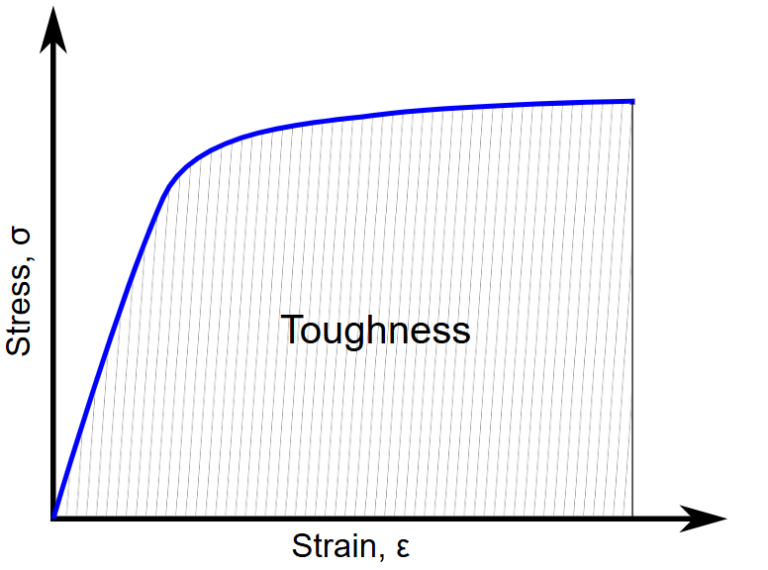
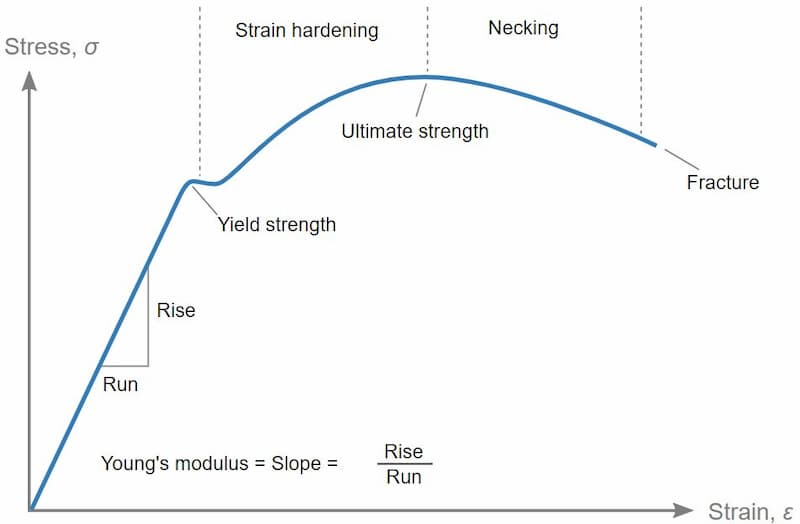
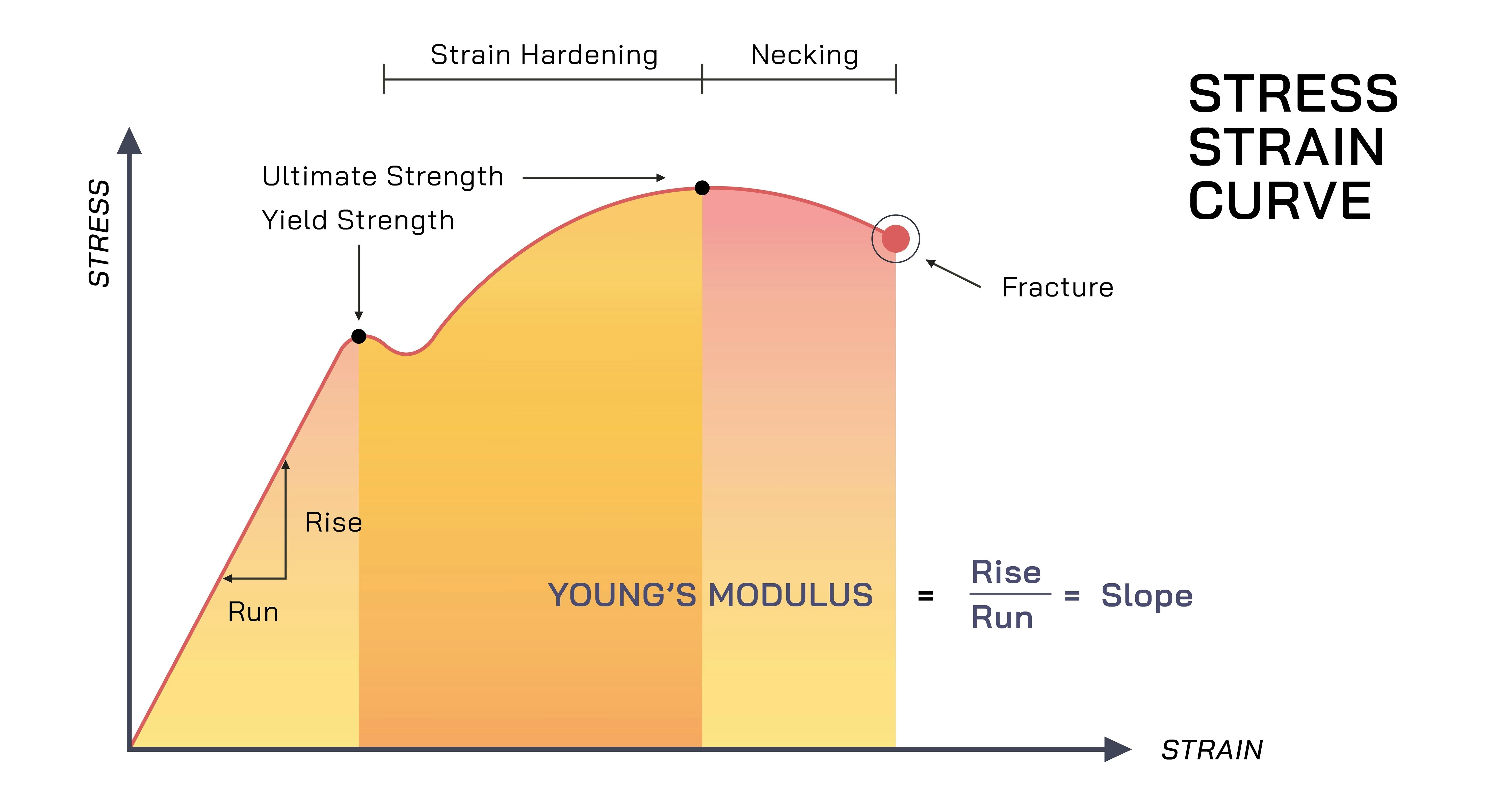
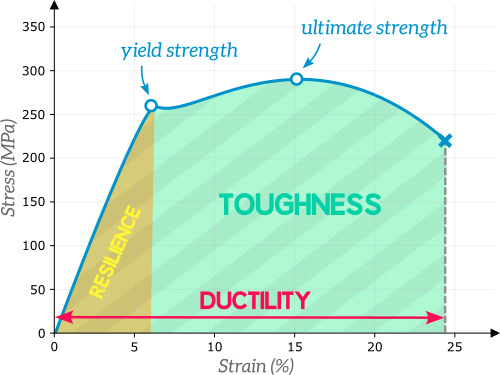
Imagine drawing a graph. On one axis (usually the vertical one), we have Stress. This is like how much you're squeezing or stretching something. Think of it as the material screaming "OW!" under pressure.
Must Read
On the other axis (usually horizontal), we have Strain. This is how much the material deforms. It's the material's response to the "OW!", like, "Okay, okay, I'm stretching a little..."
Plot these points as you slowly (or not so slowly, depending on your experiment) torture your material, and boom! You've got a Stress-Strain Curve. It’s basically a visual representation of the material's breaking point after a long day at the office.
Area Under the Curve: The Secret Sauce
Here's the magic trick: The area under the stress-strain curve represents the material's toughness! Yes, the area! The bigger the area, the tougher the material. It’s like filling up a glass with the material's resistance to pain before it throws in the towel. Think of a flimsy wine glass versus a robust beer stein. Which do you think has a bigger "toughness area?" (Hint: it's not the one that shatters when you look at it funny.)
Calculating this area used to be a royal pain. Engineers had to use calculators, slide rules (look them up!), or maybe even count squares on graph paper! Can you imagine? The horror! Now we have computers that do it in milliseconds. Thank goodness for technology, or we'd all be stuck hand-cranking toughness calculations like it's the Victorian era.
Breaking Down the Curve (Like a Bad Relationship)
Let's look at some common shapes of stress-strain curves:
- Tall and Skinny: This means the material is strong (high stress!), but not very stretchy (low strain). Think of a very brittle ceramic. Impressive, but snaps easily under duress.
- Short and Fat: This material is very stretchy (high strain!), but not very strong (low stress!). Imagine play dough, easy to manipulate but zero resistance.
- Big and Broad: This is the Goldilocks zone! High strength and high stretch! This is the stuff of superhero suits, airplane wings, and bridges that don't collapse in moderate winds.
Important Caveats (Because Life Isn't Always a Straight Line)
Now, here's the thing: toughness isn't the only thing that matters. You also need to consider:
- Temperature: Materials can get weaker or stronger depending on how hot or cold they are. Try bending a piece of rebar at -40 degrees, I dare you (don't actually do this, it’s dangerous!).
- Loading Rate: How fast you apply the stress matters too! A slow, steady pull is different from a sudden impact. Like the difference between a romantic slow dance and getting tackled in football.
- Material Defects: Tiny cracks or imperfections can significantly weaken a material. It's like that one loose thread on your favorite sweater; it can unravel the whole thing!
Toughness depends on the material and the circumstances and no one is saying your sofa has the same toughness as a titanium alloy.
In Conclusion: Go Forth and Be Tough (Or at Least Understand It)
So there you have it! Finding toughness from a Stress-Strain Curve is all about calculating the area under the curve. It's a fascinating way to understand how materials behave under pressure and to choose the right material for the job. Next time you see a skyscraper, a bridge, or even just a well-built coffee mug, remember the humble Stress-Strain Curve and the engineering magic behind it. And maybe, just maybe, you’ll impress someone at your next cocktail party with your newfound knowledge of material science. (Or, more likely, they’ll just ask for another drink. But hey, at least you tried!). Now go forth and be tough! (Figuratively, of course. Unless you’re training to be a superhero, then by all means, be literally tough too.)