How To Find Total Resistance Of A Parallel Circuit

Ever wondered how to split a river into multiple streams, each flowing smoothly and efficiently? Or perhaps you've admired the intricate network of Christmas lights that shine so brightly? You might be surprised to learn that both scenarios share a common principle with something seemingly technical: calculating total resistance in a parallel circuit. While it might sound intimidating, understanding this concept opens up a world of creative possibilities and practical applications, far beyond just electrical engineering textbooks.
For artists and hobbyists, grasping parallel resistance can be incredibly valuable. Imagine you're building a complex LED art installation. Knowing how to calculate total resistance allows you to safely power multiple LEDs from a single power source, ensuring each LED receives the correct voltage and current. No more flickering or burnt-out bulbs! Similarly, if you're a model railroader looking to electrify your layout, understanding parallel circuits enables you to power multiple sections of track independently, avoiding voltage drops and maintaining consistent speed for your trains. Even the casual learner can benefit, finding it easier to understand how household electrical systems work, allowing for safer and more informed DIY projects.
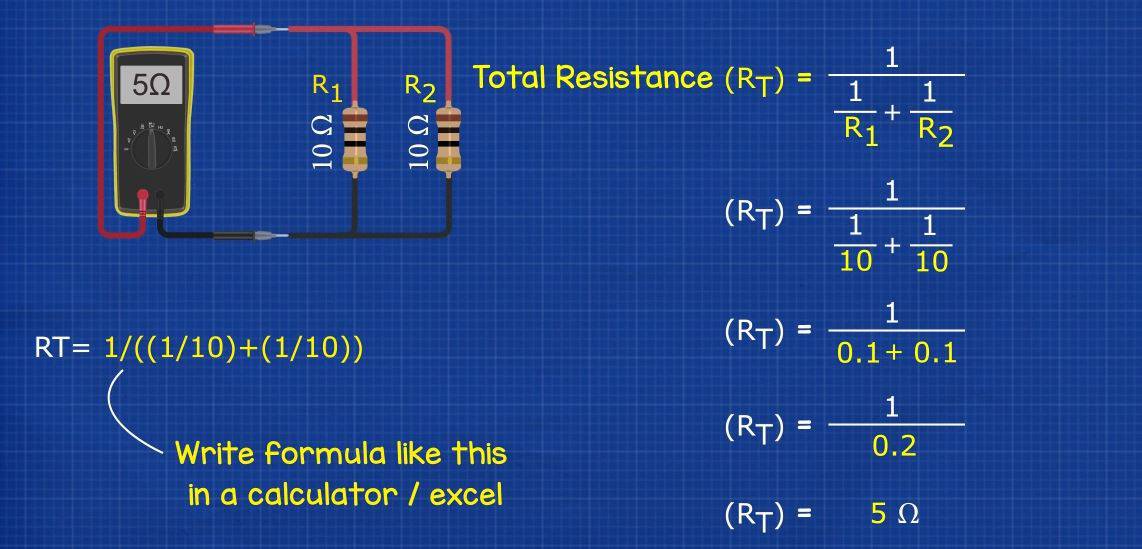
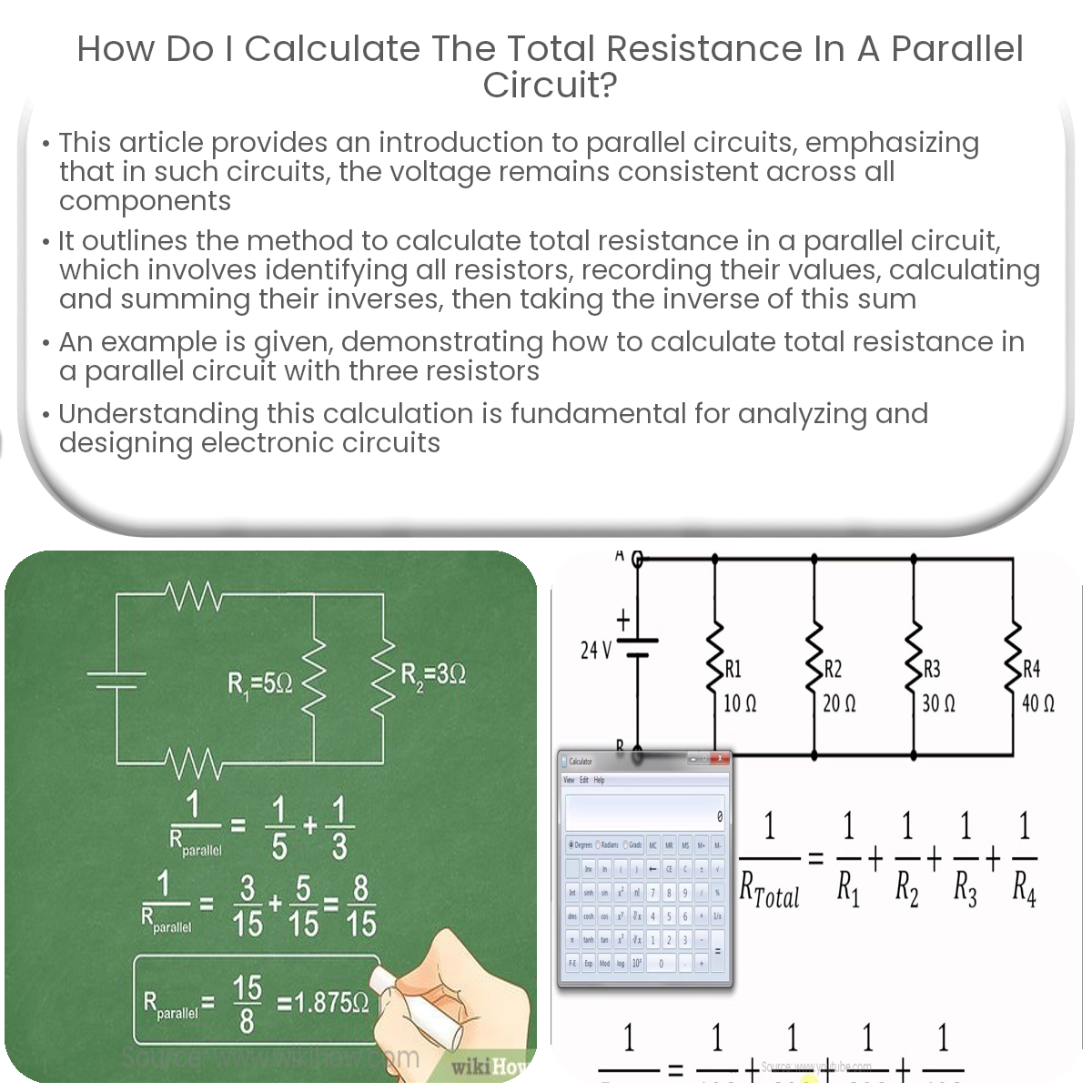
So, how does it work? Unlike a series circuit where resistance simply adds up, a parallel circuit requires a slightly different approach. The key is to understand that in a parallel circuit, electricity has multiple paths to flow. This reduces the overall resistance. Think of it like having multiple checkout lanes at a grocery store; the more lanes open, the faster the flow of customers. The formula to calculate total resistance (Rt) in a parallel circuit with two resistors (R1 and R2) is: 1/Rt = 1/R1 + 1/R2. For more than two resistors, simply add 1/R for each additional resistor to the equation. For example, imagine three parallel resistors: 2 ohms, 4 ohms, and 8 ohms. The calculation would be: 1/Rt = 1/2 + 1/4 + 1/8. This equals 7/8. Therefore, Rt = 8/7 ohms, which is approximately 1.14 ohms. Notice how the total resistance is less than the smallest individual resistance!
Must Read
Want to try it at home? Start with a simple online circuit simulator. These tools allow you to build virtual circuits and measure voltage, current, and resistance without the risk of electric shock. Experiment with different resistor values and observe how the total resistance changes. You can even simulate real-world scenarios, such as powering multiple light bulbs in parallel. Pay attention to how the current is distributed among the different branches of the circuit. Remember, the current will always choose the path of least resistance. Also, try visualizing the circuit; draw it out and label each component. This can help you understand the flow of electricity and how the resistors interact with each other. Use a multimeter to measure resistance in real-world circuits (always ensuring the power is off!).
Ultimately, understanding parallel resistance isn't just about memorizing formulas; it's about developing a deeper intuition for how electricity flows and interacts within a circuit. It's a puzzle to solve, a problem to overcome, and a gateway to unlocking your creative potential. The satisfaction of correctly calculating a circuit and seeing your project come to life is incredibly rewarding. It's a fun and engaging way to learn about the world around us, and it might just spark a lifelong passion for electronics!