
How To Find The Seer Rating For Air Conditioners
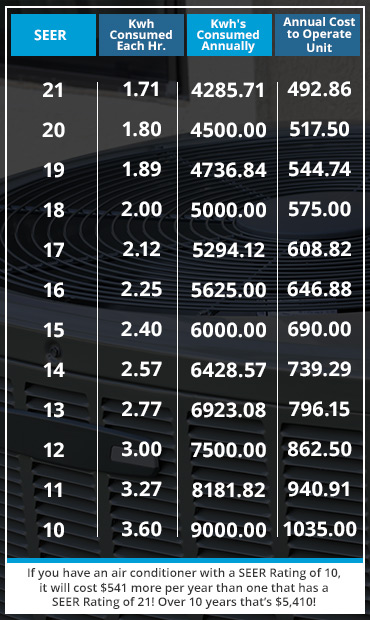
Hey there, cool cats and kittens! Ever feel like your air conditioner is just sucking money straight out of your wallet? Well, you're not alone! But fear not, because today we're going to decode a little secret that can help you chill out and save some serious cash. Ready for it? We're talking about SEER ratings!
Now, before your eyes glaze over, I promise this isn't going to be a boring lecture. Think of it more like a treasure hunt – a treasure hunt for energy efficiency! And trust me, the prize is worth it. We're talking lower energy bills, a happier planet, and bragging rights amongst your friends (because who doesn't love talking about HVAC systems at parties?).
What Exactly IS SEER, Anyway?
SEER stands for Seasonal Energy Efficiency Ratio. Sounds intimidating, right? Don't sweat it! Basically, it's a measure of how efficiently an air conditioner cools your home over an entire cooling season. The higher the SEER rating, the more efficient the AC unit, and the less energy it uses to keep you comfortable. Think of it like miles per gallon for your car, but for cool air!
Must Read
Imagine two identical houses, side-by-side. One has an ancient AC unit with a SEER rating of, say, 8 (yikes!). The other has a modern marvel with a SEER rating of 18. Which house do you think will have lower energy bills? You guessed it! The house with the higher SEER rating. Money saved is money earned, as they say!
Where Do I Find This Magical Number?
Alright, so you're pumped to find your AC's SEER rating. Excellent! Here's where to look:

1. On the Unit Itself: This is usually the easiest place to start. Look for a sticker or label on the outdoor unit (the condenser) or sometimes on the indoor unit (the evaporator). You might see something like "SEER: 14" prominently displayed. Keep your eyes peeled; it might be hidden amongst other technical jargon, but it's usually there. It might also be on the documentation you received when you bought the unit.
2. The Model Number: Didn't find it on the unit? No problem! Jot down the model number of your AC unit. This is usually a combination of letters and numbers. Then, head to the manufacturer's website (Carrier, Trane, Lennox, etc.) and search for the model number. You should be able to find the product specifications, including the SEER rating. This is like being a detective, finding the hidden clues. Are you feeling like Sherlock Holmes yet?
3. Your Owner's Manual: Remember that dusty old manual you tucked away in a drawer years ago? Now's its time to shine! Your owner's manual should contain all the important information about your AC unit, including its SEER rating. Dig it out, dust it off, and get ready to uncover some valuable information!

4. Ask a Professional: Still striking out? Don't worry, there's no shame in calling in the experts! A qualified HVAC technician can easily identify your AC unit and tell you its SEER rating. Plus, they can give you advice on whether it's time to upgrade to a more efficient model. Think of them as your HVAC superheroes, swooping in to save the day (and your money!).
Why Should I Even Care About SEER?
Okay, so you know how to find the SEER rating. But why bother? Here's the deal:

Money Savings: As we've already established, a higher SEER rating means lower energy bills. Over time, the savings can really add up! Think of all the fun things you could do with that extra cash – a vacation, a new gadget, or maybe even a lifetime supply of ice cream! The possibilities are endless!
Environmental Impact: Energy-efficient AC units use less electricity, which means less strain on the power grid and a smaller carbon footprint. You can feel good knowing that you're doing your part to protect the environment. It's like being an eco-warrior, fighting for a greener planet, one air conditioner at a time!
Increased Comfort: Newer, more efficient AC units often provide more consistent and reliable cooling. No more sweltering in one room while freezing in another! Just consistent, comfortable temperatures throughout your home. Now that is true bliss!
Time to Take Action!
So, what are you waiting for? Go forth and find your AC's SEER rating! Understanding your AC's efficiency is the first step towards saving money, reducing your environmental impact, and enjoying a more comfortable home. Don't be intimidated by the technical jargon. Embrace the challenge and become an informed homeowner!
And remember, this is just the beginning. There's a whole world of energy efficiency out there waiting to be explored. Consider researching other energy-saving tips, like proper insulation, smart thermostats, and energy-efficient appliances. Every little bit helps!
The power to create a more comfortable, affordable, and sustainable future is in your hands. So, go out there and make a difference! You've got this!