
How To Find The Period Of A Sinusoidal Function

Alright folks, buckle up! We're diving into the wonderfully wavy world of sinusoidal functions. Don't let that name intimidate you. Think of them as the mathematical equivalent of ocean waves, sound waves, or even the rhythmic blinking of a disco ball! It's all about repetition, baby!
Spotting the Repetition: Our First Clue
The secret ingredient here is the period. Imagine you're watching a dog chase its tail. The period is how long it takes for the dog to complete one full circle and start again. For a sinusoidal function, it's how long the wave takes to complete one full cycle – from crest to crest, or trough to trough. Piece of cake, right?
Let's say you're at the beach, counting waves. You notice a wave crashes, then another, and then the pattern repeats. If it takes 10 seconds for that whole wave pattern to play out once, then the period of those ocean waves is 10 seconds! Easy peasy.
Must Read
The Visual Approach: Graphing is Your Friend
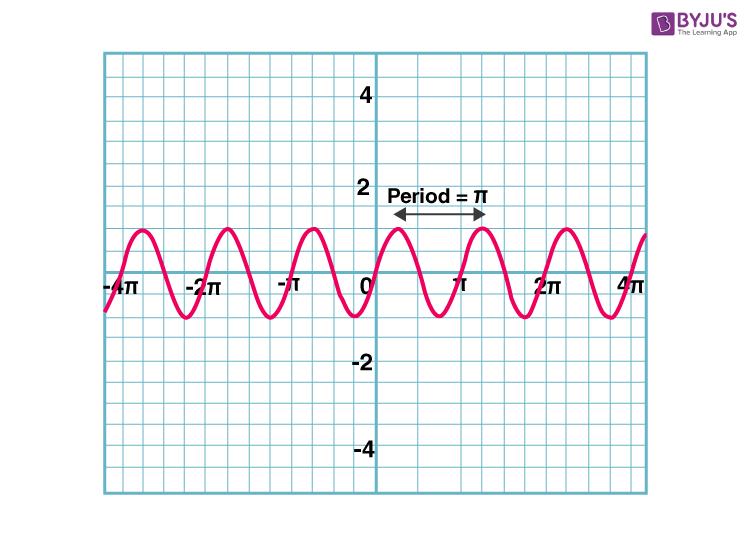
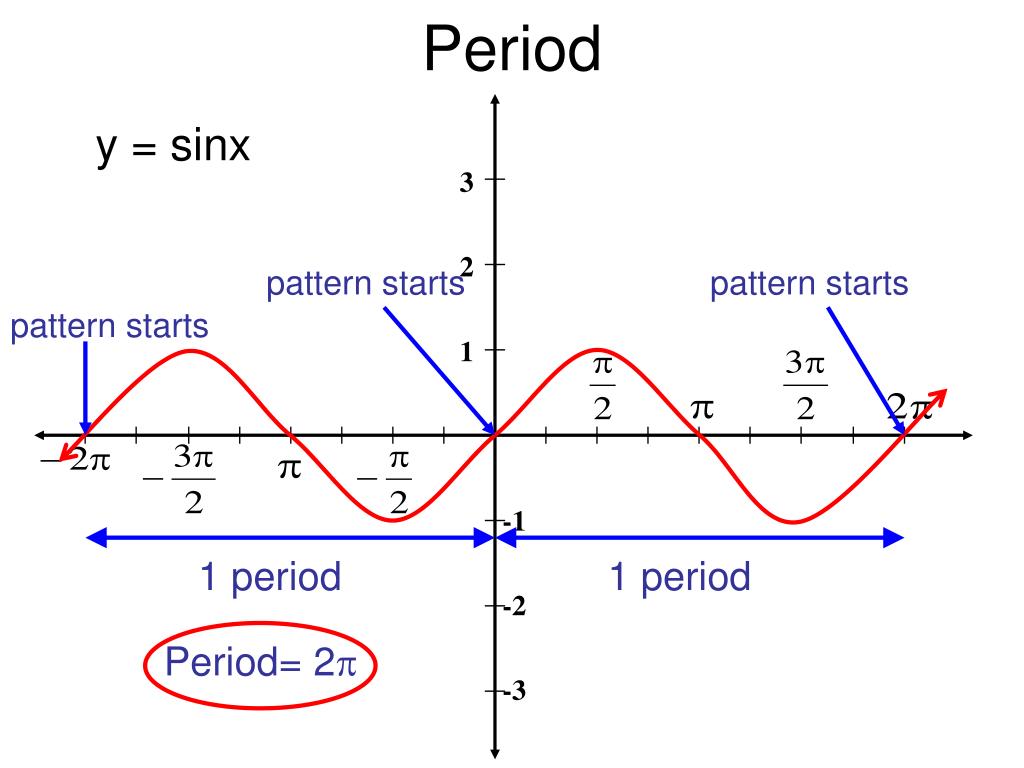
One of the easiest ways to find the period is to look at the graph. Think of the graph like a roller coaster. The period is the length of one complete hill and valley. Just measure the distance along the x-axis it takes to complete that one loop!
Imagine you’ve plotted the temperature throughout the day. You see a wave-like pattern, peaking in the afternoon and dipping at night. The period would be the time it takes for one full temperature cycle, likely 24 hours in most cases!
Finding the Period Directly from the Graph
Find two identical points on the graph that mark the beginning and end of one cycle. This could be two peaks, two troughs, or even two points where the wave crosses the x-axis in the same direction. The distance between these two points on the x-axis is your period!
Pro-tip: Choose points that are easy to read on the graph. Don't pick some obscure point halfway up the wave. Stick to the crests and troughs – they're usually the easiest to spot! If the graph is messy, just estimate!

The Formulaic Approach: Decoding the Equation
Sometimes, you’re not given a graph. Instead, you get the equation of the sinusoidal function. Don't panic! This is where a little mathematical magic comes in. Sinusoidal functions often look something like this: y = A sin(Bx + C) + D or y = A cos(Bx + C) + D.
The letters A, B, C, and D are just numbers that determine the specific shape and position of the wave. The most important number for finding the period is B. The period is calculated using the formula: Period = 2π / |B|. Yes, that's right, we're using that mysterious number, pi!
Breaking Down the Formula: No Need for Tears
Don't let the formula scare you. It's actually quite simple. 2π is just a constant (approximately 6.28). |B| means the absolute value of B (just ignore the minus sign if B is negative!). So, you're essentially dividing 6.28 by the absolute value of B. That's it!
Think of B as controlling how "squished" or "stretched" the wave is horizontally. A larger B means the wave is squished, resulting in a shorter period. A smaller B means the wave is stretched, resulting in a longer period.
Example Time: Let's Get Our Hands Dirty
Let's say our equation is y = 3 sin(2x). In this case, B = 2. So, the period is 2π / 2 = π (approximately 3.14). That means one full cycle of the wave completes in a length of π units along the x-axis.

Another example: y = 5 cos(x/3). Now, B = 1/3. The period is 2π / (1/3) = 6π (approximately 18.85). This wave has a much longer period than the previous one.
Dealing with Phase Shifts: C is for Complicated (Just Kidding!)
That 'C' in our general equation (y = A sin(Bx + C) + D) is called the phase shift. It basically shifts the whole wave left or right. While the phase shift changes the starting point of the wave, it doesn't change the period.
So, you can safely ignore the phase shift when calculating the period. Focus on that B value! You’re doing great!
Vertical Shifts and Amplitude: Distractions!
The A and D values are also important, but not for finding the period. A controls the amplitude (the height of the wave), and D controls the vertical shift (how high or low the whole wave is positioned).
They might make the wave look different, but they don't affect how long it takes to complete one cycle. They're just trying to throw you off! Don't let them!
Real-World Examples: Sinusoidal Functions are Everywhere!
Sinusoidal functions aren't just abstract mathematical concepts. They pop up all over the place in the real world. Think about the swing of a pendulum. The time it takes for the pendulum to swing back and forth once is its period.
Or consider the voltage in an AC electrical circuit. It follows a sinusoidal pattern. The frequency of the AC current is related to the period. Even your heartbeat, when graphed, can resemble a sinusoidal function (though it's probably more complex than a perfect sine wave!).
Common Mistakes: Don't Fall Into These Traps!
One common mistake is forgetting to take the absolute value of B. The period must always be a positive number. Another mistake is confusing the amplitude with the period. They are completely different things!
And of course, be careful with your units. If the x-axis represents time in seconds, then the period will be in seconds. If the x-axis represents distance in meters, then the period will be in meters. Pay attention to the context!
Practice Makes Perfect: Get Those Waves Flowing!
The best way to master finding the period is to practice. Find some graphs of sinusoidal functions and try to determine the period visually. Or find some equations and use the formula.
There are tons of resources online with practice problems and solutions. Don't be afraid to ask for help if you get stuck. Math can be fun, but it can also be frustrating sometimes. Stick with it and you'll get there!
Final Thoughts: You're a Sinusoidal Superstar!
So, there you have it! Finding the period of a sinusoidal function isn't so scary after all. Whether you prefer the visual approach or the formulaic approach, you now have the tools to conquer those waves!
Go forth and find those periods! You've got this! Remember, sinusoidal functions are just repeating patterns. Spot the repetition, and you've found the key!