How To Find The Charge Of Transition Metals

Let's dive into something that might sound intimidating, but is actually super cool: figuring out the charges of transition metals! Think of it like cracking a secret code. These metals are the rock stars of the periodic table – shiny, colorful, and a little unpredictable. Understanding their charges helps us understand how they interact with other elements, making everything from vibrant paints to life-saving medicines possible.
Why is this useful? For beginners in chemistry, grasping transition metal charges is a crucial step in learning how to write chemical formulas and balance equations. It unlocks a deeper understanding of chemical reactions. For families who enjoy DIY projects involving chemicals (think bath bombs or tie-dye), knowing the charges helps you safely and effectively combine ingredients. And for hobbyists like jewelry makers who work with metal plating or glass blowers who create colorful glass using metal oxides, understanding the charges dictates the outcome of your creations!
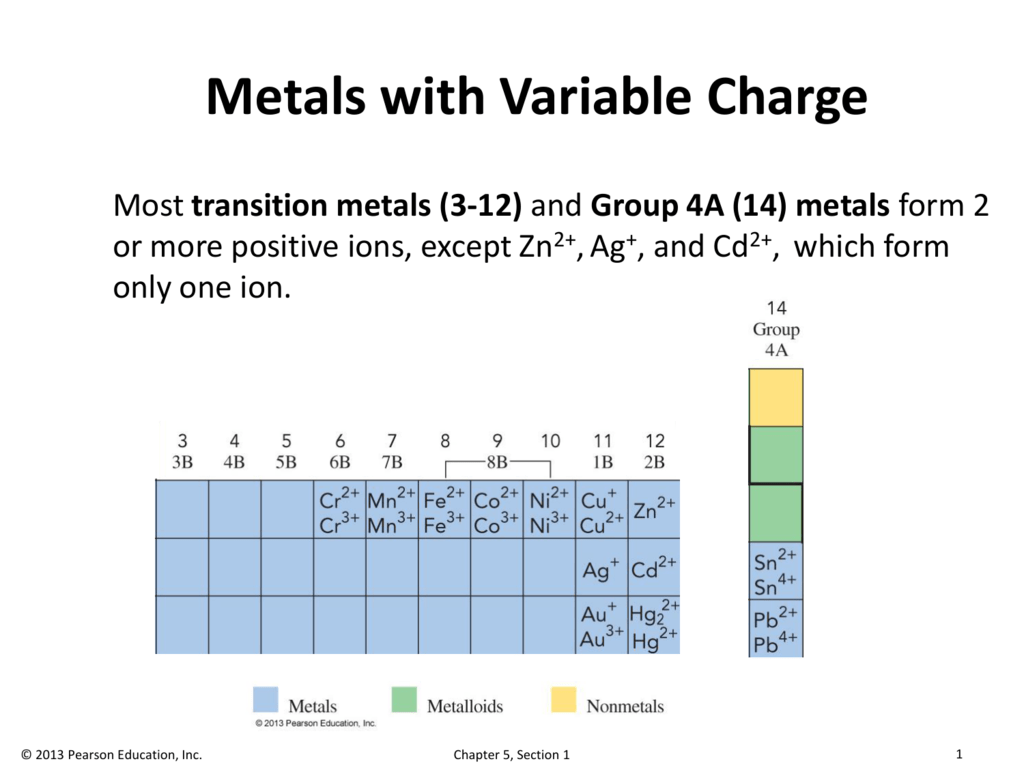
So, how do we find these charges? Unlike elements in Group 1 or 2, which almost always have a +1 or +2 charge respectively, transition metals can have multiple possible charges. This is because they can lose different numbers of electrons. The key is to look at what they're bonded to. Think of it like this: in a stable compound, the positive and negative charges have to cancel each other out.
Must Read
Here's the breakdown with examples:
1. Identify the Anion (Negatively Charged Ion): You need to know the charge of the other element(s) in the compound. Common anions and their charges include:
- Chloride (Cl-): -1
- Oxide (O2-): -2
- Sulfate (SO42-): -2
- Nitrate (NO3-): -1

2. Use the Overall Charge of the Compound: Unless otherwise indicated, assume the compound is neutral, meaning the overall charge is zero.
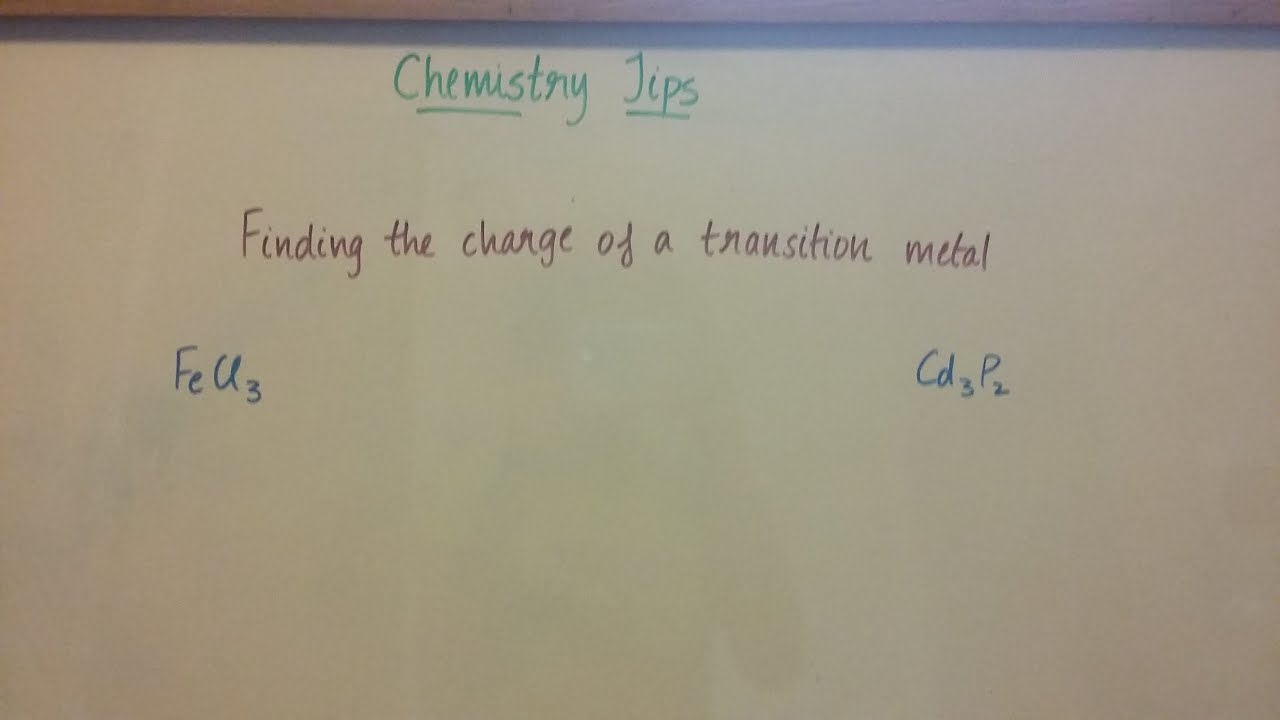
3. Calculate the Charge of the Transition Metal: Let's say we have copper(Cu) bonded with chlorine (Cl) in the compound CuCl2. We know that chlorine has a -1 charge. Since there are two chlorine atoms, the total negative charge is -2. To balance this out to zero, the copper must have a +2 charge. So, we call this copper(II) chloride.
Another example: Iron oxide (Fe2O3). Oxygen has a -2 charge, and there are three oxygen atoms, for a total negative charge of -6. Since there are two iron atoms, each iron atom must have a +3 charge to balance the -6. Therefore, it is iron(III) oxide.
Simple Tips to Get Started:
- Memorize common anion charges. This will be your foundation.
- Practice! Work through examples, starting with simple compounds.
- Look up common oxidation states. Some transition metals have charges they prefer to form more often than others (e.g., silver is often +1).
- Don't be afraid to ask for help! Chemistry can be tricky, so reach out to a teacher, tutor, or online forum if you get stuck.
Unlocking the secrets of transition metal charges might seem daunting initially, but with a little practice, it can be surprisingly rewarding. It's like learning a new language – once you understand the grammar, you can start speaking it fluently. So, grab a periodic table, embrace the challenge, and discover the fascinating world of chemical interactions. Enjoy the journey of understanding how these vibrant elements behave!