
How To Find Out Amps From Watts
Ever feel like electricity is some kind of mystical force, known only to bearded wizards in lab coats? You’re not alone! For many of us, the terms watts, volts, and amps sound like a secret language. But guess what? Cracking this code is not only surprisingly easy, but it can also make your life a whole lot more fun and empower you to understand the world around you a little better.
Today, we’re going to tackle one of the most useful electrical puzzles: How to find out amps from watts. Trust me, it’s simpler than it sounds, and by the end of this, you’ll feel like a bona fide electrical detective!
Why Bother, You Ask? (Great Question!)
Okay, so why should you care about this magical conversion? Is it just for bragging rights at your next dinner party? (Though, let’s be honest, it totally could be!) The truth is, understanding amps from watts has some seriously practical benefits that can save you headaches and even keep your home safer.
Must Read
Imagine this:
- You’re about to plug in your new, super-powerful blender, but your old toaster is already humming. Will your breaker trip? Knowing the amps helps you avoid that sudden, inconvenient darkness!
- You’re planning to buy a new power strip. Some are rated for 15 amps, others for 20. Which one do you need? Your newfound knowledge will guide you!
- You’re setting up a camping site or a workshop and need to ensure your generator can handle all your gadgets. This skill is your superpower!
In short, it puts you in control of your electrons, rather than the other way around. Pretty cool, right?
The Big Reveal: The Super Simple Formula!
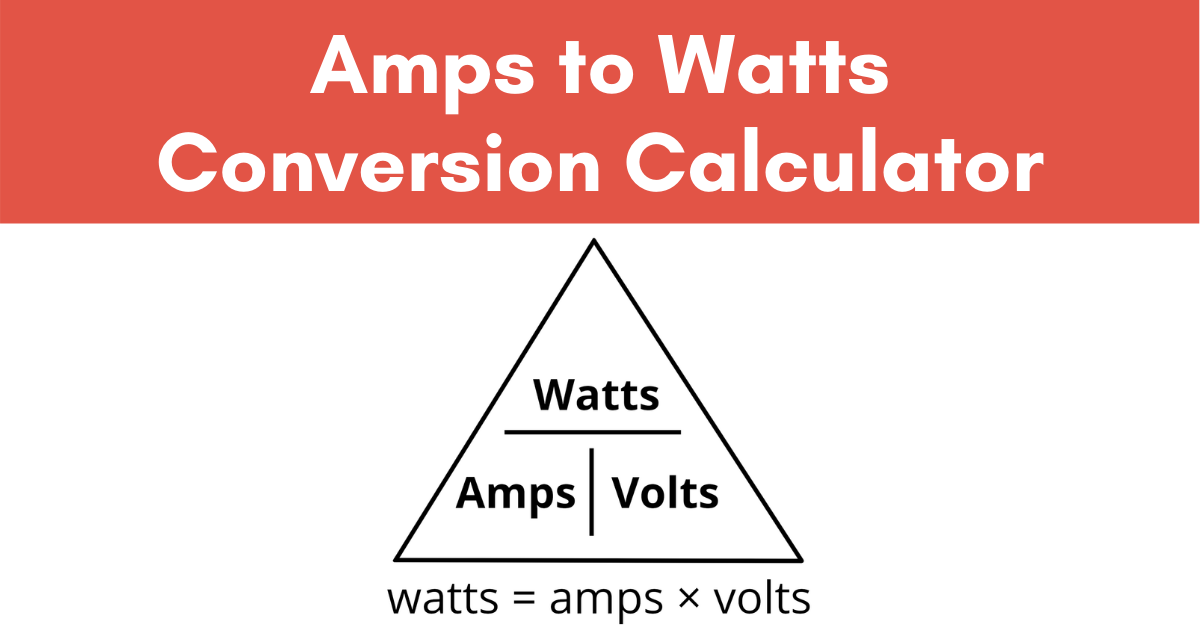
Alright, drumroll please! The secret formula for finding amps from watts is brilliantly straightforward. Are you ready for it?
It’s this:

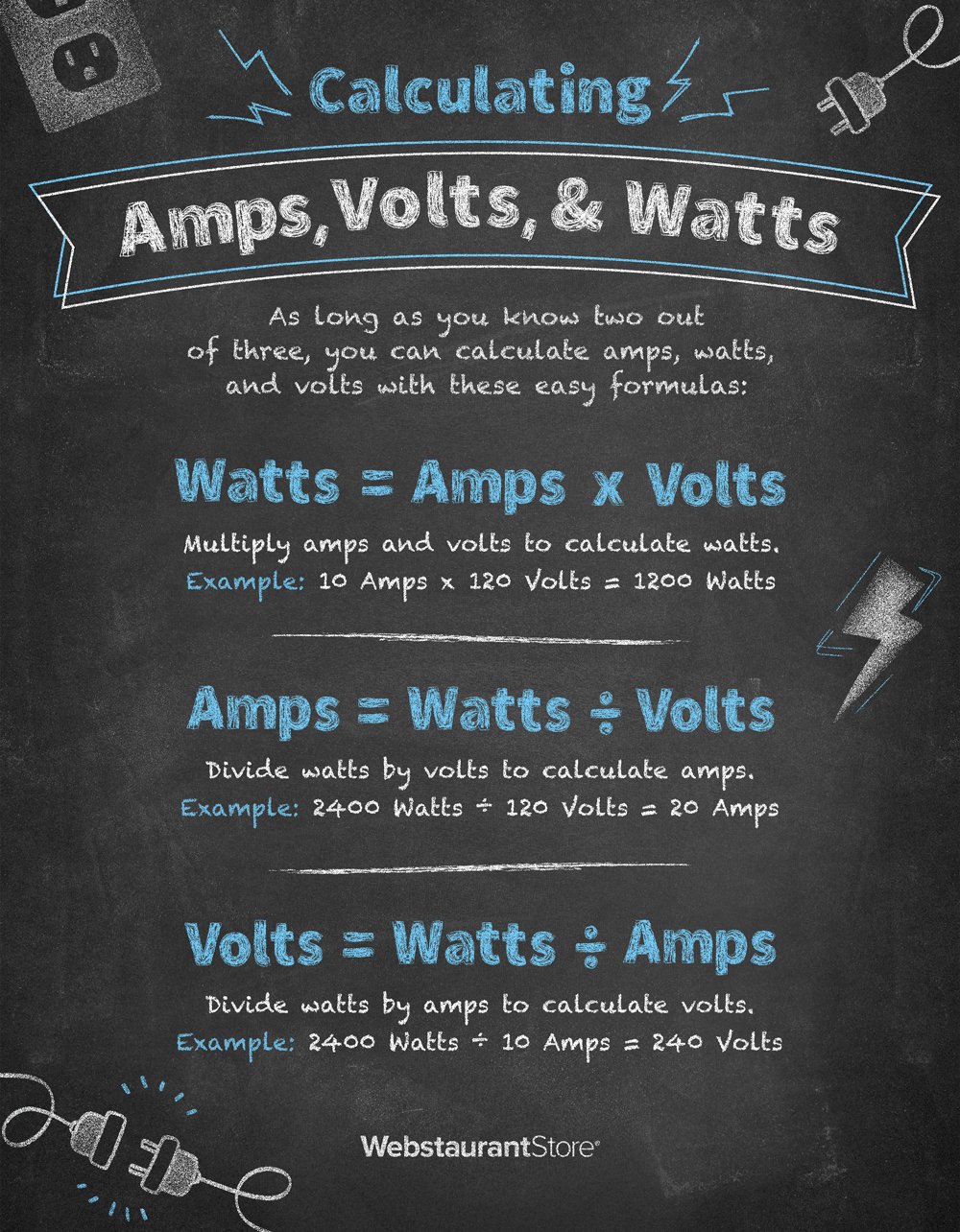
Amps = Watts / Volts
See? We told you it wasn't rocket science! Let's break down each part of this powerhouse equation.
What are Watts? (The "Power Hungry" Rating)
Think of watts as the total power a device consumes or produces. It’s like how much "effort" it takes to run your appliance. The higher the watts, generally the more powerful (or power-hungry) the device. You'll often find the wattage clearly labeled on your appliances – look for a sticker on the back or bottom, or check the user manual. Your hairdryer might be 1500W, your laptop charger 65W, or your microwave 1200W.
What are Volts? (The "Push" of Electricity)
Volts (or voltage) represent the "electrical pressure" or the "push" that makes the electricity flow. In most standard homes in North America, your wall outlets deliver approximately 120 volts (V). Larger appliances like electric dryers, ovens, or central air conditioners often use 240V outlets. For our everyday calculations, assuming 120V for most wall outlets is a safe bet, unless you're dealing with those bigger beasts.
What are Amps? (The "Flow" or "Current")
And finally, amps (short for amperes) are what we’re trying to find! Amps measure the amount of electrical current flowing. Imagine it like the volume of water flowing through a pipe. Too much water for too small a pipe, and you've got a problem (or a tripped breaker, in electrical terms!).

Let’s Do Some Real-World Math (It's Fun, Promise!)
Now that you know the players, let's put our formula to the test with some common household items. Grab a pen and paper (or just use your brain – you've got this!).
Example 1: Your Trusty Hairdryer
Let's say your hairdryer proudly boasts 1500 watts (W) on its label. And since you're plugging it into a standard wall outlet, we know it's getting 120 volts (V).
Using our formula: Amps = Watts / Volts
Amps = 1500 W / 120 V
Amps = 12.5 A

So, your hairdryer pulls 12.5 amps! If your circuit breaker for that room is rated for 15 amps, you know you have a little wiggle room, but not much. Definitely don't run another high-wattage appliance on the same circuit simultaneously!
Example 2: Your Morning Coffee Maker
Your beloved coffee maker, essential for starting the day, is rated at 1000 watts (W). Again, it’s plugged into a 120V outlet.
Amps = 1000 W / 120 V
Amps ≈ 8.33 A
Less than the hairdryer, but still a significant draw! Now you know if your coffee maker and toaster can coexist peacefully on the same circuit without causing a power outage before your first sip.
You Are Now an Electrical Guru!
See how easy that was? You've just performed real-world electrical calculations! You’re no longer guessing; you’re knowing. This simple formula unlocks a deeper understanding of your devices and your home’s electrical system.
No more tripped breakers when you try to vacuum and microwave at the same time. No more wondering if your extension cord can handle your power tools. You're empowered to make smarter, safer decisions, and that, my friend, is a truly awesome feeling!
Keep That Spark Alive!
This is just the beginning of your journey into understanding the fascinating world of electricity. This simple watts-to-amps conversion is a fantastic foundational skill.
Why stop here? What about finding watts from amps and volts? Or volts from amps and watts? It’s all interconnected, and with a little curiosity, you can demystify so much more.
So go forth, armed with your new knowledge! Look at your appliances with fresh eyes, calculate their amp draw, and feel the thrill of understanding. Learning isn’t just about facts; it’s about gaining confidence, solving problems, and feeling more connected to how the world works. Keep exploring, keep learning, and keep that brilliant spark of curiosity shining!