
How To Figure Watts Per Hour
Imagine your favorite kitchen gadget, perhaps that trusty coffee maker that greets you every morning with its comforting gurgle. It hums, it brews, it delivers that perfect start to your day. Have you ever wondered about its secret life, the tiny whisper of power it demands from the wall outlets in your home?
Unlocking this secret is simpler than you might think, a bit like solving a gentle puzzle about your daily routines. We're going to explore how to peek behind the curtain of your home's energy use, not with complex equations, but with a sprinkle of curiosity and a dash of common sense. It’s an adventure waiting to unfold.
First, let's meet the star of our show: Watts. Think of Watts as the muscle power of your appliance, its instantaneous demand for energy. It's how much energy it needs at any given moment to do its job, whether it's chilling your food to perfection or blasting your favorite tunes with vibrant sound.
Must Read
You can often find this crucial number printed right on the appliance itself, a little clue waiting to be discovered. Look carefully on the back, the bottom, or even in the trusty instruction manual that came with it. It might say something clear like "1200W" or "250 Watts" – this is its power rating, its inherent strength.
Let's say our beloved coffee maker proudly displays "900 Watts" on its label. That's its unique power fingerprint, its unmistakable energy signature ready to be read. This number is the first chapter in its story about daily adventures and contributions to your household.
The Appliance's Daily Diary: How Long Does It Work?
Now that we know its strength, the next crucial piece of the puzzle is time – the duration of its active performance. How many hours a day, or even how many precious minutes, does this appliance actually perform its magic for you? This is where the energy story gets personal for your home.
For our coffee maker, it might brew for a grand total of 15 minutes each morning, a quick burst of activity. Perhaps you use it twice a day, once for you and once for a guest, so that’s 30 minutes in total. It's not running constantly, thankfully, just when needed.
Thirty minutes is precisely half an hour, or 0.5 hours when written as a decimal. Keep that number tucked away; it's the precise duration of its daily performance, its moment in the spotlight. This step requires a little observation, a moment of mindful living in your own space.
Consider your refrigerator, a silent workhorse in the kitchen. It doesn't run constantly, but rather cycles on and off throughout the day to maintain a consistently cool temperature inside. Estimating its actual run-time can be a bit trickier than a simple 'on/off' device, but often manufacturers provide average daily Watt-hour estimates, or you can use an inexpensive monitor to measure it yourself.

A powerful gaming PC, on the other hand, might be a more active participant in your energy story. If it’s on for three hours after work, perhaps battling dragons or exploring virtual worlds, that’s three hours of its significant power personality being fully expressed in your living space.
The Grand Calculation: Unveiling Watt-Hours
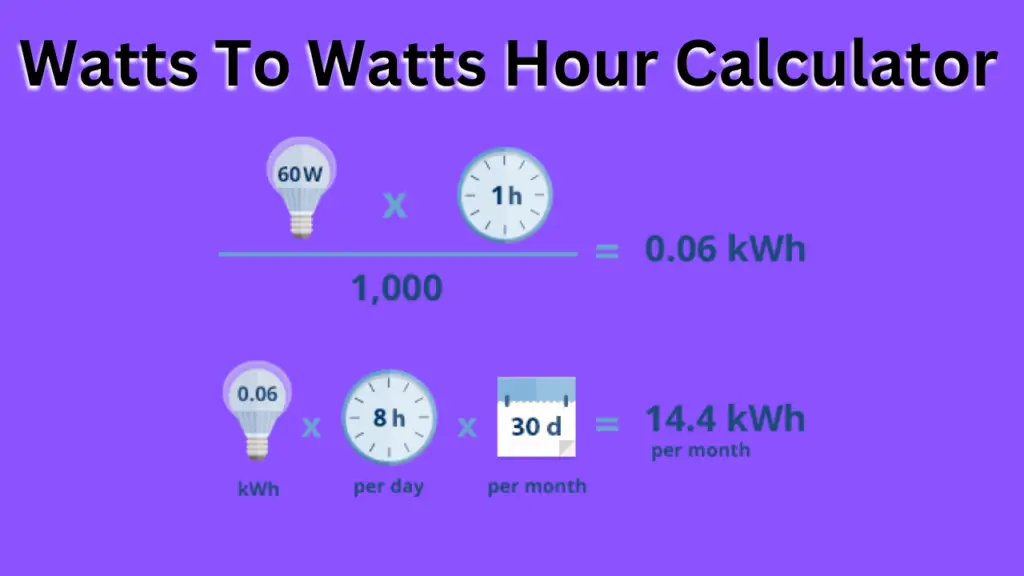
Here's where the two essential pieces of information — the appliance's strength in Watts and its active time in hours — come together in a satisfying way. It's a simple multiplication, as easy as counting apples in a basket or steps on a path.
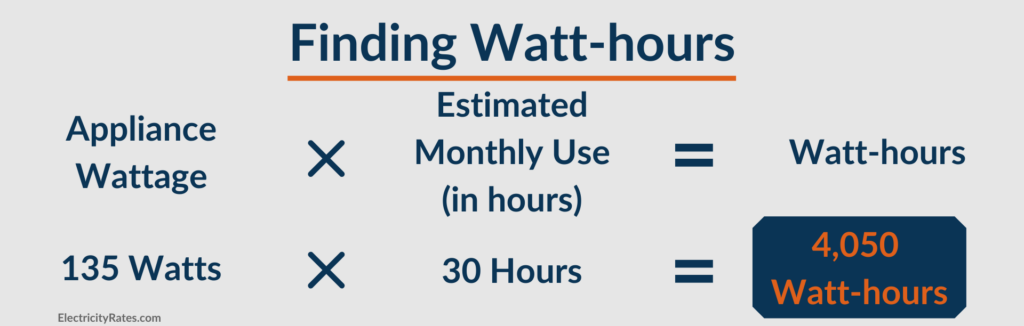
Take the appliance’s Watts and multiply it by the number of hours it's actively working during the day. The delightful result? Watt-hours. This is the true, comprehensive measure of the energy it consumes over that specific period, its full contribution.
For our charming coffee maker (900 Watts) that runs for 0.5 hours: 900 Watts x 0.5 hours = 450 Watt-hours. That's its daily energy footprint, the total energy it sips from your wall, ready to be understood.
This number, 450 Watt-hours, tells you exactly how much energy went into crafting that delightful morning brew. It's a personal, empowering insight into your own energy dance, a glimpse into the rhythm of your home.
Think about a single light bulb, say a classic 60-watt incandescent one. If you leave it on for 5 hours while reading a captivating novel or working on a hobby, it uses 60 Watts x 5 hours = 300 Watt-hours. Simple, elegant, and perfectly understandable, isn't it?
From Watt-Hours to Your Wallet: The Kilowatt-Hour Connection
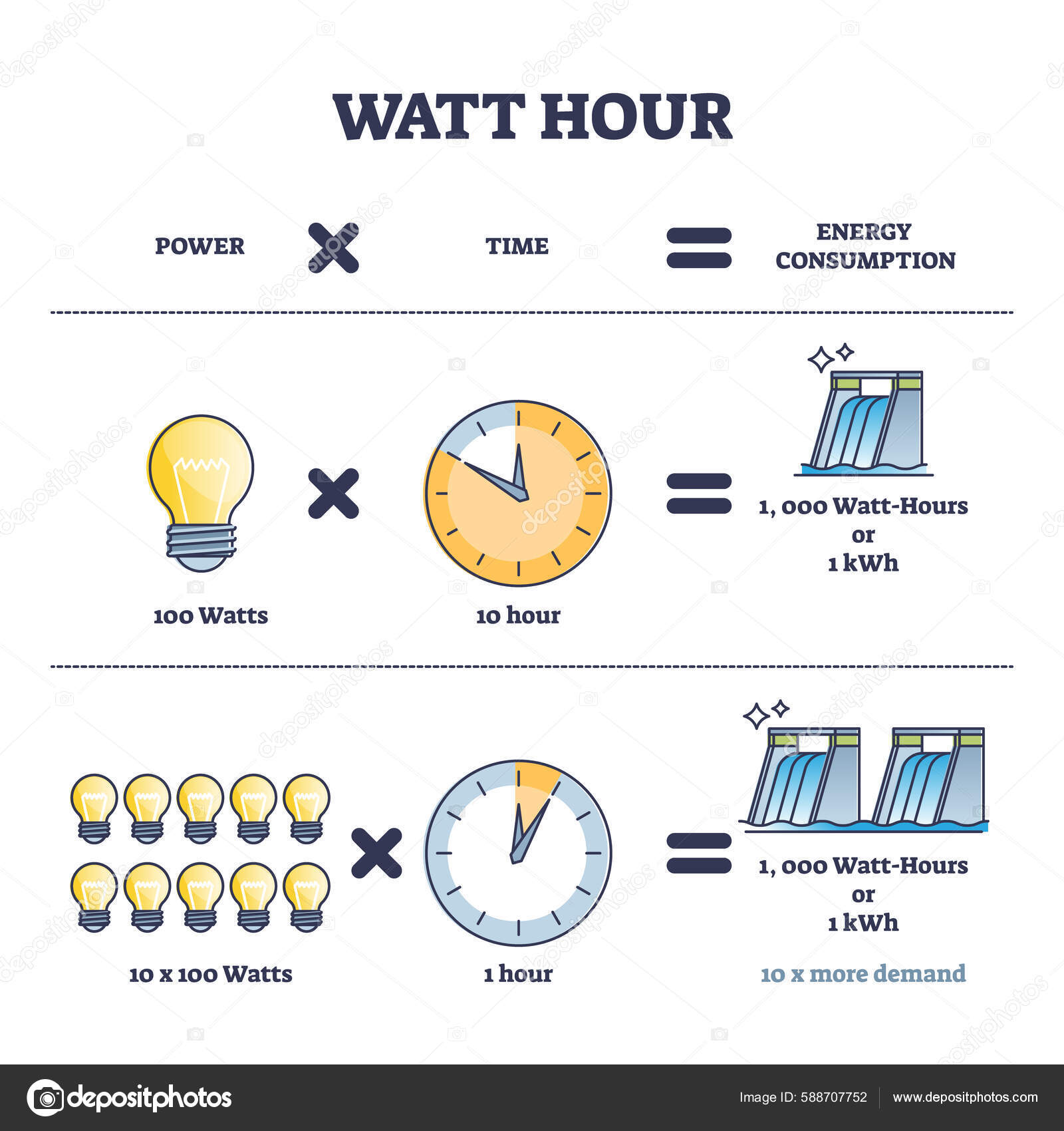
Now, for a slightly bigger picture that connects directly to your household budget. Your electricity bill doesn't usually talk in small Watt-hours; it speaks the language of Kilowatt-hours, often abbreviated as kWh for simplicity.
The "Kilo" prefix simply means a thousand, a handy conversion factor we see everywhere. So, 1 Kilowatt-hour is exactly equivalent to 1000 Watt-hours. It's like changing pennies into dollars – just a different, larger denomination for easier counting and billing purposes.
To convert our coffee maker's daily usage of 450 Watt-hours into Kilowatt-hours, you just divide by 1000. So, 450 / 1000 = 0.45 kWh, a manageable number for your records.
This 0.45 kWh is the precise number your utility company uses to calculate that specific appliance's portion of your bill. It’s the direct, tangible link between your appliance’s daily habit and the numbers you see on your monthly statement, making it all real.
Understanding this conversion lets you connect the dots between your home's gentle hum and the financial figures on your bill. It's incredibly empowering to see how those seemingly small, everyday actions truly translate into tangible costs and potential savings.
You might find your local utility charges around 15 cents per kWh, a common rate in many areas. So, that daily coffee habit costs approximately 0.45 kWh x $0.15/kWh = $0.0675 per day. Not much for a single cup of comfort, is it?
The Surprising Energy Hogs and Silent Sippers
This simple calculation opens up a whole new world of delightful surprises and sometimes, amusing revelations. You might expect big appliances like your washing machine to be the main characters in your energy story, and sometimes they are. But often, it's the quiet background actors that truly steal the show with their constant, gentle draw.
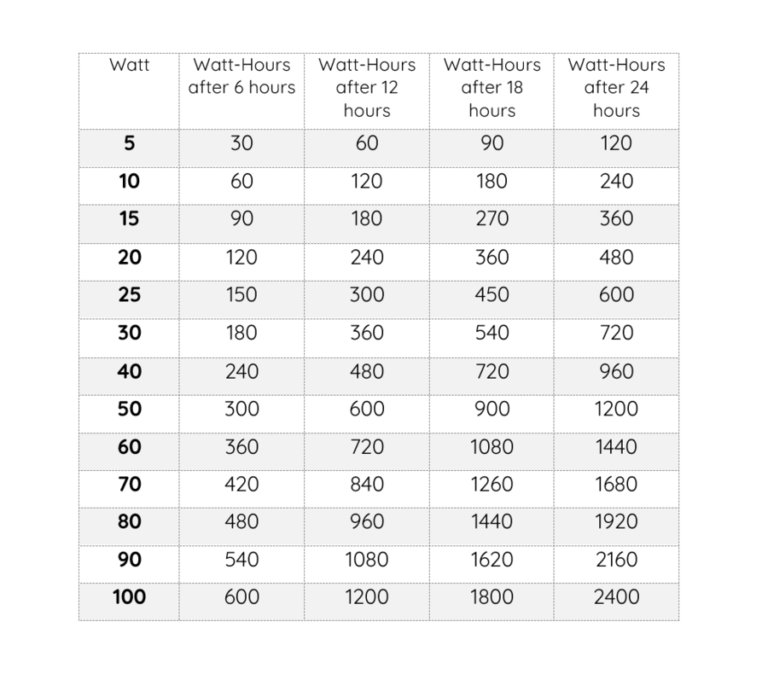
Take the humble phone charger. It might only be 5 Watts, a tiny sip of power, barely noticeable on its own. But if it's plugged in for 24 hours a day, even when your phone isn't attached, that's 5 Watts x 24 hours = 120 Watt-hours daily, a continuous, subtle draw.
Over a month, that seemingly small usage accumulates to 3600 Watt-hours, or 3.6 kWh. Multiply that by many such little devices scattered around your home, and it suddenly starts adding up. This is the realm of energy vampires, devices that draw power even when "off" or idle, just waiting.
"Sometimes the smallest, quietest things can have the biggest impact, like a gentle ripple turning into a powerful wave across your energy bill."
Your TV, for instance, in standby mode, might draw 10 Watts, patiently awaiting your command. If it’s in standby for 20 hours a day (when you’re not actively watching it), that's 200 Watt-hours of silent consumption. It’s always waiting, always drawing a little something, even when the screen is dark.
Imagine a whole house full of these silent sippers: the microwave clock proudly displaying the time, the computer monitor that's "asleep" but not fully off, game consoles patiently waiting for action. Each one is a tiny straw in your home's overall energy drink, collectively adding up.
On the flip side, some things use far less than you'd intuitively think, bringing a pleasant surprise. An LED light bulb, for example, might shine brightly with only 8 Watts of power. Running it for a full 8 hours in your reading nook is just 64 Watt-hours, demonstrating what a truly efficient and modern light source it is.
Beyond the Numbers: A Heartwarming Perspective
Understanding Watt-hours isn't just about saving a few dollars, though that's certainly a nice bonus; it's about fostering a deeper, more mindful connection to your home and your planet. It's about making conscious choices, both big and small, that truly reflect your personal values.
Think of the joy of realizing you can save enough on electricity to treat yourself to an extra coffee from your favorite cafe each month, a small indulgence earned through awareness. Or the quiet satisfaction of knowing you’re actively reducing your carbon footprint, one mindful unplug at a time, contributing to something bigger.
Perhaps you decide to spend a fun afternoon going on an "energy hunt" with your kids, turning it into a game. Discovering which appliances are the biggest guzzlers and which are the most frugal can be a playful and educational way to teach responsibility and environmental awareness.
A grandmother might find immense comfort in knowing her old, beloved sewing machine, which has crafted countless memories, uses only a modest amount of power, allowing her to continue creating beautiful quilts and garments without any guilt. It's about preserving cherished hobbies and traditions.
This new perspective isn't about deprivation or being overly restrictive; it's about profound empowerment. It's knowing exactly what's happening behind the scenes in your home and having the informed choice to nudge things in a direction that feels right for you and your family.
The next time you brew your morning coffee, you'll have a newfound appreciation for those 900 Watts, knowing their brief, powerful dance results in exactly 450 Watt-hours of deliciousness. It's a small story, but a powerful one, unfolding daily in the heart of your home.
So go ahead, embark on this delightful journey and explore the unique energy personalities of your home. It’s a journey of discovery, revealing the hidden lives of your favorite gadgets and empowering you to make choices that truly resonate with your lifestyle, your dreams, and your wallet.