
How To Figure Out How Many Solar Panels You Need
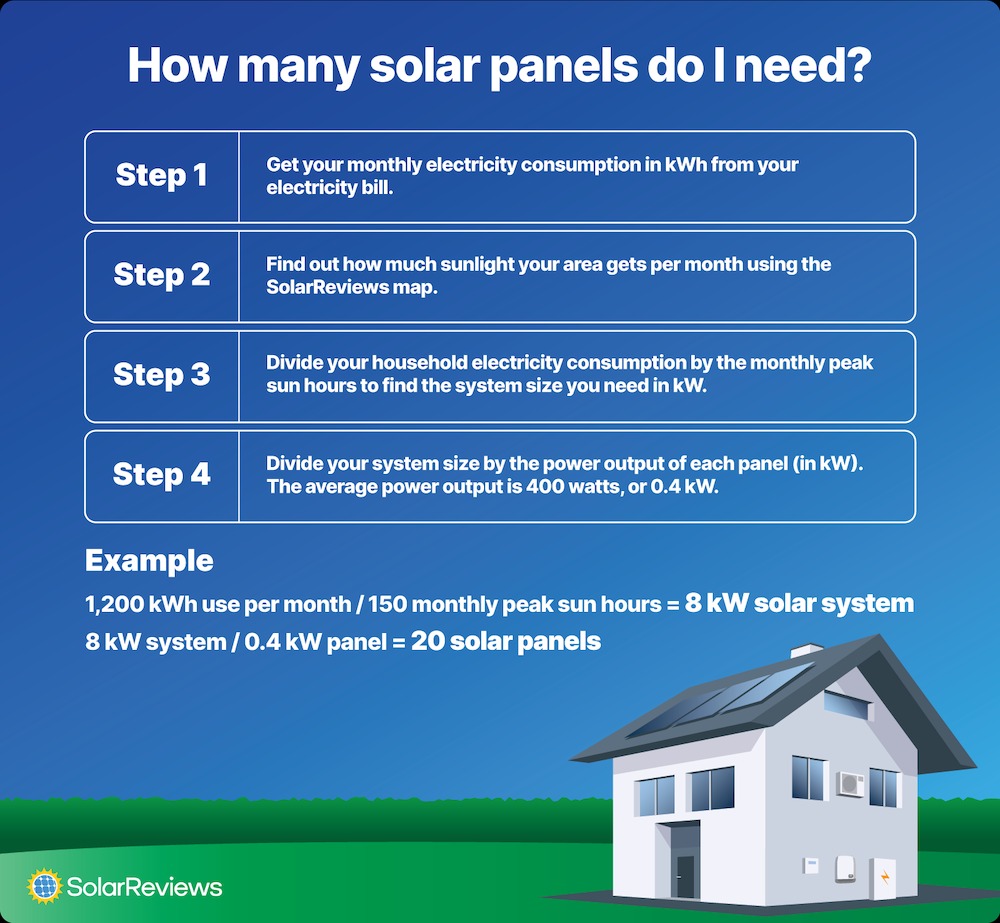
Okay, let's talk about sunshine, savings, and something surprisingly empowering: figuring out how many solar panels you need. Forget feeling like you're back in high school physics – we're keeping this breezy and bright, like a perfectly sunny day.
Step 1: Decode Your Electricity Bill - Your Energy Biography
First, grab your electricity bill. Not the crumpled one you found under the sofa, but a relatively recent one. Think of it as a mini-biography of your energy habits.
Look for the section that shouts about kilowatt-hours, usually abbreviated as kWh. This is the key! It's how much electricity you guzzled last month.
Must Read
Add up your kWh usage for the last 12 months to get your yearly total. Don't worry if it fluctuates, we're going for an average.
Step 2: The Sun's Cooperative Spirit – Location, Location, Location!
Now, let's consider your geographical swagger. Sunshine isn’t a one-size-fits-all deal. Phoenix, Arizona gets a whole lot more sun than, say, Seattle, Washington.
The amount of sun your location gets is measured by something called peak sun hours. You can easily find this information with a quick internet search. Just type in "peak sun hours [your city/state]".
This number represents the average number of hours per day your panels will get the equivalent of full, direct sunlight. The higher the number, the less panels you will need to meet your electricity needs.
Step 3: Panel Power Play – Unveiling the Panel's Personality
Solar panels are like little energy factories, each with its own personality. That is, a power rating, measured in watts (W).

Most residential solar panels range from 300 to 400 watts each. Think of it as their individual power punch.
Higher wattage panels are like the marathon runners of the solar world – they produce more electricity in the same amount of space.
Step 4: The Big Reveal – Crunching the Numbers (Without the Crunching Sound)
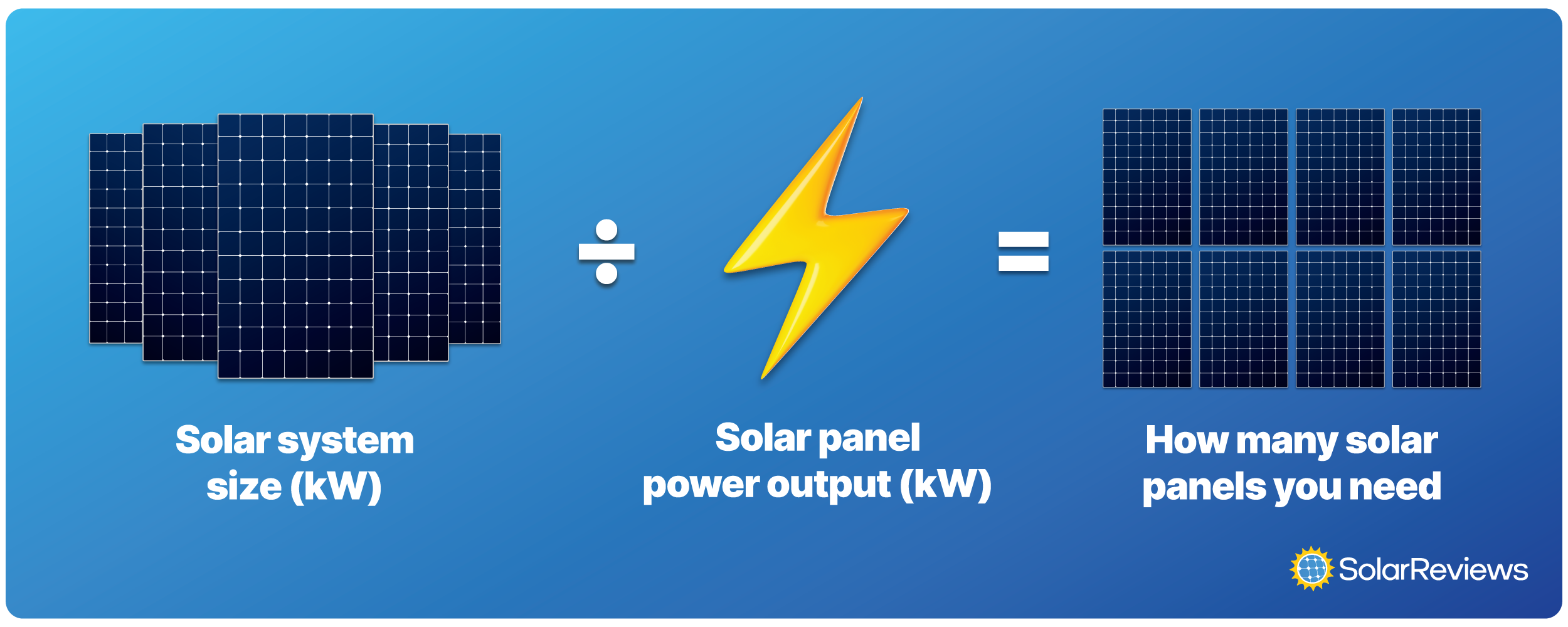
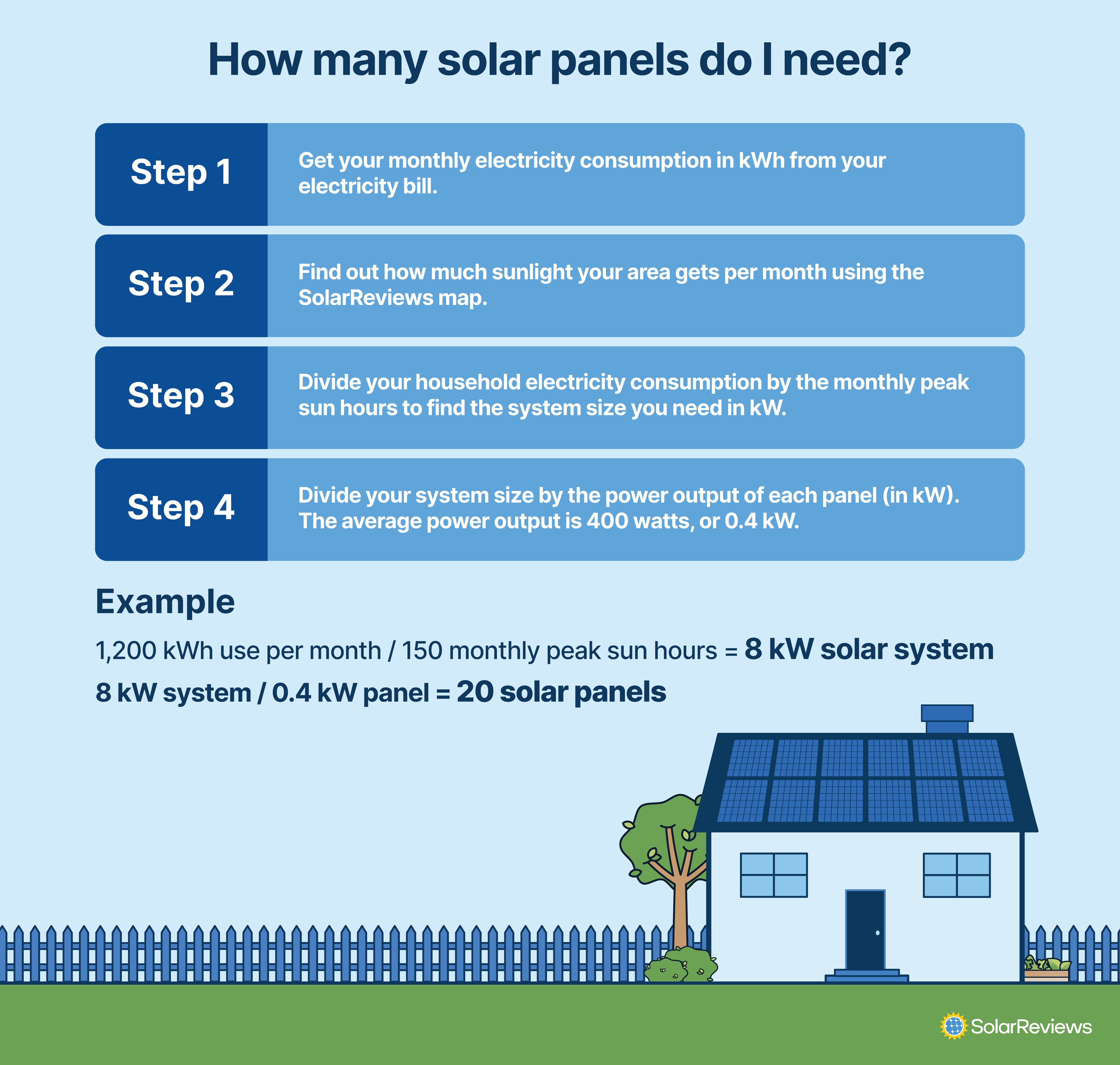
Time to put it all together! Don't panic, we're not doing calculus. Here is a simplified formula that will help guide your estimation:
Number of Panels = (Yearly kWh Used) / (Panel Wattage x Peak Sun Hours x 0.75)
That 0.75 accounts for energy loss due to inefficiencies in the system. It’s like a little buffer, because let's face it, nothing's perfect.
Let's say you use 10,000 kWh per year, you live in a place with 5 peak sun hours, and you're eyeing 350-watt panels. The calculation would look like this:
Number of Panels = (10,000) / (350 x 5 x 0.75) = approximately 7.6. You'd probably round up to 8 panels.
Step 5: Reality Check – Roof Reality and Future Fantasies
Now, take a good, long look at your roof. Is it facing south? (That's generally the best for sun exposure in the Northern Hemisphere). Is it shaded by trees or buildings?
A shaded roof means you'll need more panels to compensate for the reduced sunlight. Think of it as the solar panel version of needing glasses.
Also, consider your future electricity needs. Are you planning on getting an electric vehicle? Adding a hot tub? Factor that into your calculations.
Step 6: The Superhero of Solar - Talk to the Experts
Finally, and perhaps most importantly, talk to solar professionals. They are the superheroes of the solar world.
They can assess your specific situation, give you personalized recommendations, and handle the installation process. It’s like having a sherpa guide you up Mount Solar.

A Few Extra Rays of Sunshine
Remember, this is just an estimate. There are other factors that can affect the number of panels you need, such as the angle of your roof and the type of inverter you use.
Don't be afraid to ask questions! Solar professionals are there to help you understand the process and make informed decisions.
Going solar is a big decision, but it's also an exciting one. You're not just saving money and helping the environment – you're becoming a part of the renewable energy revolution.
Embrace the sunshine! Take pride in making a difference, one solar panel at a time!
A word of caution: Be aware of inflated claims and high-pressure sales tactics. A reputable solar company will be transparent and upfront about costs and benefits. Do your research!
Don’t be afraid to shop around and compare quotes from multiple installers. It’s like dating – you want to find the perfect match for your energy needs.
Consider incentives and rebates that can help reduce the cost of your solar system. These can vary depending on your location, so be sure to check with your local government and utility company.
Adding solar panels isn't just about saving money, it can potentially increase the value of your home. It's like adding a shiny new gadget that keeps on giving.
Solar power makes you feel great. It is like saying "I am independent!", "I am helping the earth". It is an empowering feeling.
Do you know how many watts are produced by the largest solar panel in the world? It is approximately 700W. So cool!
And here's a fun fact: Germany has some of the highest solar energy production in the world, even though it's not exactly known for its sunny weather. It shows that with the right technology and investment, anything is possible.
So, there you have it! Factoring the number of solar panels you require can be simpler than you imagine. Just follow these easy steps. Don't be scared!