
How To Figure Out How Many Solar Panels I Need
So, you're thinking about joining the sun-powered revolution, huh? Awesome! Getting solar panels is like giving your roof a superpower: the ability to generate its own energy. But before you start picturing yourself as a solar overlord, let's figure out how many of these shiny rectangles you actually need.
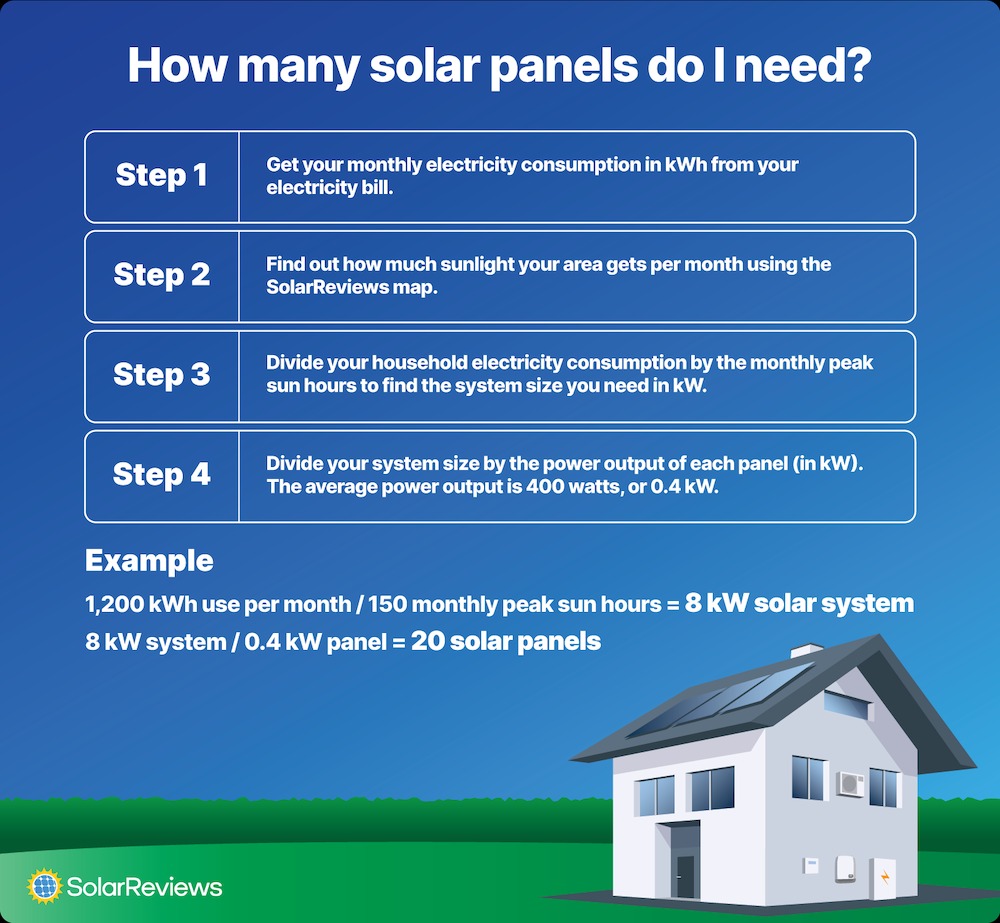
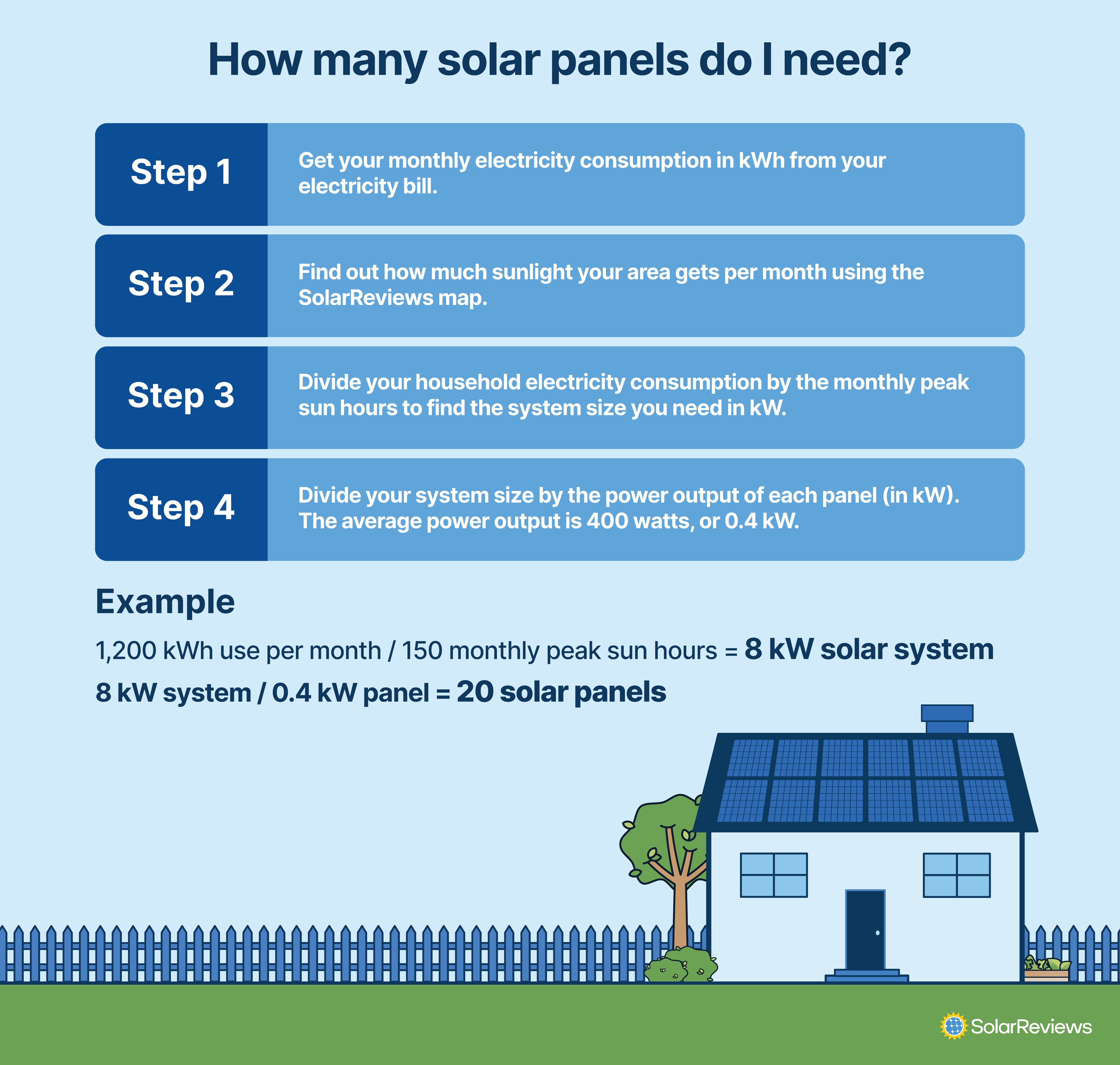
First, grab your most recent electricity bill. Don't worry, you don't need to understand all those tiny numbers. Just look for the big one: your average monthly energy usage in kilowatt-hours (kWh). This is the magic number we’ll be using.
Okay, found it? Great! Let’s pretend your bill says you use 1000 kWh each month. That's your starting point.
Must Read
Step 1: Decoding Your Energy Diet
Think of your energy consumption like your food intake. Some months, you're feasting on electricity, blasting the AC and watching Netflix for hours. Other months, you're practically fasting, just using enough juice to keep the fridge humming. Your average is what matters here.
Consider a story, my aunt Mildred. She was convinced her energy bill was possessed. Turns out, she was just running her Christmas lights year-round. True story! Don’t be like Mildred; understand where your energy is going.
Got your average monthly kWh? Perfect. Now, let’s move on.
Step 2: Sizing Up Your Sunshine
Now, we need to figure out how much sunshine your roof is getting. This isn't about guessing if it's "sunny" or "kinda sunny." There are actually tools for this!
The best place to start is with online solar calculators. The National Renewable Energy Laboratory (NREL) has a tool called PVWatts. You can input your address, roof angle, and direction, and it will estimate how much sunlight your location gets.
These tools measure something called "peak sun hours." This is the equivalent of how many hours per day your roof is getting the full-strength sun. It varies based on location, time of year, and even the weather.
Let's say PVWatts tells you your roof gets an average of 5 peak sun hours per day. Keep that number tucked away; it's about to become very useful.
Step 3: Panel Power Play
Solar panels come in different wattages, which is basically how much electricity they can produce under ideal conditions. A typical residential solar panel is around 300-400 watts.
For simplicity, let's assume you're using 400-watt panels. Now, a little math (don’t worry, it’s easy!). A 400-watt panel produces 0.4 kilowatts (kW).
Remember your 5 peak sun hours? Multiply that by the panel's wattage: 0.4 kW x 5 hours = 2 kWh per day. This means one 400-watt panel in your location would generate about 2 kWh of electricity each day.

Step 4: Crunching the Numbers (The Fun Part!)
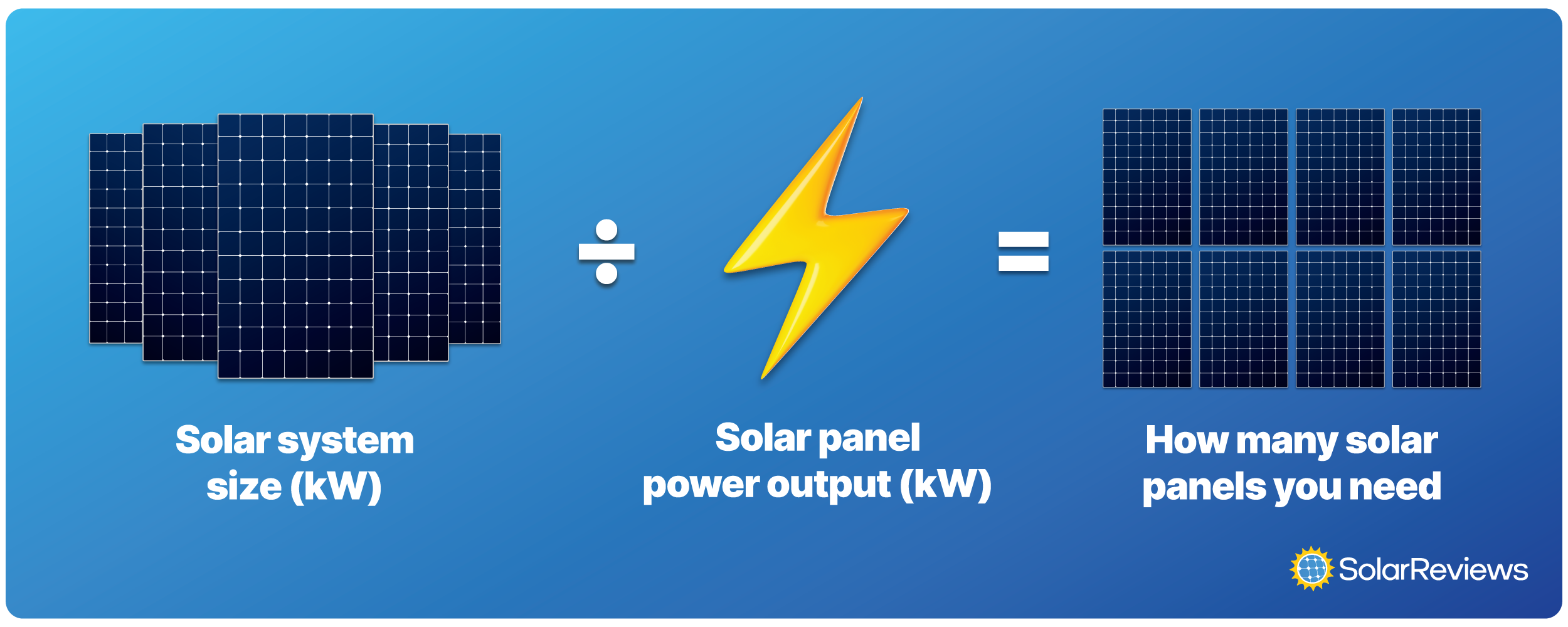
Okay, now we're cooking! You know your monthly energy usage (let's stick with 1000 kWh), and you know how much energy one panel produces per day (2 kWh).
First, figure out your daily energy usage: 1000 kWh / 30 days = approximately 33 kWh per day. Next, divide your daily usage by the amount each panel produces: 33 kWh / 2 kWh per panel = 16.5 panels.
Since you can’t install half a panel, round up to 17! So, based on these estimates, you'd need roughly 17 400-watt solar panels to cover your 1000 kWh monthly usage.
Step 5: The "Real World" Reality Check
Now, before you order 17 panels and start climbing on your roof (DON'T DO THAT!), remember that this is a simplified calculation. There are other factors to consider.
Panel efficiency: Solar panels aren't 100% efficient; some energy is lost in the conversion process. This is something your solar installer will take into account. Also, there are shade issue if your roof shaded by trees for other buildings.

Inverter losses: An inverter converts the DC electricity from your panels into AC electricity that your home can use. Inverters also have some energy loss.
Future energy needs: Are you planning on getting an electric car or adding a pool? Factor in potential future energy increases.
Think about my neighbor, Bob. He installed solar panels thinking he'd be energy-independent forever. Then, he bought a Tesla and realized he needed to add more panels! Learn from Bob's…enthusiasm.
Step 6: Talk to the Pros (Seriously!)
The best way to get an accurate estimate of how many solar panels you need is to consult with a qualified solar installer. They'll assess your specific situation, take into account all the relevant factors, and provide you with a customized quote.
They'll also handle all the permitting and installation, so you don't have to risk falling off your roof (which is a definite plus!).
Don't be afraid to get multiple quotes and compare prices. Remember, you're investing in a system that will last for decades, so do your research.
Choosing a reputable installer is crucial. Read reviews, check their credentials, and make sure they have a good track record.
Step 7: Enjoy the Sun-Kissed Savings
Once your solar panels are installed and humming along, you can start enjoying the benefits of clean, renewable energy. You'll be reducing your carbon footprint, saving money on your electricity bill, and contributing to a more sustainable future.
Plus, you can brag to all your friends about how you're powered by the sun. Who doesn't love bragging rights, especially when they involve saving the planet?
So there you have it! Figuring out how many solar panels you need isn't rocket science. A little bit of math, a dose of common sense, and a consultation with a pro will have you soaking up the sun's energy in no time.
Just remember Mildred, Bob, and the power of peak sun hours, and you'll be well on your way to a brighter, more sustainable future. Happy solar-ing!