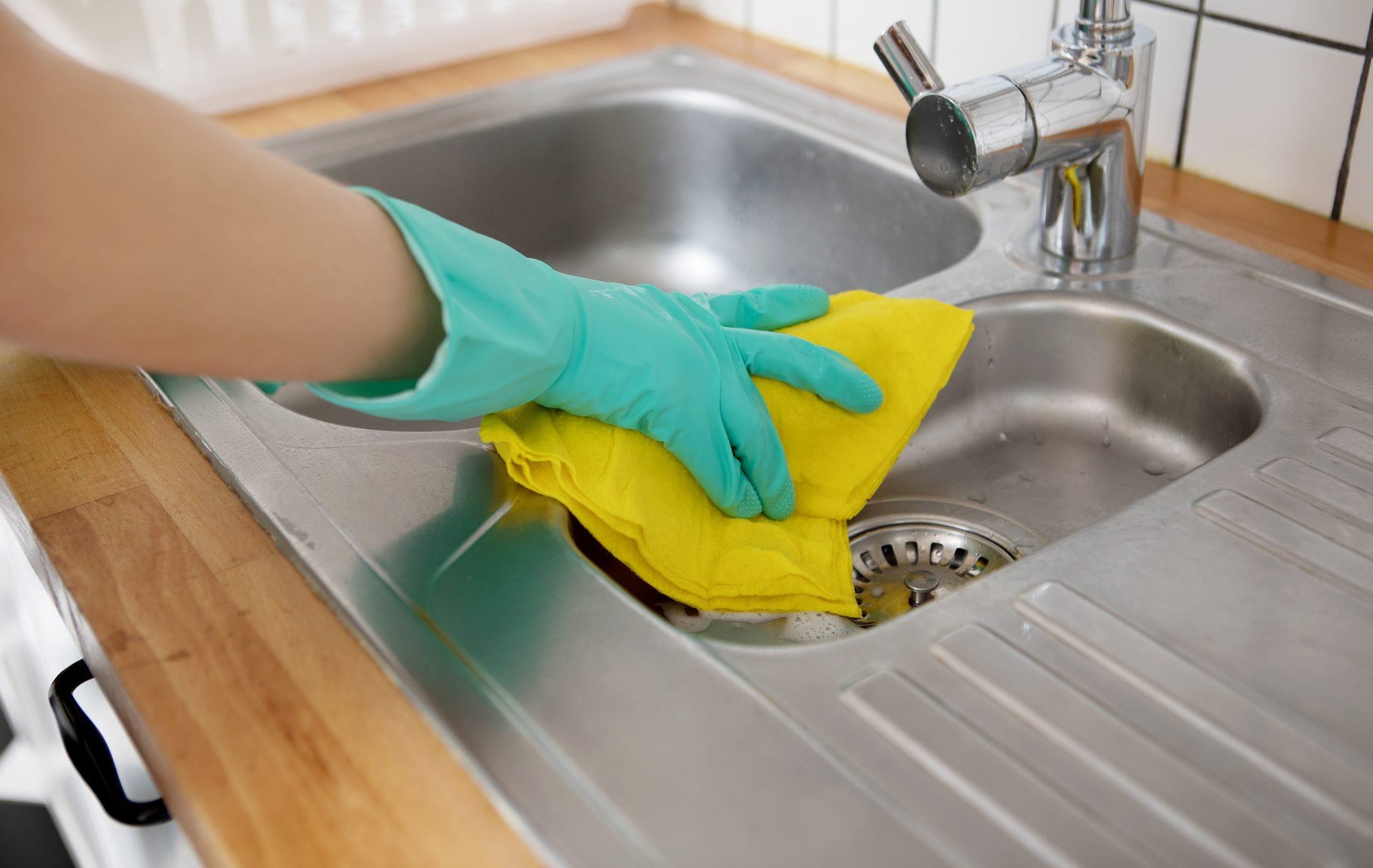
How To Disinfect Stainless Steel Kitchen Sink

Let's face it, nobody loves cleaning the sink. But a sparkling, germ-free stainless steel kitchen sink? Now that's something we can all appreciate! Think about it: your sink is the workhorse of your kitchen. It's where we prep food, wash dishes, and sometimes even rinse off muddy vegetables from the garden. It's a constant battleground against grease, grime, and who-knows-what-else. So, keeping it clean isn't just about aesthetics; it's about maintaining a healthy and hygienic kitchen environment.
The benefits of a disinfected sink extend far beyond just a pretty shine. A clean sink helps to prevent the spread of bacteria and germs that can cause illness. Think of all the raw meat, poultry, and produce that pass through your sink. Without regular disinfecting, these can leave behind harmful pathogens like Salmonella and E. coli. A disinfected sink also helps to eliminate unpleasant odors that can linger after washing particularly pungent foods like onions or garlic. In essence, disinfecting your sink is an investment in the overall health and well-being of your household.
We use our stainless steel sinks for everything! From washing everyday dishes and utensils to prepping ingredients for that Sunday roast, the sink is constantly exposed to food particles, grease, and water. You might even use it to bathe your small dog (we've all been there!). Because of this constant use, it’s crucial to incorporate regular disinfecting into your cleaning routine. Think of it as a mini spa day for your sink!
Must Read
So, how can you make disinfecting your stainless steel sink more effective and, dare we say, even enjoyable? Here are a few practical tips:
- Start with a good scrub: Before disinfecting, make sure you've removed any visible food particles and grime. A simple scrub with dish soap and a sponge or brush is a great first step. Rinse thoroughly.
- Choose your weapon wisely: There are several effective disinfecting options. Bleach diluted in water (always following the manufacturer's instructions!) is a powerful disinfectant. However, be cautious when using bleach, as it can damage certain surfaces and should never be mixed with ammonia. Vinegar and baking soda is a more natural alternative, creating a fizzing action that can help to loosen debris and kill germs. You can also find commercially available disinfectant sprays specifically designed for kitchen surfaces.
- Let it sit: Once you've applied your chosen disinfectant, let it sit for the recommended amount of time. This allows the disinfectant to properly kill bacteria and germs.
- Rinse thoroughly: After the disinfecting time is up, rinse your sink thoroughly with clean water. This is especially important if you've used bleach.
- Dry it off: Drying your sink with a clean cloth will help to prevent water spots and keep it looking shiny. Plus, a dry surface is less hospitable to bacteria growth.
- Don't forget the extras: Pay attention to areas like the drain, faucet, and sprayer. These can also harbor bacteria. Give them a good scrub and disinfectant treatment as well.
By following these simple tips, you can keep your stainless steel kitchen sink clean, disinfected, and looking its best. Remember, a little effort goes a long way in maintaining a healthy and hygienic kitchen. So, grab your sponge, choose your disinfectant, and get ready to give your sink the TLC it deserves! You (and your family) will be glad you did.