
How To Determine The Direction Of Electric Field

Alright, gather 'round, folks! Let's talk about something that sounds super intimidating but is actually pretty darn cool: electric fields. And specifically, how to figure out which way they're pointing. Think of it like figuring out which way the office coffee maker is brewing – crucial information for a productive day, right? Except, you know, with invisible forces and without the caffeine jitters.
What's the Big Deal with Electric Fields, Anyway?
So, what is an electric field? Imagine you're at a party and someone REALLY doesn't like you. They're emitting a vibe, a negative energy field, that pushes you away. That, in a nutshell, is kinda what an electric field is. Except instead of bad vibes, it's force. And instead of an annoying partygoer, it's a charged particle. An electric field is the region around a charged object where another charged object would experience a force.
It's like this invisible spiderweb that's spun from charge. If you plop another charged critter (another bug, maybe?) onto the web, it'll either be pulled towards the spider (if it's negatively charged and the spider is positive) or repelled away (if they're both positive – nobody likes a crowded web!).
Must Read
The Test Charge Tango: Our Secret Weapon
Okay, so how do we figure out which way this invisible spiderweb is facing? We need a… wait for it… TEST CHARGE! Dramatic music sting
A test charge is a hypothetical, infinitely small, positively charged particle. Infinitely small because we don't want it messing with the field we're trying to measure. Imagine trying to measure the wind direction with a giant billboard – it would totally skew the results, right? We want something tiny, like a feather. And positively charged because, well, that's just the convention. Blame Ben Franklin, or whoever decided these things centuries ago. It's all their fault!
Here's the rule, and it's a BIGGIE:
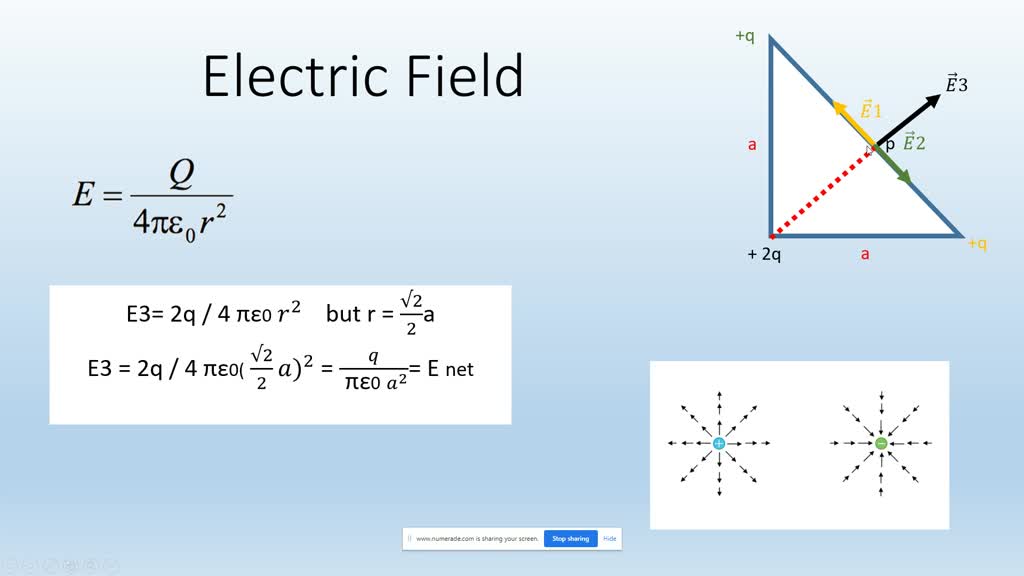
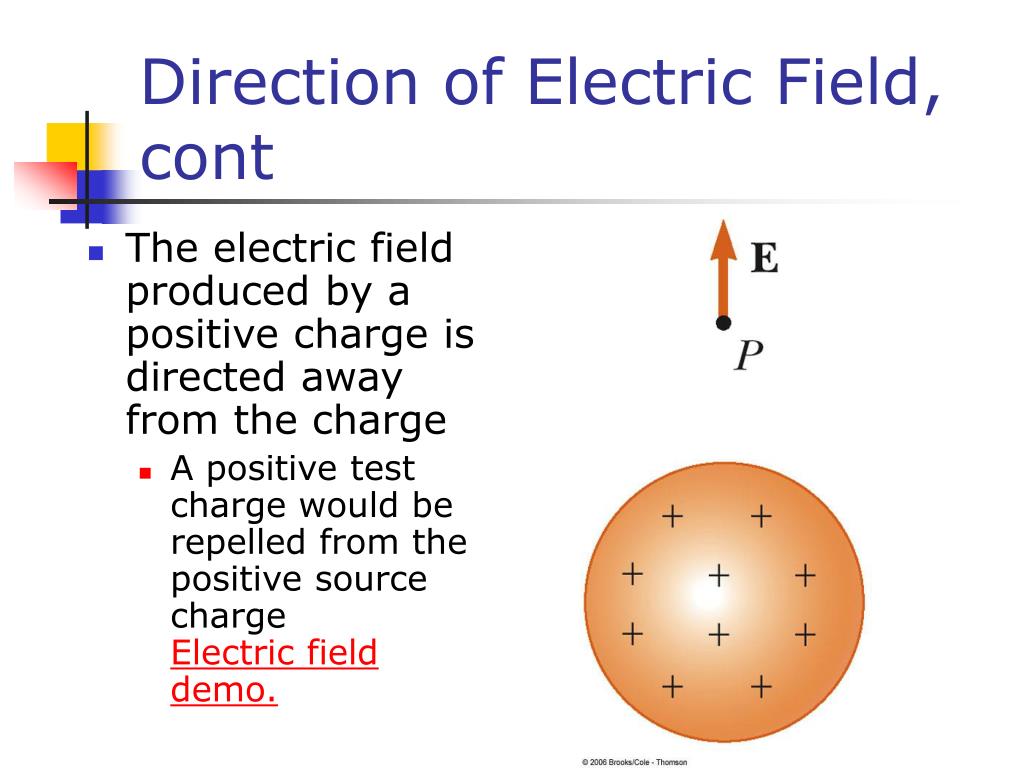
The direction of the electric field is the direction of the force that a positive test charge would experience if placed in that field.
Think of it this way: If you let go of the test charge, which way does it ZOOM? That's the direction of the electric field! It’s that simple. No, seriously.

Putting It Into Practice: Field Trip! (A Mental One)
Let's say we have a positively charged particle. We plop our positively charged test charge nearby. What happens?
BOOM! Repulsion! The test charge gets pushed away from the positive particle. Therefore, the electric field lines point away from positive charges. Imagine tiny arrows shooting outwards, like a porcupine doing a headstand.
Now, let's try a negatively charged particle. Our positively charged test charge gets pulled towards it, like a moth to a flame (a negatively charged, force-field-generating flame!). Therefore, the electric field lines point towards negative charges. Think of it as a drain, sucking everything in.
Important Note: Electric field lines NEVER cross. It would be like two arrows arguing over which direction is the "real" direction. The universe doesn't like arguments. They're bad for productivity.
Visualizing the Invisible: Field Lines
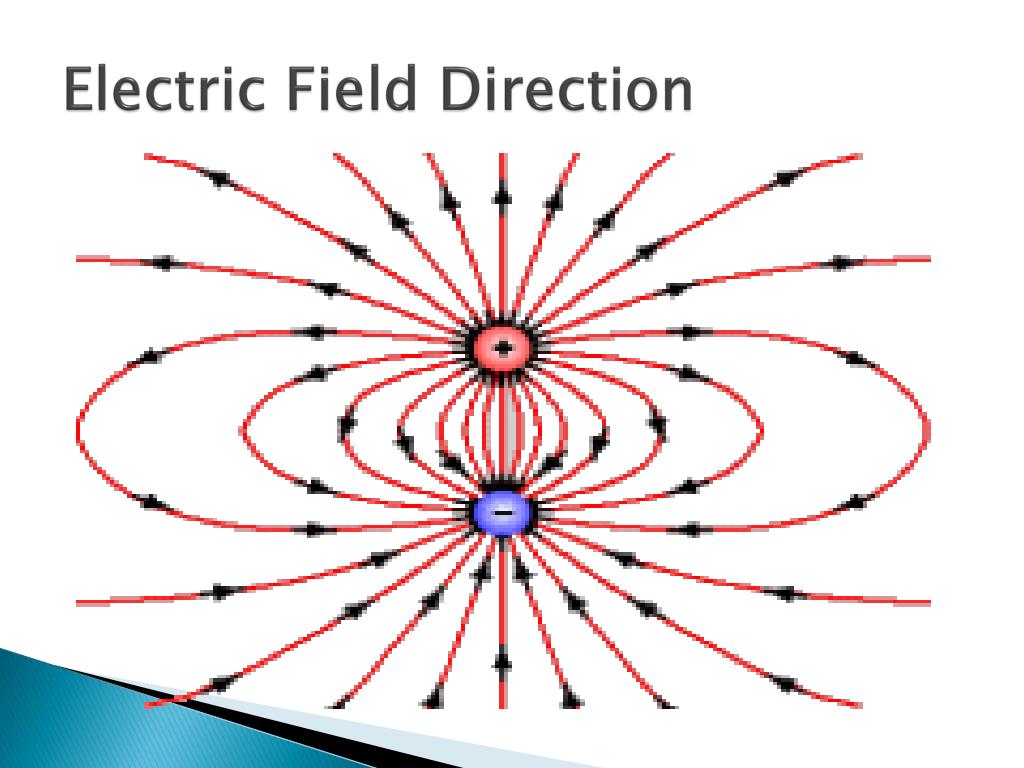
Electric field lines are a way to visualize the field. They start on positive charges and end on negative charges. The closer the lines are together, the stronger the field. Think of it like a really busy highway – lots of cars close together means lots of traffic (i.e., strong field!).
So, if you see a picture with electric field lines radiating outwards from a point, you know there's a positive charge lurking there. If they're converging inwards, it's a negative charge party. And if the lines are all parallel and evenly spaced, you've got a uniform electric field – a rare and beautiful thing, like a unicorn riding a Roomba.
Advanced Shenanigans: Multiple Charges!
Now, things get really interesting when you have multiple charges. The electric field at any point is the vector sum of the electric fields created by each individual charge. Translation: you have to add up all the individual forces (taking into account their direction, of course) to figure out the net force on your test charge, and therefore, the net direction of the electric field.
It's like having several people all yelling at you at once. You have to figure out which voice is the loudest and which direction it's coming from to figure out who you should probably agree with (or run away from!).
Final Thoughts: Embrace the Field!
So there you have it! Determining the direction of an electric field isn't so scary after all. Just remember the test charge, the force it would experience, and the magic of electric field lines. Now go forth and conquer the electrostatic universe! And maybe grab a coffee – you've earned it!