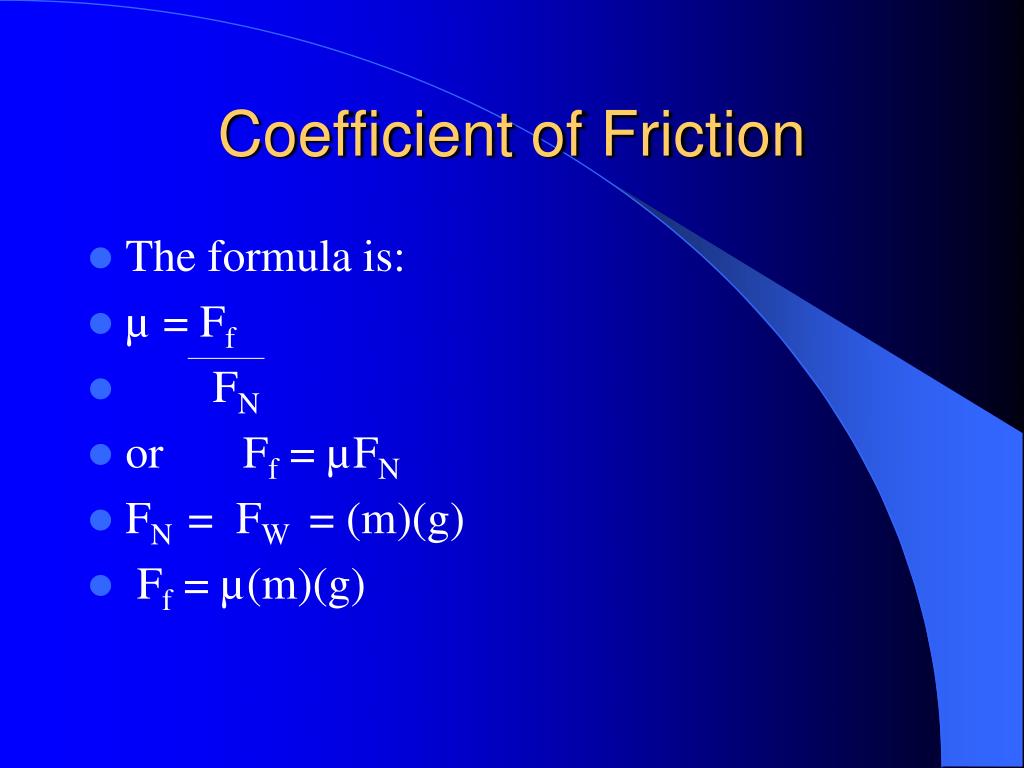
How To Determine The Coefficient Of Friction
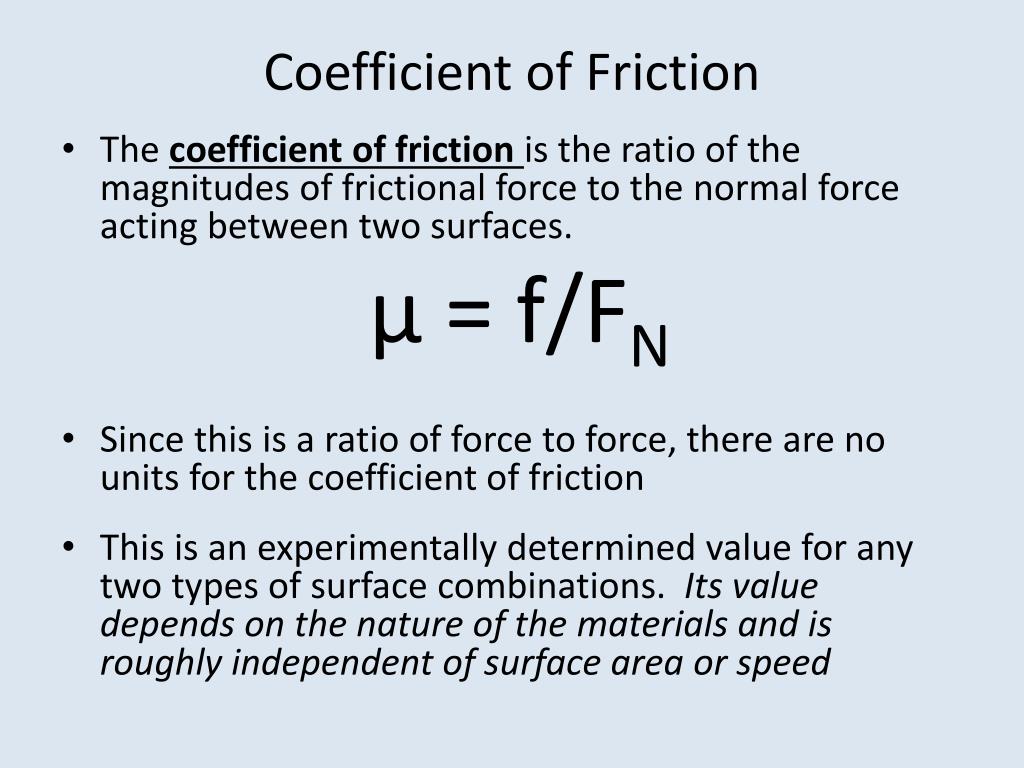
Ever wondered why some things slide super easily while others just stubbornly stick? It's all thanks to a little something called friction! And guess what? We can actually measure how "sticky" things are with something called the coefficient of friction. Sounds complicated, right? Don't worry, it's way more fun than it sounds!
The Sliding Block Method: A Classic!
Imagine you've got a block. Any block will do! A wooden block, a plastic block, even a block of cheese (though maybe don't use cheese... things could get messy). Now, put that block on a flat surface, like a table. Slowly, slowly, start tilting the table. Keep going, keep going... and BAM! The block starts to slide!
The angle at which it starts sliding? That's the key! This angle is directly related to the coefficient of static friction – basically, how much "oomph" it takes to get something moving in the first place. It's like the block is saying, "Okay, okay, I'll move... but you gotta give me this much of a slope first!" Think of it as the surface's way of whispering its secrets to you.
Must Read
Want to get mathematical? The tangent of that magic angle is the coefficient of static friction. Yep, it's that simple! Grab a protractor, tilt that table, and do some trigonometry. It's like being a detective, solving a physics mystery with nothing but a block and a tilted surface!
The Pulling Method: Strength Required!
Okay, tilting tables isn't your thing? No problem! Let's try pulling! Put that block back on the table. This time, attach a spring scale to it. A spring scale is that little gadget that measures how much force you're using to pull. Start pulling gently. The block probably won't move at first. Keep pulling, pulling, pulling... and finally it budges!
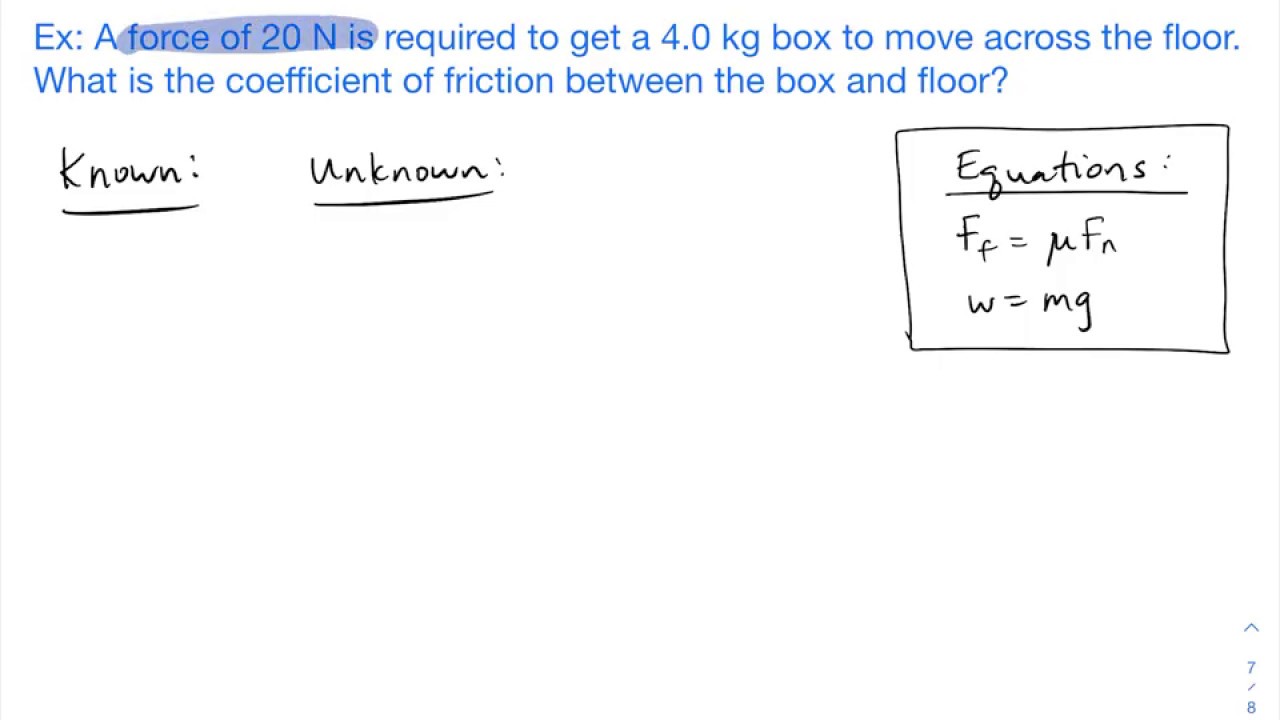
The reading on the spring scale right before the block starts to move is the force you need to overcome static friction. Now, you also need to know how heavy the block is (its weight). Divide the force you used to pull the block by the weight of the block, and voila! You've got another way to find the coefficient of static friction!
It’s like a mini tug-of-war, except you're playing against the table itself. This method is awesome because you get to feel the resistance firsthand. You’re literally battling friction!
Dynamic Friction: Keeping Things Moving!
So, you've conquered static friction. The block is sliding! But friction doesn't disappear once things are in motion. Nope, there's a whole other kind of friction called dynamic friction (or kinetic friction). It's the force that opposes motion when something is already moving.
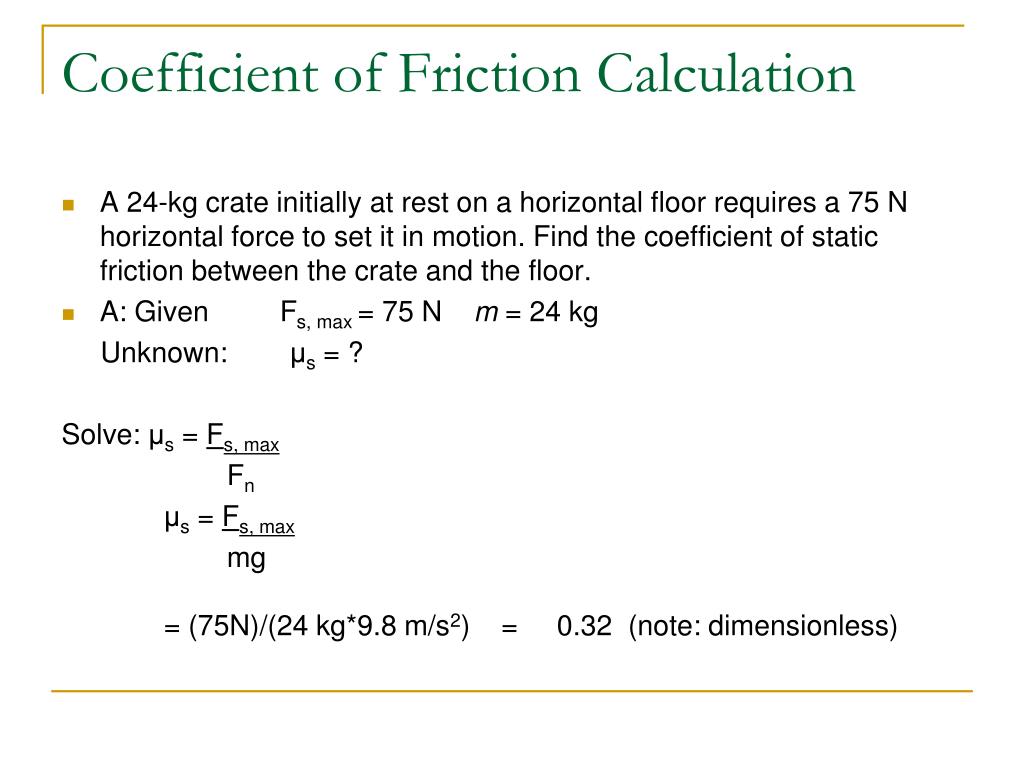
To figure this one out with the pulling method, you keep pulling the block at a constant speed. This is important! If you're speeding up or slowing down, things get more complicated. The reading on the spring scale while you're pulling at a constant speed is the force you need to overcome dynamic friction. Divide this force by the weight of the block, and boom! You’ve just found the coefficient of dynamic friction.
Dynamic friction is usually less than static friction. It's easier to keep something moving than it is to start it moving. Think about pushing a heavy box. Getting it started is the hardest part, right? Once it's sliding, it's a little easier to keep it going.

Why is This So Cool?
Finding the coefficient of friction isn't just about numbers and formulas. It's about understanding how the world works! It helps us design safer brakes, build more efficient machines, and even understand how penguins slide across the ice (seriously!).
Plus, it's a chance to get hands-on with physics! You don't need fancy equipment or a lab coat. Just a block, a table, and a little bit of curiosity. So, grab some supplies, find a friend (or not!), and start experimenting! You might be surprised at what you discover. You’ll find that friction is more fascinating than you ever imagined!
So, what are you waiting for? Go forth and conquer the world of friction! Who knows, maybe you'll become the next Isaac Newton... or at least have a really interesting conversation starter at your next party!