
How To Determine Horsepower Of An Electric Motor

Ever find yourself staring at an electric motor, humming with potential, and wondering just how much oomph it's packing? We're not talking about the cute, miniature ones powering your kid's toys; we're talking about the serious contenders – the workhorses behind everything from your pool pump to industrial machinery. Figuring out their horsepower (HP) might seem daunting, but trust us, it's easier than parallel parking a DeLorean. Let's dive in!
Decoding the Nameplate: Your Secret Weapon
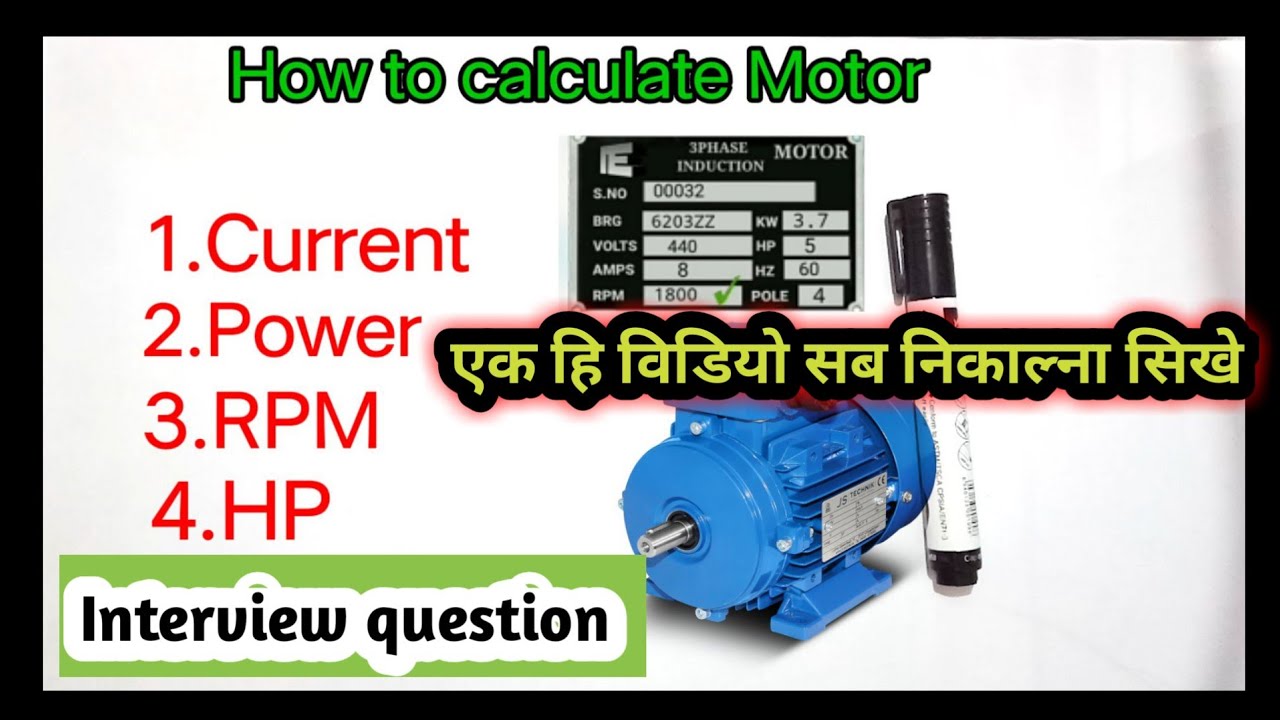
Think of the motor's nameplate as its vital statistics report. It's typically a metal plate affixed to the motor’s housing, and it's brimming with information. Finding it is your first crucial step. This isn't some Indiana Jones-level treasure hunt; it's usually right there, staring back at you. Don't be intimidated by the numbers and abbreviations; we'll break it down.
Look for these key pieces of information:
Must Read
Sometimes, the horsepower is directly printed on the nameplate. If you see "HP" followed by a number (e.g., "HP 5"), congratulations! You've hit the jackpot. But what if it's not there? Don't worry; we've got a backup plan.
The Calculation Route: Math That Doesn't Suck
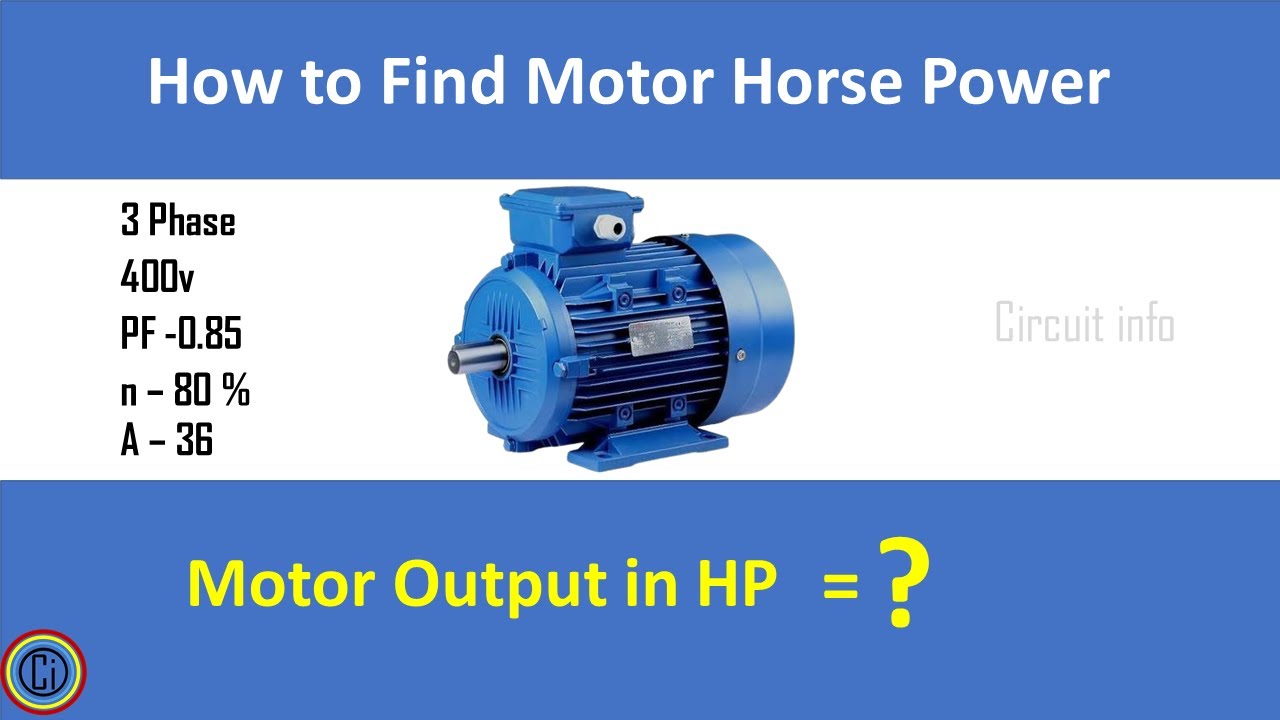
If the horsepower isn't explicitly stated, we can calculate it using a formula. This isn't quantum physics; it's more like a really useful recipe. Here's the formula, broken down for clarity:

Horsepower (HP) = (Voltage (V) x Current (A) x Efficiency x Power Factor) / 746
The number 746 is a constant: the number of watts in one horsepower. Think of it as the cheat code to unlock the motor’s potential.
Let's imagine a scenario. You have a motor with these specs:
Plugging these values into our formula gives us:
HP = (230 x 10 x 0.85 x 0.9) / 746 = 2.35 HP (approximately)
So, that motor is roughly a 2.35 horsepower beast! Remember to pay close attention to units and make sure your voltage is in volts, current in amps, and efficiency and power factor as decimals (e.g., 85% = 0.85).
Practical Tips and Considerations
Double-check your readings: Ensure you're using accurate values from the nameplate. A small error can throw off your calculation.
Use a calculator: Seriously. Unless you're Rain Man, save yourself the headache and let a calculator do the heavy lifting.
Account for Service Factor: Some motors have a service factor (SF) greater than 1.0. This indicates the motor can handle occasional overload. If present, you can potentially multiply the calculated HP by the service factor for a peak horsepower rating, but understand you are likely shortening the lifespan of your motor.
Safety First: Always disconnect the motor from the power source before inspecting it or attempting any measurements. Electricity is not your friend if you're careless.
Why Does Horsepower Matter, Anyway?
Knowing the horsepower of an electric motor is crucial for several reasons. It helps you select the right motor for a specific application, ensuring it can handle the required load without overheating or failing. It's also essential for calculating energy consumption and determining the appropriate size of electrical circuits and protective devices. Think of it as matching the right tool to the job – you wouldn't use a butter knife to chop firewood, would you?
Whether you're a seasoned engineer, a DIY enthusiast, or just curious about the world around you, understanding how to determine the horsepower of an electric motor is a valuable skill. It's a reminder that even seemingly complex systems can be understood with a little bit of knowledge and the right approach.