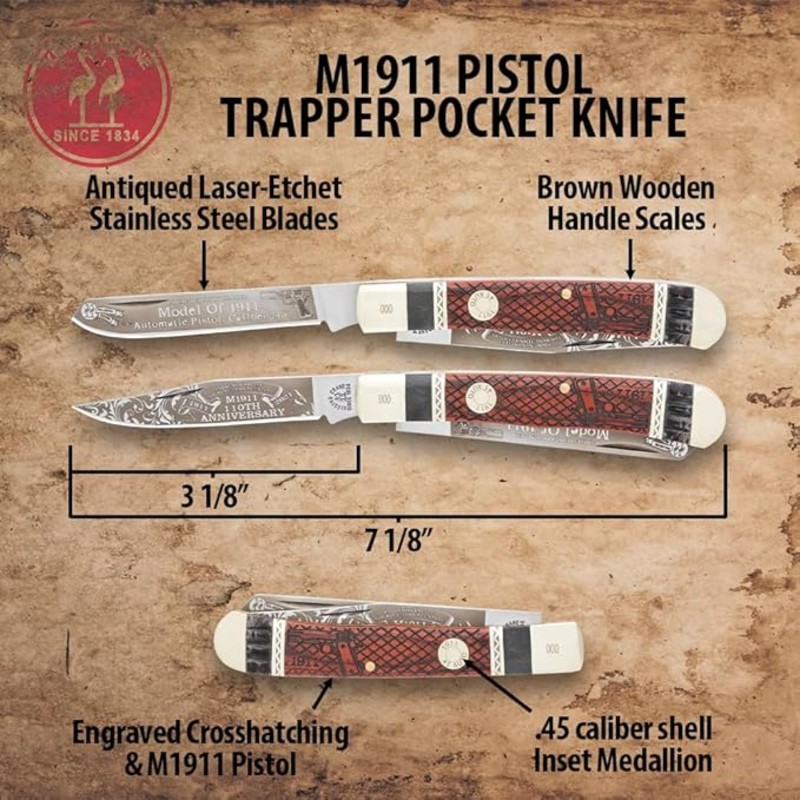
How To Date A Kissing Crane Knife

Figuring out the age of a vintage Kissing Crane knife can feel like solving a mini-mystery, and that's part of what makes it so enjoyable! Whether you're a seasoned collector or simply stumbled upon an old knife in your grandpa's attic, knowing how to "date" it unlocks a piece of history and adds to its story. Plus, understanding its age can significantly impact its value, making it a useful skill for both buyers and sellers.
Why bother trying to determine the age? For beginners, it's a fascinating way to connect with the past. Imagine holding a knife that might have been used by a farmer, a soldier, or even a craftsman a century ago! For families, it's a great opportunity to learn together and create a tangible link to your ancestors. If you're a serious hobbyist or collector, accurately dating a Kissing Crane knife is essential for understanding its rarity, authenticity, and overall value in the market.
So, how do you go about "dating" a Kissing Crane? The most important clue lies in the markings on the tang – that's the part of the blade that connects to the handle. The company, originally founded in Germany, used various marks over the years. Look closely! Early knives often featured a detailed crane design. As time went on, the design might have become simpler or more stylized. Some marks include the city of origin, such as "Solingen," a renowned German cutlery center. The absence of "Germany" after "Solingen" usually indicates a pre-World War I knife. Variations in the placement and style of the words and symbols are also key indicators.
Must Read
Another factor to consider is the handle material. Celluloid, bone, stag horn, and wood were all commonly used, but the specific type and style can help narrow down the age range. For instance, certain types of celluloid were popular during specific periods. Researching the types of materials used during different eras of knife manufacturing can provide valuable context.
Finally, examine the blade shape and construction. The grind, finish, and overall design of the blade can reflect manufacturing techniques and styles prevalent during certain periods. Look for clues like the type of steel used, the presence of file work on the spine, or the specific style of bolster (the metal part between the blade and the handle).

Ready to get started? Here are some simple, practical tips:
- Start with the tang stamp: This is usually the most informative clue. Use a magnifying glass for a closer look.
- Take good, clear photos: Capture the tang stamp, handle material, and blade details. This will be helpful for comparing to online resources.
- Consult online resources: There are many websites and forums dedicated to knife collecting. Search for "Kissing Crane tang stamps" or "dating vintage knives."
- Compare your knife to known examples: Look for knives with similar markings and features that have already been dated by experts.
- Don't be afraid to ask for help: Join a knife collecting forum or contact an experienced collector for their opinion.
Dating a Kissing Crane knife isn't an exact science, but it's a rewarding process that combines detective work, historical knowledge, and a touch of luck. The thrill of uncovering the story behind your knife is a big part of the fun. And who knows, you might just discover you have a real treasure on your hands! Enjoy the journey!