
How To Cut Abs Plastic Sheet

Alright, settle in, grab your imaginary coffee, because we're about to delve into the fascinating, sometimes frustrating, but ultimately rewarding world of cutting ABS plastic. You know ABS, right? It's the unsung hero of your daily life. It's in your LEGOs, your car's bumper, that sturdy drain pipe under your sink, and probably half the gadgets you own. It's strong, it's durable, and it's surprisingly tricky to cut neatly if you don't know the secret handshake. But fear not, my friend, because by the end of this, you'll be slicing ABS like a plastic-wielding ninja!
First Things First: Safety (and Not Just Because My Mom Told Me To)
Before we even think about touching a blade, let's talk safety. I know, I know, "safety first" sounds boring, but trust me, your eyeballs are not a renewable resource, and neither are your fingers. So, please, for the love of all things crafty:
- Always wear safety glasses. Plastic shards have a mischievous way of finding unprotected eyes.
- Consider gloves. Not just to look cool (though you totally will), but to protect against slips and sharp edges.
- Work in a well-ventilated area. Cutting plastic can produce dust and fumes you don't want to inhale. It's not exactly Chanel No. 5.
- And for goodness sake, secure your workpiece! A wobbly piece of plastic is like trying to cut a greased pig. It's going to end badly, probably with a lot of squealing (from you).
The Prep Work: Measure Twice, Cut Once, Cry Never
This isn't just a catchy phrase; it's practically scripture in the DIY world. Grab a pencil or a fine-tipped marker. For ultimate precision, a scribe tool is your best friend – it makes a tiny, unmistakable groove. Mark your cut line clearly. Remember, once you cut it, there's no "undo" button in real life, unless you happen to own a time machine (in which case, please share!).
Must Read
The Blade Brigade: Choosing Your Weapon
Now for the fun part! There are several ways to tackle ABS, depending on its thickness and the kind of cut you need. Think of it like choosing the right spoon for your ice cream – a tiny espresso spoon for a giant sundae just won't cut it (pun intended).
1. The Scoring & Snapping Method (For Thinner Sheets – Think Pizza Crust)
This is your go-to for sheets up to about 1/8 inch thick and for nice, straight lines. It's surprisingly satisfying, like breaking a KitKat bar perfectly.

- Tools: A sturdy utility knife with a fresh, sharp blade, and a reliable straight edge (a metal ruler is perfect).
- The Dance:
- Lay your ABS sheet on a stable, sacrificial surface (a cutting mat or an old piece of wood).
- Align your straight edge precisely with your marked line.
- Score! With firm, even pressure, draw your utility knife along the straight edge. Don't try to cut all the way through in one go – you're not a superhero.
- Repeat! Make several passes, applying a bit more pressure each time, deepening the groove. Aim for about half the sheet's thickness.
- The Snap! Slide the scored line to the edge of your workbench or table. Hold the larger piece firmly down and quickly, decisively press down on the overhang. CRACK! It should snap cleanly. If it doesn't, you didn't score deep enough. Go back and score deeper, you rebel!
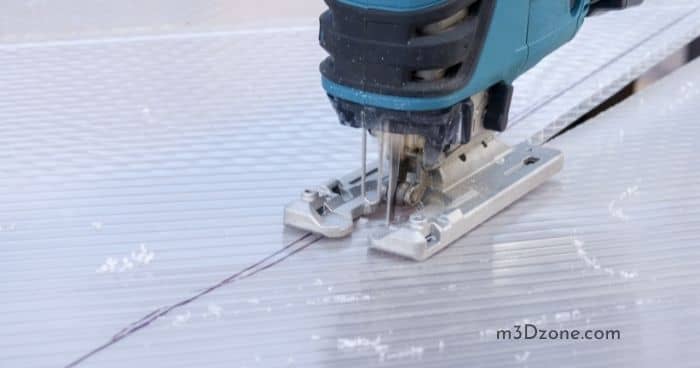
2. Jigsaws & Bandsaws (For Curves & Thicker Stuff – Think Sculpting)
When straight lines bore you, or your ABS sheet is getting chunky, it's time to bring in the power tools. These are fantastic for curves, intricate shapes, or thicker materials where scoring just won't cut it (another pun!).
- Tools: A jigsaw or bandsaw. The key is a blade with fine teeth, often labeled for plastic, metal, or laminate. A coarse wood blade will just rip and melt the plastic, creating a sticky, gooey mess that smells vaguely of burning tires.
- The Technique:
- Clamp that sheet down! Seriously, don't skimp on the clamps.
- Move slowly and steadily. Let the blade do the work. If you push too hard, you'll generate heat, which is the enemy of smooth ABS cuts. Too much heat equals melting, gumming up the blade, and an ugly, melted edge.
- Consider applying masking tape over your cut line. This can help prevent chipping, especially on the top surface. It's like a tiny bodyguard for your plastic.
3. Circular Saws & Table Saws (For Thick, Straight Cuts – The Heavy Hitters)
If you're dealing with really thick ABS sheets and need perfectly straight, long cuts, these are your beasts. But a word of warning: these tools demand respect. They are powerful and can be dangerous if mishandled.
- Tools: A circular saw or table saw with a fine-toothed blade (again, a plywood or plastic-specific blade works wonders).
- The Cautionary Tale:
- Safety, safety, safety! Eye protection, hearing protection, and definitely no loose clothing. Kickback is a real phenomenon and can launch your plastic (or worse, your hand) into orbit.
- Use a slow feed rate. Just like with the jigsaw, heat is your nemesis.
- Ensure the sheet is fully supported throughout the cut to prevent warping or pinching the blade.
4. Rotary Tools (Dremel, et al.) (For Tiny Details & Surgical Precision)
For those super intricate cuts, small holes, or weird angles, your trusty Dremel-style rotary tool can be a lifesaver. Think of it as the surgeon's scalpel in your DIY operating room.
- Tools: A rotary tool with a cut-off wheel or a small routing bit.
- The Finesse: Go slow, take your time, and let the tool do its job. These little guys spin at incredibly high speeds, so they can generate heat quickly. Small, controlled passes are key.
The Grand Finale: Finishing Touches (Don't Be a Barbarian!)
So you've made your cut. Now what? Your edges might be a little rough, a little sharp, maybe even a bit melted. Nobody wants that! This is where you smooth things over.
- Filing: A flat file can quickly knock down any major burrs or high spots.
- Sanding: Start with a medium-grit sandpaper (around 120-180 grit) to refine the edge, then move to a finer grit (220+) for a perfectly smooth finish. You can sand by hand or use an orbital sander for larger areas.
- Deburring: For very thin material, a simple deburring tool (or even the back of a utility knife blade held at an angle) can quickly clean up the edge.
A Few Parting Wisdoms (The "Oh, By The Way" Section)
- ABS Dust: It's fine, it's clingy, and it gets everywhere. Have a shop vac handy for cleanup.
- Cooling: If you're getting a lot of melting, try blowing compressed air on the blade and cut line while you're working. Some pros even mist the blade with water (though be careful mixing water and power tools, obviously!).
- Test Cuts: Always, always do a test cut on a scrap piece if you're unsure about your blade or technique. Better to mess up a scrap than your masterpiece!
And there you have it! Cutting ABS plastic isn't some dark art practiced only by mythical creatures. With the right tools, a bit of patience, and a healthy respect for safety, you'll be shaping plastic to your will in no time. Now go forth, create, and build something awesome!

