How To Connect Two 12v Batteries To Make 24v
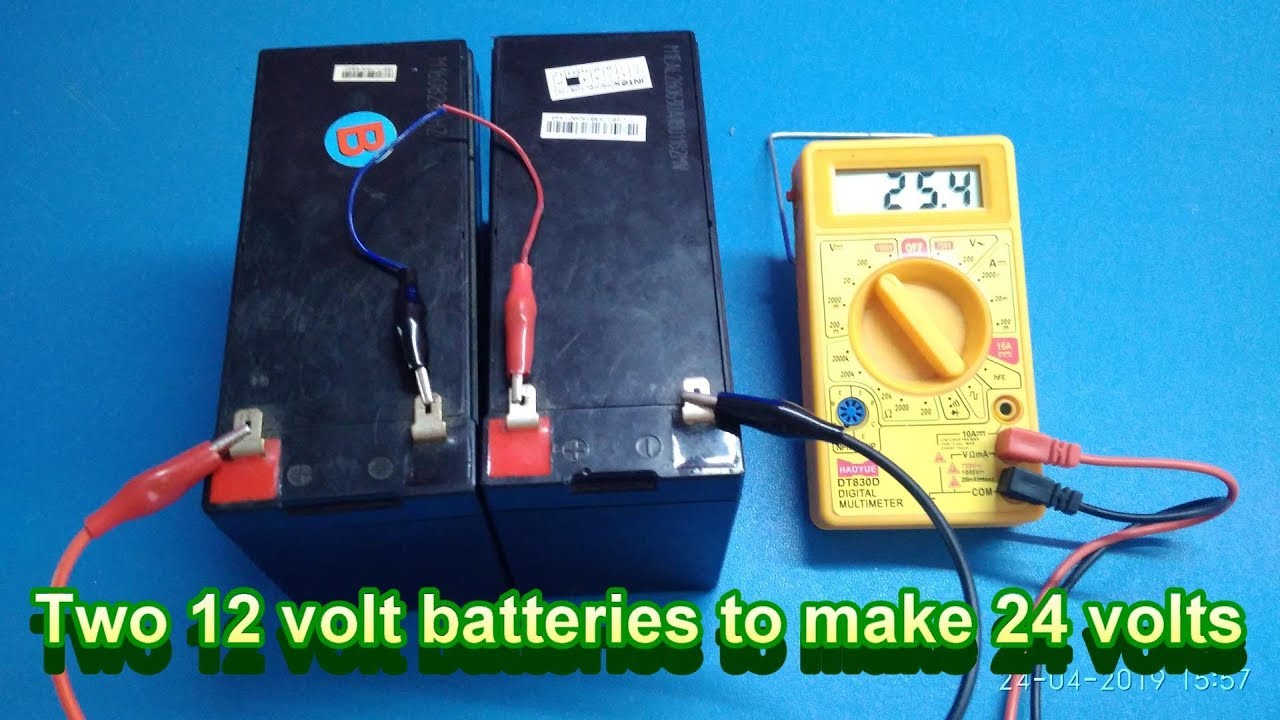
Hey there, battery buddy! Ever wondered how to, you know, double your voltage? Like, take two humble 12v batteries and BAM! 24v of pure electrical excitement? Well, you've come to the right place. Grab your multimeter and maybe a snack, because we're about to dive in. (Don't worry, it's easier than parallel parking... most of the time.)
So, Why Bother?
Good question! Why would you want 24v instead of just 12v? Maybe you've got a fancy 24v motor you need to power. Or perhaps you're building some kind of super-secret, high-voltage contraption (don't tell me if it's for world domination!). Whatever the reason, sometimes more voltage is just... more better. And trust me, there are applications where 24V is the ONLY way to fly.
Just remember – more voltage isn't always the answer! Make sure your device actually needs 24v before you go Frankenstein-ing things. Otherwise, you might end up with a crispy critter instead of a smoothly running machine. Ouch!
Must Read
The Magic Word: Series
Okay, so how do we actually do this voltage doubling voodoo? The key is connecting your batteries in series. No, not like a Netflix series (although binge-watching is always a good option after you're done). In electrical terms, series means connecting the positive terminal of one battery to the negative terminal of the other. Think of it like a train, with the batteries being the cars!
Seriously, it's that simple (almost).

Step-by-Step: From Zero to 24v Hero
Alright, let's get down to brass tacks. Here's what you'll need:
- Two 12v batteries (duh!) – Preferably identical. Same brand, same capacity, same age… you get the idea. Trust me, batteries do NOT like being mismatched.
- Battery cables – Enough to connect the batteries in series and then to your device. Make sure they're the right gauge for the current you'll be drawing. Too thin, and they'll get hotter than a jalapeno in July.
- A wrench – For tightening those terminals. Don't go Hulk-smashing them, though. Snug is good. Stripped threads are bad.
- Safety glasses – Because, you know, safety first! We don't want any stray sparks ruining your good looks.
Now, the moment of truth!
- Disconnect everything! Seriously. Make sure both batteries are completely disconnected from any load or charger. We don't want any unexpected electrical surprises.
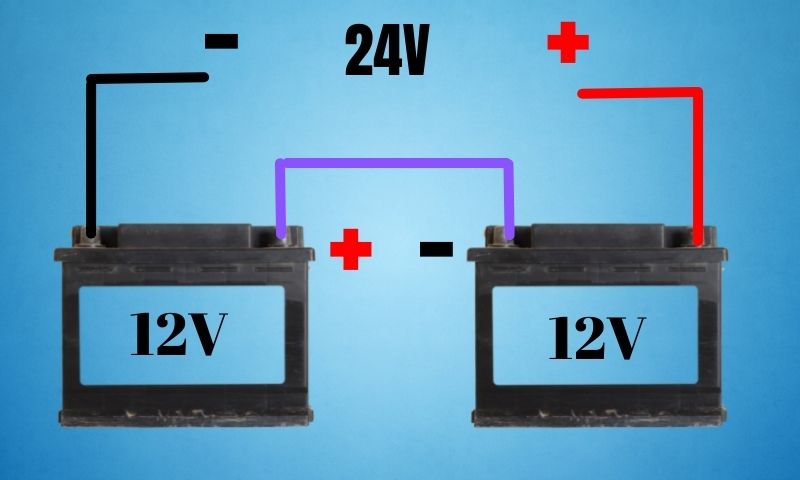
- Connect a cable from the positive (+) terminal of battery A to the negative (-) terminal of battery B. This is the magic series connection!
- You now have two "free" terminals: the negative (-) terminal of battery A and the positive (+) terminal of battery B. These are your 24v output terminals!
- Connect a cable from the negative (-) terminal of battery A to the negative (-) input of your 24v device.
- Connect a cable from the positive (+) terminal of battery B to the positive (+) input of your 24v device.
Double-check everything! Before you flip any switches, make absolutely sure your connections are correct. Positive to negative, positive to positive… you get the gist. A little mistake can lead to a big problem (like fireworks). No one wants that!
Important Considerations (aka Don't Blow Stuff Up!)
Okay, we're almost there! But before you go off and conquer the world with your newfound 24v power, a few words of caution:

- Matching Batteries: I can't stress this enough. Use identical batteries! Mismatched batteries can lead to all sorts of problems, including reduced lifespan and, in extreme cases, battery damage.
- Charging: You'll need a 24v charger to properly charge your series-connected batteries. A 12v charger won't cut it. Trust me.
- Discharging: Draw power evenly from both batteries. If one battery is working harder than the other, it will wear out faster.
- Short Circuits: Avoid them like the plague! A short circuit can cause sparks, heat, and potentially even fires. Be careful!
And there you have it! You've successfully connected two 12v batteries to create a 24v power source. Now go forth and electrify! (Responsibly, of course.)
Remember, if you're ever unsure about something, consult a qualified electrician. Electricity is cool, but it's also dangerous if not handled properly. Stay safe!