
How To Connect Portable Generator To House
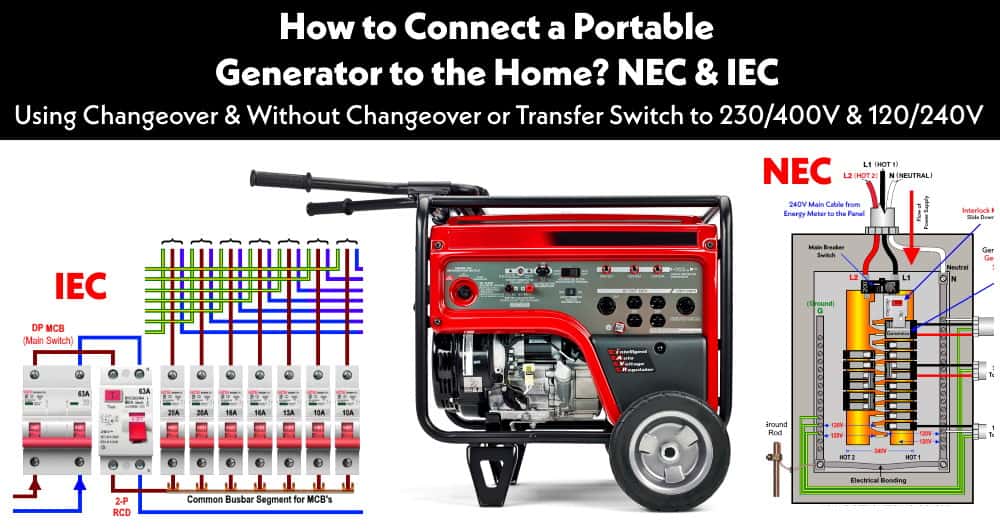
Ever found yourself staring into the dark abyss of a power outage, wishing you had a magic wand to bring your lights, fridge, and Wi-Fi back to life? You're not alone! In our modern world, losing power can feel like a mini-apocalypse, but fear not, because your trusty portable generator is here to be your hero. Connecting it to your house doesn't have to be a daunting task, and with a little know-how (and a lot of safety), you can be enjoying that hot coffee and Netflix in no time.
Why Safe Connection is Your Superpower
Before we dive into the nitty-gritty, let's talk about the golden rule: safety first! You see, simply running extension cords all over your house might seem like a quick fix, but it's like a messy spaghetti dinner for your power lines and can be incredibly dangerous. The real villain here is something called backfeeding – sending power from your generator back into the utility grid. This can seriously injure or even kill utility workers who are trying to restore power. We definitely don't want that!
The solution? A proper, dedicated connection. This usually involves either a manual transfer switch or an interlock kit. These clever devices ensure that your home is either connected to the utility power OR your generator power, but never both at the same time. Think of it like a smart bouncer at the club, only letting one VIP source of electricity in at a time.
Must Read
Your Essential Toolkit for Power Bliss
Ready to get powered up? Here's what you'll need, beyond your actual generator, of course:
- The Generator: Make sure it’s the right size for what you want to power. A quick Google search for "generator sizing guide" can help!
- Heavy-Duty Extension Cords: For connecting individual appliances if you're not using a full house connection. These should be rated for outdoor use and have the correct gauge for the power they're carrying.
- Generator Inlet Box: This is a weatherproof box installed on the exterior of your house. It’s where you'll plug your generator into your home's electrical system.
- NEMA L14-30P or L5-30P Power Cord: This specific cord connects your generator to the inlet box. It has a special twist-lock plug for a secure connection.
- Manual Transfer Switch or Interlock Kit: This is the star of the show for safe whole-house power. These absolutely need to be installed by a licensed electrician. Seriously, this is not a DIY project unless you're a qualified professional yourself!
The Power-Up Play-by-Play (Simplified!)
Step 1: Get the Pros Involved (for installation!)
Before you do anything, call a licensed electrician to install your generator inlet box and either the manual transfer switch or interlock kit. This is the foundation of a safe connection and ensures everything meets local electrical codes. It’s an investment in safety and peace of mind.

Step 2: Placement is Key (Think Outdoors!)
Once your electrician has set up the house, it's time for your generator! Always, always run your portable generator outdoors. Position it at least 15-20 feet away from your house, ensuring the exhaust is directed away from windows, doors, and vents. Carbon monoxide is an invisible, odorless killer, and your safety is paramount. Think of it as giving your generator some personal space – it needs to breathe fresh air, and so do you!
Step 3: Connect the Power Cord
With the generator safely placed, grab your special generator power cord (NEMA L14-30P/L5-30P). Plug one end into your generator and the other end into the generator inlet box on your house. Make sure both connections are snug and secure.

Step 4: Start Your Engine!
Now, follow your generator manufacturer's instructions to start it up. Check the fuel, turn on the choke (if needed), and pull that cord (or press that button!). Let the generator run for a few minutes to warm up and stabilize. It's like letting your car idle before hitting the highway.
Step 5: Engage the Power (The Big Switch!)
Head to your main electrical panel. If you have an interlock kit, you'll first turn off the main breaker for your utility power. Then, you can slide the interlock plate, which allows you to turn on the generator's main breaker. If you have a manual transfer switch, you'll flip the main switch from "utility" to "generator." Remember, one source at a time!

Once the generator power is engaged, you can selectively turn on the individual circuit breakers for the appliances you want to power – fridge, a few lights, Wi-Fi router. Don't try to power everything at once; your generator has limits!
Step 6: Power Down Protocol
When the grid power returns, or you're simply done using the generator, reverse the process:
- Turn off all individual appliance circuit breakers that were powered by the generator.
- Disengage the generator power at your main panel (either flip the transfer switch back to "utility" or turn off the generator breaker and flip the main utility breaker back on with the interlock kit).
- Let your generator cool down for a few minutes while running without a load.
- Shut off your generator according to the manufacturer's instructions.
- Disconnect the power cord from the inlet box and the generator.
A Little Reflection on Resilience
There's something wonderfully empowering about knowing you can keep your home humming when the world outside goes dark. It's not just about keeping the fridge cold; it's about the comfort of light, the connection of Wi-Fi, and the ability to brew that morning coffee. Being prepared allows you to transform a potential headache into a cozy, memorable moment – perhaps even a chance for some device-free family time (after the initial power-up, of course!). Taking control of your power means taking control of your peace of mind, proving that a little preparation goes a long, long way.
