Ever look up at the night sky and imagine a pristine, twinkling canvas? Well, news flash, folks! Our cosmic backyard is getting a little… cluttered. Yep, we're talking about space debris – everything from defunct satellites the size of school buses to tiny flecks of paint traveling faster than a speeding bullet. It's like the universe's biggest, most dangerous junk drawer, and it needs a good tidy-up!
But don't despair! Humanity, ever the clever bunch, is already cooking up some seriously awesome, and frankly, super fun ways to sweep up this celestial mess. Think of it as extreme spring cleaning, but with lasers and nets instead of mops and buckets. Get ready to feel good about our future in space, because these ideas are out of this world!
The Great Space Sweep-Up: Our Cosmic Cleaning Crew
The "Falling Star" Method: Let Gravity Do the Dirty Work!
First up, we have a rather elegant solution: letting nature take its course. Many pieces of space junk are in what we call Low Earth Orbit, meaning they're not that far from our planet. Up there, there's still a tiny whisper of atmosphere. Over time, this whisper creates a subtle drag, slowly pulling debris lower and lower, until – poof! – it re-enters Earth's atmosphere and burns up like a mini, unintentional shooting star. It's like leaving a messy room door open, hoping a strong breeze will just whisk the dust bunnies away.
This is nature's own self-cleaning oven for space junk! We can even design new satellites to have little "wings" or tethers that increase this drag, giving them a gentle nudge towards their fiery, but safe, exit when their mission is over. It's the ultimate cosmic "take out the trash" strategy!
Future missions are being designed with this in mind, making sure that when their job is done, they don't just become more litter. It's all about responsible space travel, like bringing a reusable bag to the grocery store, but for rocket parts!
Innovative NASA Solutions for Cleaning Up Space Debris Efficiently
The "Grab-and-Go" Gang: Nets, Harpoons, and Robotic Arms!
For the bigger, badder pieces of debris that aren't quite ready for a fiery re-entry, we need something a bit more hands-on. Imagine a giant, space-faring fishing boat, but instead of fish, it's reeling in old rocket stages!
One super cool idea involves launching satellites armed with enormous nets. Picture a space bot throwing a huge fishing net around a rogue piece of junk, then dragging it into a lower orbit to burn up. Or how about a harpoon? Yes, a harpoon! Specialized spacecraft could fire a tethered harpoon into a dead satellite, reeling it in like a cosmic Moby Dick hunter. It sounds like something straight out of a sci-fi movie, but these are real concepts being developed by brilliant engineers!
Space debris - efforts to clean up space - YouTube
Then there are the robotic arms. Think of the International Space Station's famous Canadarm, but beefed up and ready for cleanup duty. These advanced arms could gently grab onto defunct satellites and either push them towards re-entry or move them to a "graveyard orbit" where they won't bother anyone. It's like playing a delicate, high-stakes game of space-sized Jenga, but instead of knocking things down, we're carefully taking them out!
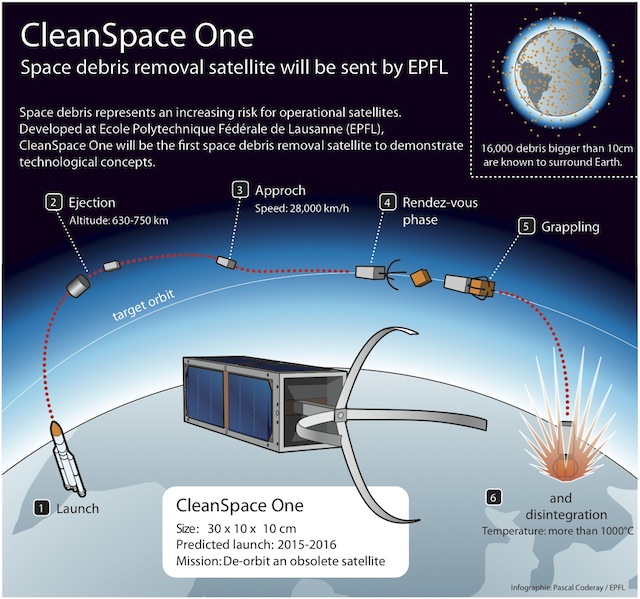
Projects like ClearSpace-1, led by the European Space Agency, are literally planning to launch a four-armed robot into space to grab a piece of debris and pull it down. It’s a mission of galactic goodwill, clearing the path for future exploration!
Meet the Teen Who's Cleaning Up Space Junk
The "Zappy Zappers" Method: Lasers to the Rescue!
Now for the truly flashy stuff: lasers! No, we're not talking about blowing up debris (that would just create more tiny pieces!). Instead, the idea is to use powerful ground-based or space-based lasers to gently nudge smaller, harder-to-catch pieces of junk. How does it work?
Imagine a tiny puff of vapor created on the surface of the debris by a laser beam. This tiny puff acts like a miniature rocket thruster, giving the debris a gentle push, ever so slightly altering its orbit. Over time, these tiny nudges accumulate, guiding the debris into the atmosphere where it can burn up safely.
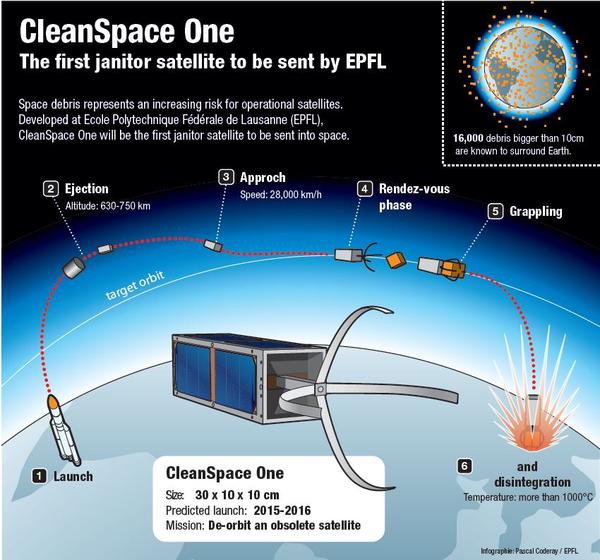
Soon: 'Janitor' satellite to clean up space junk
It's like flicking a pebble with your finger, but with light! This method is particularly exciting for dealing with the really small, countless pieces of debris that are too tiny to track individually but still pose a significant threat. It's precise, clean, and has that undeniable "pew-pew!" factor that makes space exploration so much fun.
Beyond the Cleanup: Preventing Future Messes
Of course, the best way to clean up a mess is to not make one in the first place! The space industry is already working hard on prevention. This includes designing satellites to automatically de-orbit at the end of their lives, using special tethers, or even building "space tugs" that can ferry defunct satellites to safety.
It’s an exciting time, filled with innovation and a growing sense of responsibility for our shared cosmic neighborhood. So next time you look up at the stars, remember that humanity isn't just sending rockets up; we're also figuring out how to be the best possible houseguests in the universe. And that's something to truly feel good about!



:max_bytes(150000):strip_icc()/__opt__aboutcom__coeus__resources__content_migration__mnn__images__2018__04__space-debris-44e7005c0bcd47dcafacf9079ef4caf8.jpg)