Ever wondered what’s really going on inside those everyday batteries around your house? You know, the ones powering your TV remote, your child's favorite toy, or that trusty flashlight? There’s a whole world of invisible energy buzzing within them, and guess what? You can actually peek right inside! It’s not about technical wizardry or complicated science. It’s about a simple, fun discovery, like a tiny treasure hunt with a delightful little gadget.
Imagine holding the secret key to unlocking a battery’s hidden power. It’s an incredibly satisfying feeling, almost like being a friendly energy detective. You’re not just looking at a mundane power source; you’re about to discover its unique "energy signature." This isn't just for mechanics or electricians. This is for anyone with a spark of curiosity and a love for finding out how things tick.
Meet Your Energy Explorer Tool
First things first, you'll need a special friend for this adventure. It’s often called a multimeter, but you can think of it as your personal battery whisperer. This clever little device is designed to listen to the silent hum of electricity. It has a screen that will light up with numbers, and usually a big dial that clicks satisfyingly into different positions. You might even find one with a handy clamp-style jaw, which makes things extra neat and tidy for checking amps.
Getting your hands on one is surprisingly easy. Many hardware stores have them, or you can find them online. Don't be intimidated by all the buttons and symbols! For our adventure, we’re focusing on just one specific setting. Think of it like choosing a channel on a radio – you just need to find the right frequency for battery gossip.
Setting the Stage for Discovery
Okay, you’ve got your battery whisperer ready. Now, let’s get it set for its big moment. Take a deep breath and turn that satisfying dial. You're looking for the symbol that represents what we call amps. This is where the magic happens! On many devices, especially the clamp-style ones, you’ll be looking for a setting marked with an A, or perhaps mA for smaller currents. If you have the clamp type, you’ll usually want to make sure you're on the right current type, often alternating (AC) or direct (DC) – for most batteries, we're thinking DC.
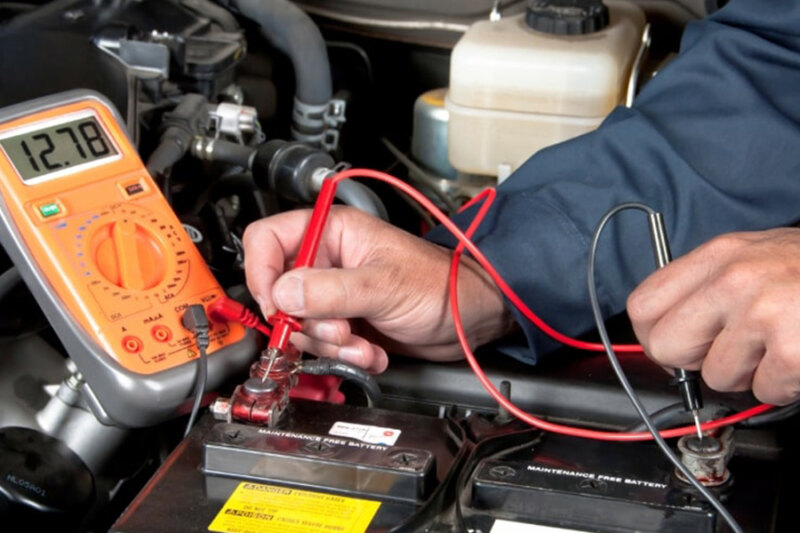
How to Test Car Battery Amps. - YouTube
You’ll often see a range of numbers next to the "A" or "mA," like "2A," "10A," or "200mA." This just means you're telling the tool what kind of energy flow to expect. If you’re unsure, it’s usually best to start with a higher range and then adjust down if the reading is too small. It's like picking the right magnifying glass for a tiny detail.
"It's like being a friendly detective, uncovering tiny power secrets."
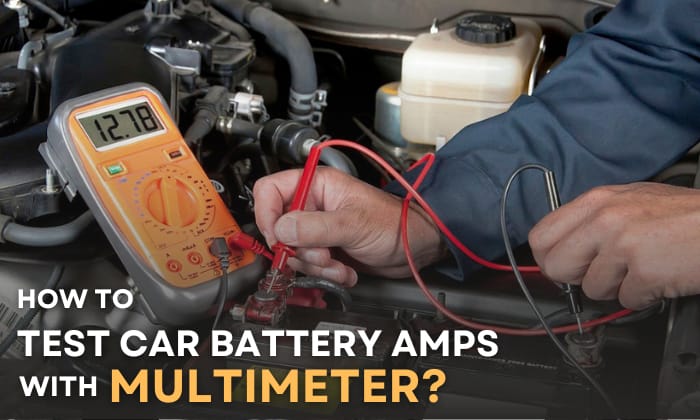
How To Test Car Battery Amps With Multimeter
The Moment of Connection
Now for the exciting part! This is where you actually connect your battery whisperer to the battery. If you have the clamp-style meter, this is delightfully simple. You’ll open the jaw and gently clamp it around just one of the battery’s wires. Yes, only one! This is important for getting an accurate read on the current flowing through it. Imagine the electricity flowing like a tiny river, and your clamp meter is taking a quick, non-invasive measurement of how much water is passing by.
If you have a traditional multimeter with probes, it’s a tiny bit different but still super easy. You’ll plug your black probe into the COM port and your red probe into the port marked for amps (often labeled with "A" or "mA"). Then, you'll need to insert your multimeter into the circuit. This usually means you’d disconnect one of the wires from the battery (say, the positive one) and then connect your red probe to the battery terminal and your black probe to the wire you just disconnected. This way, the electricity has to flow through your meter to complete the circuit, allowing it to measure the amps.
The Big Reveal: Numbers on the Screen!
And there it is! A number will appear on your multimeter's screen. This number, often accompanied by a unit like "A" or "mA," tells you the amps currently flowing from your battery. Isn't that cool? One moment, you’re just holding a battery, and the next, you’re privy to its inner workings. You're seeing, in real-time, the flow of energy. Some batteries might show a robust, steady number, while others might reveal a gentle trickle, indicating they're winding down.
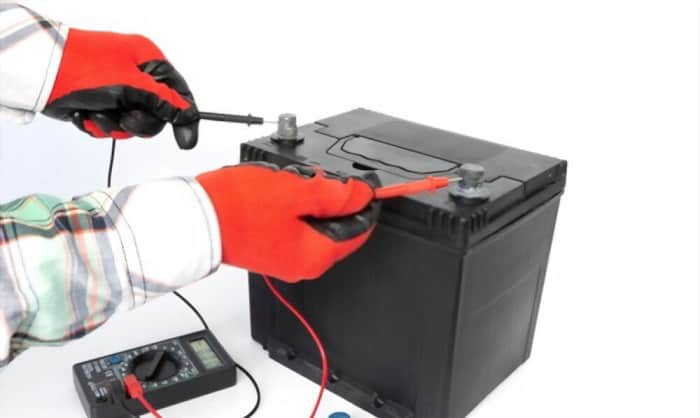
How to Test Car Battery Amps With Multimeter? - 3 Steps
Each battery has its own personality, its own story to tell through these numbers. A fresh, powerful battery will zing with a good reading. An older, tired one might just purr softly. It’s not about judging; it’s about understanding. You become a true battery connoisseur, able to appreciate the subtle differences in their energetic output.
Why This Is So Much Fun
Checking the amps on a battery is more than just a technical task. It's a tiny act of scientific exploration, a moment of pure curiosity fulfilled. It’s like peeking into a secret chamber and seeing the gears turn. There's a genuine thrill in seeing those numbers light up, providing instant feedback on something usually invisible. You're not just reading a number; you're deciphering a message from the heart of a power source.
How to Test Car Battery Amps With Multimeter? - 3 Steps
It makes you feel empowered, like you've gained a new superpower of understanding. You can test different batteries – a brand new one versus an old one, a big D-cell versus a tiny AAA – and marvel at the differences. Each test is a mini-experiment, a chance to learn and observe. It’s simple, it’s engaging, and it connects you to the everyday technology around you in a whole new way.
A Gentle Word of Caution
While this is a fun and safe activity, it’s always good to be mindful. Batteries are little powerhouses, so treat them with respect. Avoid shorting them (connecting the positive and negative terminals directly without a load) as this can make them hot. And always follow the instructions for your specific multimeter. But generally, gently checking amps with your special tool is a fantastic way to satisfy your curiosity.
So, why not give it a try? Grab a multimeter, find some batteries, and embark on your own little journey into the world of energetic discovery. You might just find your new favorite hobby, becoming the family's official battery whisperer, unraveling the secrets of portable power, one fascinating number at a time!