
How To Check Alternator Amps With Multimeter

Alright, so your car's acting a little funky, huh? Maybe the lights are dimming, or it's struggling to start? Could be a dead battery, sure, but what if it's something else? Like... dun dun DUN... your alternator! Let's see if we can figure this out, shall we?
Think of your alternator as the little dynamo that keeps your car's electrical system happy. It charges your battery while you drive and powers all those other fun things like your radio (crucial!), headlights, and that heated seat we all secretly love (don't deny it!). If it's not pulling its weight, you're in for a world of electrical hurt. So, how do we check if it's doing its job?
Gather Your Arsenal (aka, What You'll Need)
First things first, you’re not going into battle empty-handed! You'll need a few trusty tools. Nothing too scary, promise.
Must Read
- A Multimeter: This is your magic wand. Make sure it can read DC Amps. Digital is easiest, but analog works too if you’re feeling old-school.
- Safety Glasses: Safety first, always! We don’t want any sparks flying into your peepers.
- Gloves (Optional): If you’re like me and hate getting greasy, grab some.
- The Car: Obvious, but you'd be surprised. And it needs to be running. Carefully running.
Got everything? Great! Let’s get started. But before we do, a word of caution: messing with electricity can be dangerous. If you're not comfortable with this, leave it to a professional. Seriously. No shame in that game!
Amp It Up: Checking the Alternator's Output
Alright, deep breath. This isn't as intimidating as it sounds, I promise.
Step 1: Set Up Your Multimeter.

Turn your multimeter on and set it to read DC Amps (A with a straight line above it). Make sure you’re using the correct port on the multimeter for amperage readings – usually a separate one clearly marked. Check your multimeter's manual; it's your friend (even if it looks boring).
Step 2: The Tricky Part: Disconnecting the Battery... Sort Of.
Now, this is where things get a little different depending on the type of multimeter you have. Some have a clamp-on amp meter (super easy!), and others require you to actually interrupt the circuit. We're going to focus on the latter, since it's more common.

CAUTION: We're dealing with electricity and a running engine here. BE CAREFUL! Don't touch anything you're not supposed to, and make sure you have plenty of room to work.
Okay, so locate the negative (-) battery cable. You are going to temporarily disconnect it. Why? Because we need to put the multimeter in series with the circuit. Basically, the current has to flow through the multimeter for it to read the amps. Don't remove it completely. Just loosen it enough to slip the multimeter probes in.
Step 3: Connect the Multimeter.
Connect one probe of your multimeter to the disconnected negative battery cable. Connect the other probe to the negative battery terminal. Make sure you have a good, solid connection. Seriously. A loose connection could give you a false reading (or worse!).

Step 4: Read the Amperage.
Now, look at your multimeter. It should be showing a reading. This is the amount of current the alternator is pushing out to charge the battery and run the car's electrical systems.
Step 5: Interpreting the Results (aka, Is My Alternator Toast?).
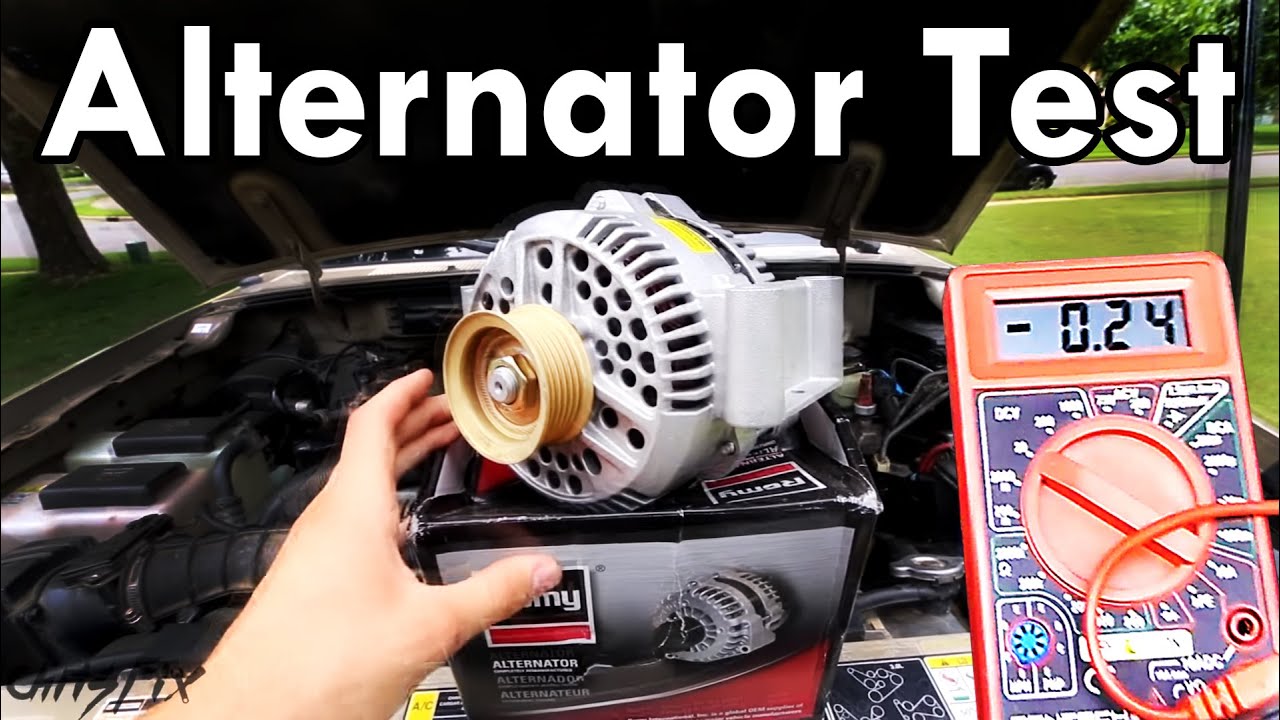
Here’s where it gets a little…fuzzy. What's a "good" reading? Well, it depends! Generally, you're looking for a reading that's enough to replace what the car is currently using. Turn on your headlights, the radio, maybe the AC. The amperage should increase, but it shouldn't be wildly high.
If the reading is very low (or even negative!), that could indicate a problem with the alternator. It might not be producing enough current to charge the battery. Time for a new one, maybe? Or a trip to the mechanic (probably a better idea, honestly).
Important Note: After you're done, RECONNECT THE BATTERY CABLE TIGHTLY! Make sure it's secure. A loose connection can cause all sorts of problems.
You Did It! (Maybe)
Congratulations! You've just checked your alternator's amperage. Give yourself a pat on the back. Now, if you're still not sure what's going on, don't hesitate to take your car to a professional. They have fancy tools and years of experience. And sometimes, that's worth its weight in gold. Good luck!