
How To Change Dc To Ac Current
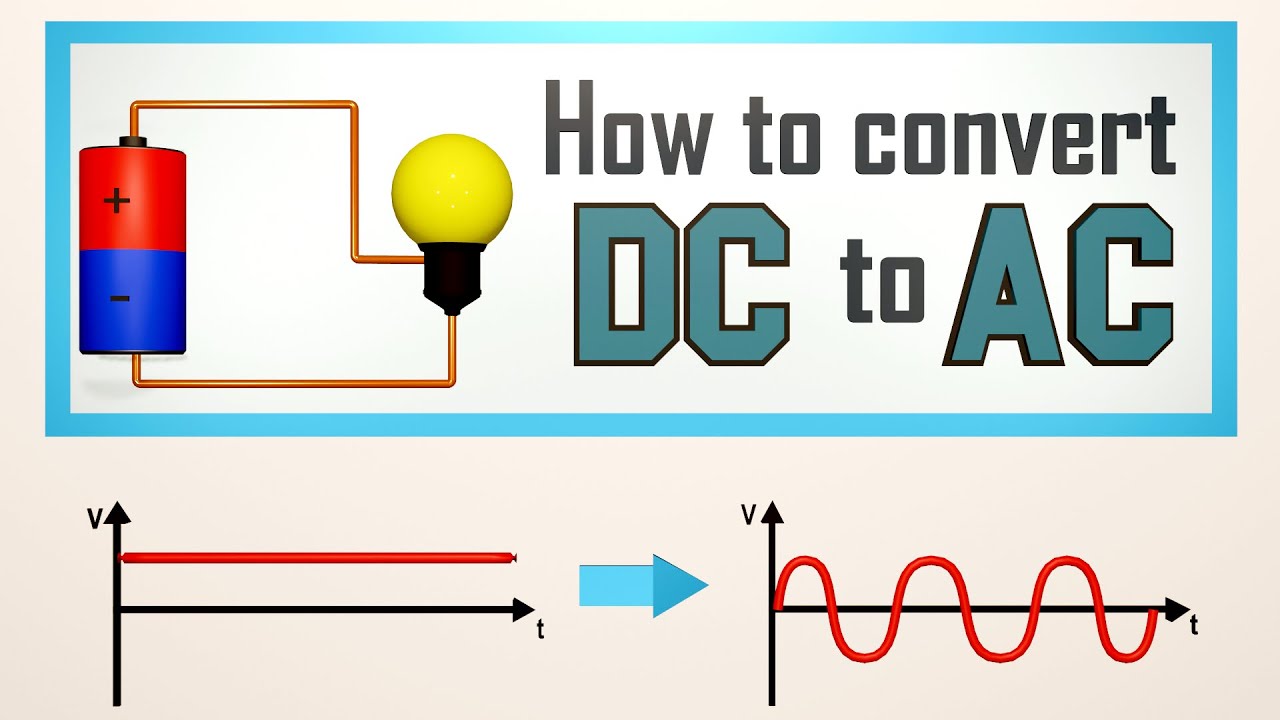
Hey there, friend! Ever found yourself staring at a car battery (that's DC, by the way) and wishing you could plug in your laptop charger (that's AC, folks!)? Or maybe you've got some sweet solar panels generating power, but your blender just gives you the side-eye? Well, pull up a chair, because we're about to demystify the somewhat magical process of turning DC (Direct Current) into AC (Alternating Current). It's easier than trying to explain memes to your grandparents, I promise!
Think of it this way:
- DC is like a one-way street for electrons. They flow steadily in one direction from the positive to the negative terminal. Batteries, solar panels, and the USB port on your computer all dish out DC.
- AC is like a busy freeway where electrons are constantly changing direction, zooming back and forth. This is what comes out of your wall sockets at home. It's super efficient for long-distance power transmission.
Why Bother Changing It?
"But why, oh why, would I want to mess with this?" you might ask, twirling a hypothetical mustache. Great question! If you have battery power but need to run anything designed for a wall outlet, you need this transformation!
Must Read
Think off-grid adventures, powering your RV, charging power tools from your car's battery, or keeping essential appliances humming during a blackout. Basically, if you have portable DC and need regular AC, this is your ticket!
Enter the Star: The Inverter!
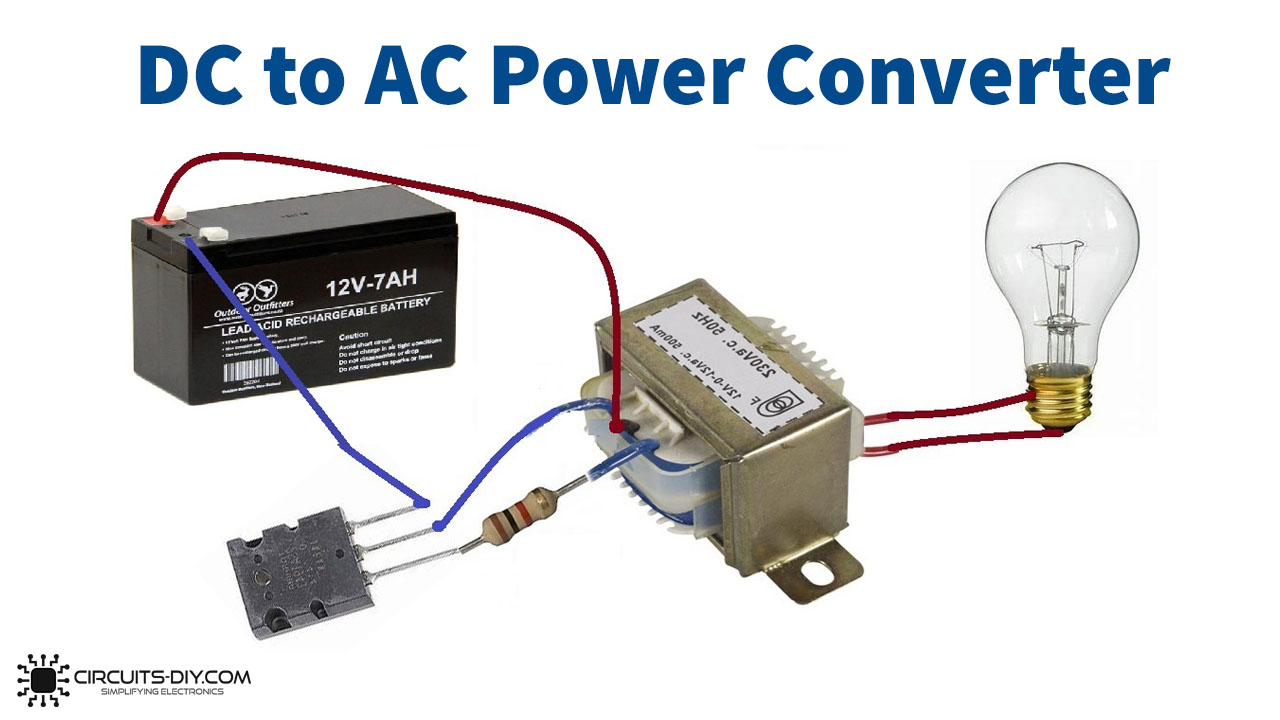
The hero of our story, the device that performs this electrifying alchemy, is called an inverter. No, it's not a secret agent, but it does make direct current do a complete 180 (and then another 180, and another...).
An inverter is essentially a clever electronic device that takes that steady, one-directional DC power and whips it into the oscillating, back-and-forth AC power your regular appliances crave. It's like teaching a straight-laced accountant to do the cha-cha!

How Does This Magic Box Work? (A Super Simple Peek)
Okay, let's not get too deep into the electrical engineering weeds here – nobody needs a physics degree for this chat! But in a nutshell:
- The inverter first chops up the DC current into a series of on-and-off pulses.
- Then, it uses some fancy electronics to reverse the direction of these pulses very rapidly.
- Finally, it often smooths out these rapidly reversing pulses and steps up the voltage using a transformer to match the AC voltage (like 120V in North America or 230V in Europe).
And voilà! Your steady DC is now a lively, alternating AC. Pretty neat, huh?
The Three Main Flavors of Inverters
Not all inverters are created equal, my friend. They come in a few varieties, much like coffee – some are perfectly fine, and some are gourmet:
Square Wave Inverters: The Old-School Jukebox
These are the OGs, the grandpappy of inverters. They produce a waveform that looks, well, like a square. It's pretty basic, a bit rough around the edges. Think of it as a very blocky, pixelated version of AC power.
They're generally cheapest and can power simple things like old-school light bulbs or heaters. But for anything with a motor (fridges, fans) or sensitive electronics (laptops, medical devices), they can cause inefficiency, buzzing, or even damage. Generally not recommended for most modern uses!
Modified Sine Wave Inverters: The Decent Compromise
Stepping up a notch, we have the modified sine wave inverter. These produce a waveform that's a bit like a staircase trying to approximate a smooth hill. It's better than square wave, offering a more refined (though still somewhat "steppy") version of AC power.

They are more affordable than pure sine wave and can happily run many common appliances like phone chargers, power tool chargers, and some basic electronics. However, sensitive electronics, variable speed motors, or anything with precise timing might still not be thrilled. You might notice a slight hum or reduced efficiency in certain devices.
Pure Sine Wave Inverters: The VIP Treatment
And then there's the crème de la crème, the absolute best: the pure sine wave inverter! These babies produce power that's virtually identical to what you get from your wall outlet at home – a beautiful, smooth, continuous wave.
If you want to run any appliance, especially sensitive electronics, medical equipment, variable speed tools, or anything with a motor, a pure sine wave inverter is your best bet. They're typically more expensive, but they ensure your gadgets run cooler, quieter, and last longer. It's like giving your electronics a spa day every day!

Choosing Your Inverter: A Quick Checklist
So, how do you pick the right one for your electrifying escapades?
- What are you powering? This is the big one. If it's anything sensitive or has a motor, go pure sine wave.
- How much power do you need? Add up the wattage of all the devices you plan to run simultaneously. Get an inverter that can handle that continuous wattage, plus a little extra for surge (starting current for motors can be much higher!). Don't undersize!
- Your budget: Pure sine wave costs more, but it's an investment in your electronics' happiness.
A Friendly Nudge on Safety!
Alright, enough with the fun and games for a second. We're playing with electricity here, so always remember:
- Read the manual! Seriously, it's there for a reason.
- Make sure your inverter is correctly sized and properly installed.
- Don't overload it.
- If you're unsure, ask someone who knows their amps from their volts! Safety first, always.
The Grand Finale: Power Up Your World!
And there you have it, my friend! The magical journey from steady DC to zippy AC is no longer a mystery. With the right inverter, you're not just changing current types; you're unlocking a whole new world of possibilities.
So go forth, embrace the power of transformation, and know that you're now one step closer to electrifying your life, wherever you are. May your watts be strong and your electrons ever flowing! Keep smiling, and keep powering on!