
How To Calculate Wh Of A Battery

Hey there, tech enthusiast (or just someone who's tired of their gadgets dying at the worst possible moment)! Ever looked at a battery and seen a bunch of numbers like "Volts" and "Ah" or "mAh" and thought, "What in the world does that actually mean for how long my stuff will last?"
Well, my friend, you're in luck! Today, we're going to demystify the magical number that tells you just that: Watt-hours, or Wh for short. No, you don't need a wizard's spellbook or a degree in quantum physics. We're going to break it down into bite-sized, giggle-inducing pieces. Ready? Let's dive in!
What in the World Are Watt-Hours (Wh) Anyway?
Imagine Watt-hours as the ultimate measure of a battery's total energy capacity. Think of it like this: if you're buying a bag of chips, you look at the total calories, right? Wh is sort of the "calories" of your battery. It tells you how much energy the battery can deliver over a certain period. More Wh usually means more playtime for your devices, more miles for your e-bike, or simply, more glorious, uninterrupted Netflix.
Must Read
It's super important for everything from comparing power banks to understanding why some airplane regulations care about your battery's size. Basically, Wh helps you know how much "juice" you've got in the tank.
The Super Simple Secret Formula (Shhh, Don't Tell Anyone!)
Okay, here's the big reveal. The formula for calculating Watt-hours is so easy, even my goldfish could probably do it (if he had tiny fins to type with and an interest in portable power, which, let's be honest, he mostly cares about eating flakes).
All you need are two key pieces of information, usually printed right on your battery:
1. Voltage (V): Think of Voltage (V) as the "push" or "oomph" of the electricity. It's how hard the electrons are being shoved through the circuit. Higher voltage means a stronger push. Most small electronics (like phones) use around 3.7V, while bigger devices might be 12V, 24V, or even 48V. It's like the pressure in a water pipe!
2. Amp-hours (Ah): This is the "fuel tank size" of your battery. Amp-hours (Ah) tells you how many amps the battery can supply for one hour. So, a 10 Ah battery can give you 10 amps for one hour, or 1 amp for ten hours, or 0.5 amps for twenty hours (you get the idea!). It's the sheer volume of electricity stored.
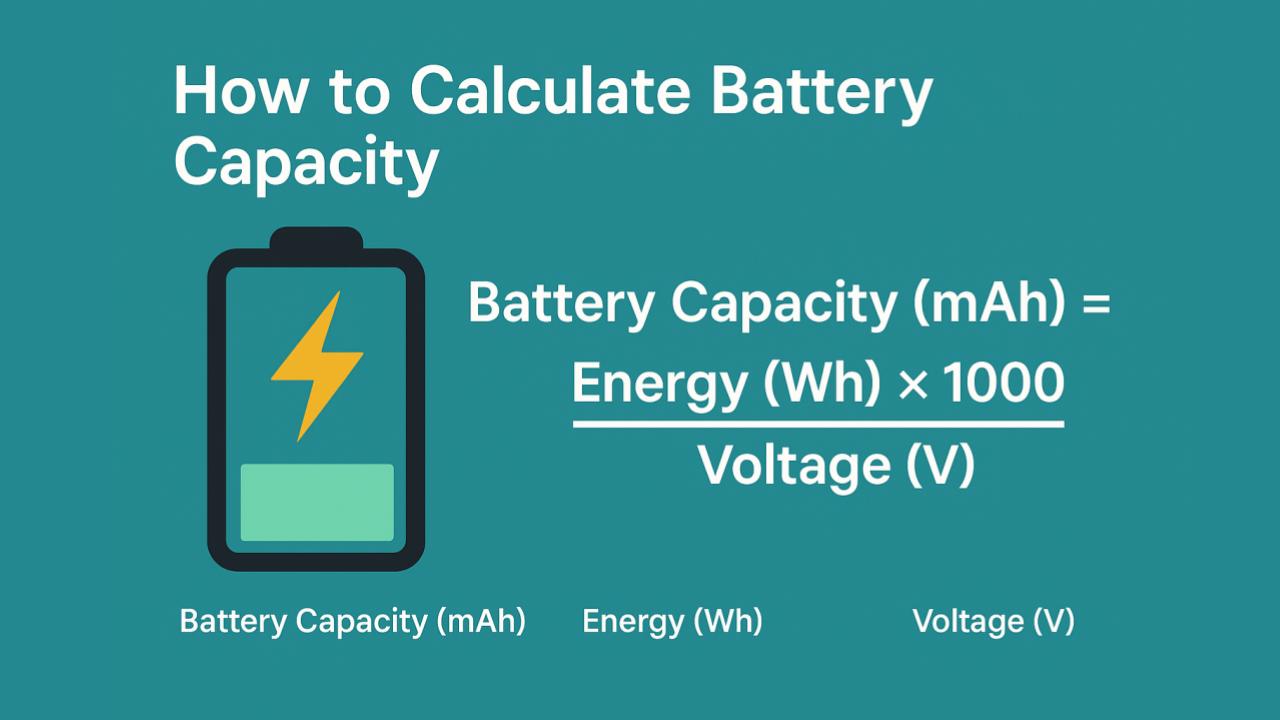
Got those two numbers? Fantastic! Now for the magic:
Wh = V * Ah
Yup, that's it! Just multiply the Voltage by the Amp-hours, and poof you have your Watt-hours!
Let's Try an Example!
Imagine you have a battery that says:
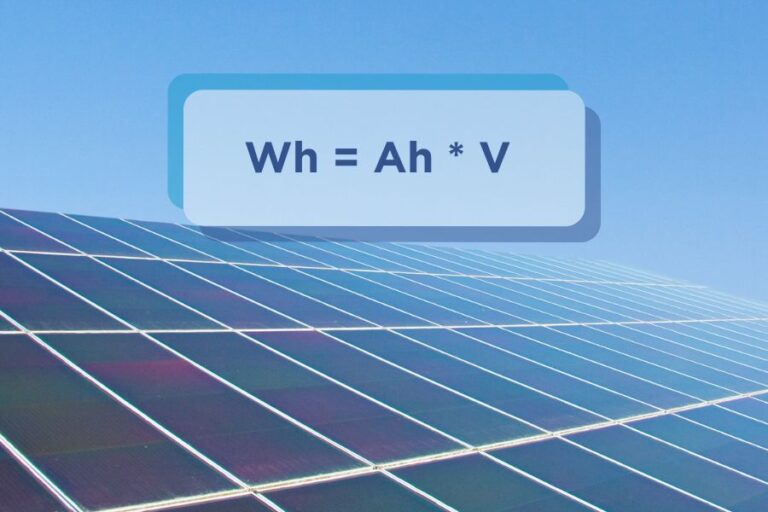
- Voltage (V): 12V
- Amp-hours (Ah): 5Ah
To find the Wh, you'd do this:
Wh = 12V * 5Ah = 60Wh
Ta-da! This battery has 60 Watt-hours of energy. See? I told you it was easy peasy lemon squeezy!
"But Wait!" You Cry, "My Battery Says mAh!"
Ah, a very common and excellent question! Many smaller batteries, especially for phones or drones, list their capacity in milliamp-hours (mAh). "Milli" just means "one-thousandth." So, 1000 mAh is equal to 1 Ah.
No worries, it's super simple to convert:
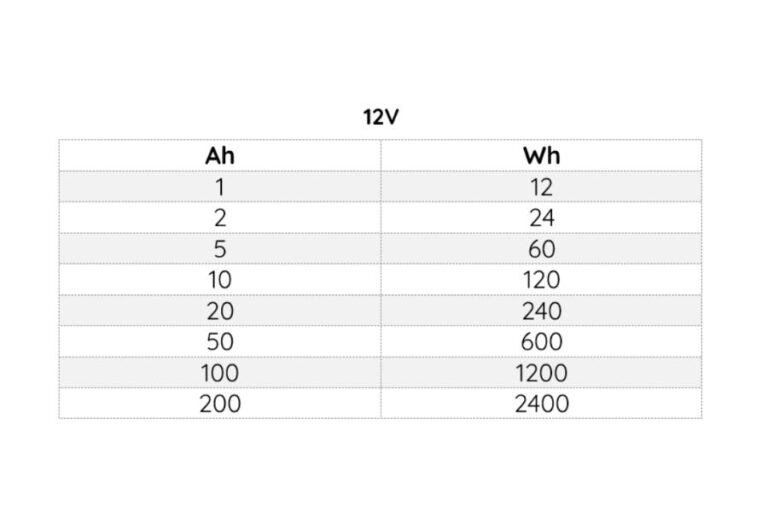
Ah = mAh / 1000
Let's do another quick example. Suppose your phone battery says:
- Voltage (V): 3.7V
- Milliamp-hours (mAh): 3000mAh
First, convert mAh to Ah:
Ah = 3000 mAh / 1000 = 3Ah
Now, calculate the Wh:
Wh = 3.7V * 3Ah = 11.1Wh
And there you have it! Your phone battery packs 11.1 Wh of energy. You're practically a math wizard now!
Why Does Knowing Wh Make You Cooler?
Besides being able to impress your friends at parties (or bore them to tears, depending on your audience), knowing Wh is genuinely useful:
- Comparing Batteries: You can easily compare apples to apples (or rather, 3.7V phone batteries to 12V drone batteries) to see which one has more total energy.
- Travel Smarts: Airlines often have restrictions on the maximum Wh you can carry on board (usually around 100Wh per battery for carry-on, and 160Wh with airline approval). Knowing your Wh saves you from airport headaches!
- Powering Your Adventures: Planning an off-grid camping trip? Knowing the Wh of your power station helps you estimate how long it can run your mini-fridge or charge your devices. No more guessing games!
You're a Wh-iz Kid Now!
See? That wasn't so bad, was it? You've just unlocked a fundamental secret of battery power. You now know that Voltage x Amp-hours = Watt-hours, and how to handle those tricky mAh numbers. You're officially a certified battery capacity guru!
So go forth, armed with your newfound Wh wisdom! Compare batteries like a pro, power your adventures, and never again be left wondering if your device has enough juice for "just one more episode" or that epic road trip. You're a battery guru now, and that's something to smile about! Keep those gadgets charged and those good times rolling!