
How To Calculate Total Amps In Breaker Panel

Ever wondered if your breaker panel is like a well-balanced seesaw? It's all about amps, and making sure you're not overloading things. Think of it as a game of electrical Tetris! Let's dive into the surprisingly fun world of calculating total amps. Ready to become an electrical detective?
Decoding the Breaker Panel
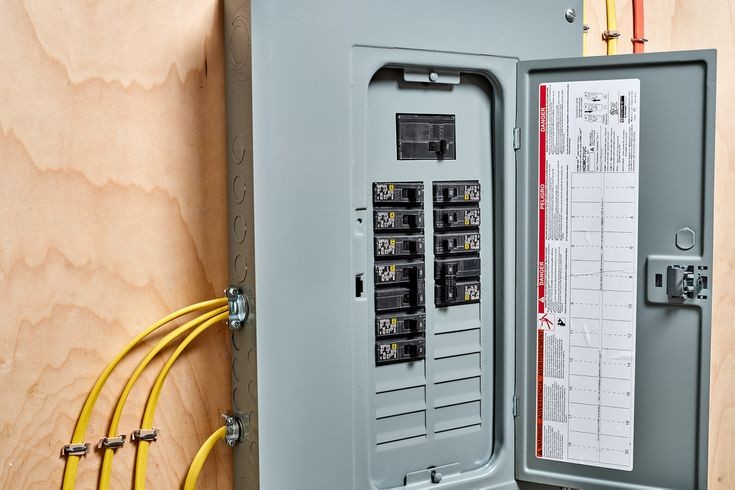
First things first, locate your breaker panel. It's usually a gray metal box, often in your basement, garage, or a closet. Open it up (safely, of course!). You'll see a bunch of switches, each labeled with a number. That number is the amp rating for that circuit. Each breaker controls power to various parts of your house.
This is where the adventure begins! Every breaker protects a specific circuit. Maybe one is for your kitchen outlets. Another might be for your living room lights. Each appliance and light fixture draws a certain amount of current, measured in amps. Adding all these up will get you to the total electrical load.
Must Read
Adding Up the Amps – It’s Easier Than You Think!
Now for the math (don't worry, it's not scary!). Let's say you want to know the total amps on one side of your panel. Focus on one column of breakers. Each breaker has an amp rating printed on it. It could be 15, 20, 30, or even more. Simply add up the amp ratings of all the breakers in that column.
For example: You have a 20-amp breaker for the kitchen lights, a 15-amp breaker for the dining room outlets, and a 10-amp breaker for some random thing. Add them together: 20 + 15 + 10 = 45 amps. Ta-da! That's the total ampacity of the main breaker section.
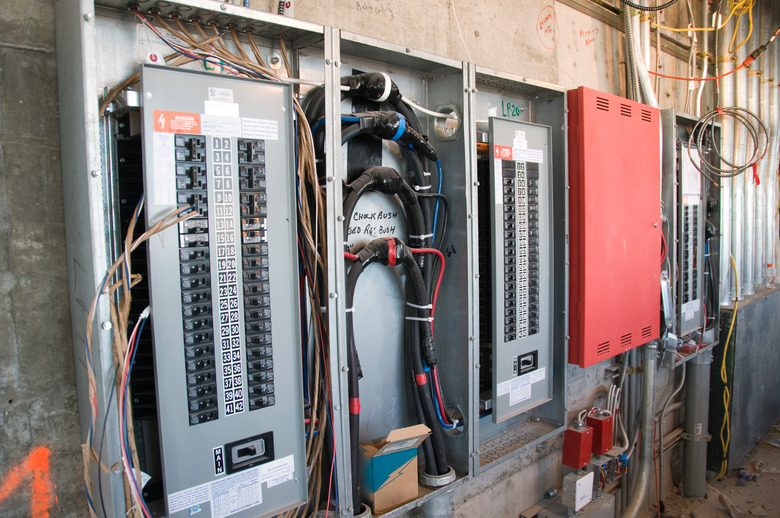
Remember this rule: The total load on one side shouldn't exceed the main breaker's rating for that side. Overloading it? That's a recipe for tripped breakers. The main breaker could be rated for 100 amps, 150 amps, or even 200 amps, depending on your home. Look for the main breaker, usually a double-wide switch at the top of the panel.
Why This is Surprisingly Entertaining!
Okay, maybe "entertaining" is a strong word. But knowing how your electrical system works is strangely empowering! It's like understanding the inner workings of your own home. No more mysteries! Plus, identifying electrical issues before they become big problems saves you money and helps prevent fires.
Imagine yourself as an electrical superhero, swooping in to diagnose power issues! All those flickering lights? You might just know the problem. That suspicious burning smell? Time to investigate! The possibilities are endless. It’s like becoming your own home electrician, which can definitely be a party trick.
Practical Tips and Tricks
Ready to check your own panel? Here are a few helpful hints. Remember, each side of the breaker panel has its own rating, and this combines to make the overall panel amperage for your house. Don't forget to consider the demand factor. Not all appliances draw their maximum amps all the time. This is key. The dishwasher running? That's going to be a load. But the lights in the closet? Not so much.
Use a spreadsheet to track your calculations. Note each breaker and its amp rating. This makes adding things up much easier and helps you keep track of changes. Want to get really fancy? Invest in a clamp meter. This device measures the current flowing through a wire without touching it. Handy, right?
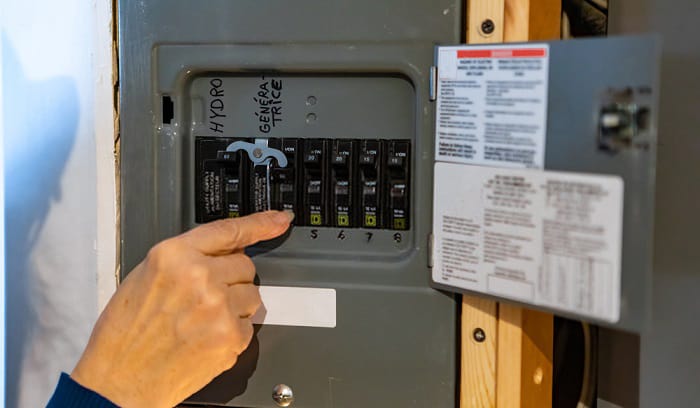
If things get too complicated, don't be afraid to call a professional. Electricity is serious business. If you're unsure about anything, consult a qualified electrician. They can help you understand your system and ensure everything is safe.
A Little Electrical Fun Fact
Did you know that Benjamin Franklin wasn't just a kite-flying enthusiast? He also laid the groundwork for much of our understanding of electricity. Think about him next time you check your breaker panel. You’re participating in a scientific legacy!
Go Forth and Calculate!
So, are you ready to become an electrical whiz? Calculating the total amps in your breaker panel is a surprisingly rewarding endeavor. It's a chance to understand your home, solve problems, and maybe even impress your friends. Just remember to be safe, have fun, and always consult a professional if you're unsure. Now go forth and conquer those amps!
