
How To Calculate Square Feet For Air Conditioning
:max_bytes(150000):strip_icc()/air-conditioning-chart-1152654_final-02-c37c8b4fdf08432baf378e8f0cb9d8e0.jpg)
Okay, let's talk about something that might not sound super exciting, but trust me, it's way more important than you think: figuring out the right size air conditioner for your space. I know, I know, calculating square footage sounds like homework. But think of it this way: getting it right is the difference between shivering in July and sweating through August. Nobody wants that!
Why should you even care? Well, an AC that's too small will run constantly, trying desperately to cool your room but never quite succeeding. You'll pay more in electricity bills and wear out the unit faster. On the flip side, an AC that's too big will cool the room too quickly, then shut off, leaving you with a humid, uncomfortable feeling. It's like wearing shoes that are either two sizes too small or two sizes too big – neither is a good fit!
The Super Simple Square Footage Calculation
Alright, so how do we figure this out? It's surprisingly easy. Imagine your room as a rectangle. You just need to measure the length and width. Grab your measuring tape (or download a measuring app on your phone – technology, right?), and let's get started.
Must Read
Let's say you're trying to cool your living room. You measure one wall and it's 15 feet long. Then you measure the adjacent wall, and it's 12 feet long. To find the square footage, you simply multiply those two numbers together: 15 feet x 12 feet = 180 square feet. Ta-da! You've got your square footage!
It's like figuring out how much pizza to order for a party. You wouldn't just guess, right? You'd think about how many people are coming and how much they usually eat. Figuring out the square footage for your AC is the same idea – you need the right "amount" of cooling for your "party" (your room).
Dealing with Odd Shapes (It's Okay to Be a Little Weird!)
Okay, so not every room is a perfect rectangle. What if you have an L-shaped living room or a quirky little nook? Don't panic! The trick is to break the room down into smaller, more manageable rectangles. Measure each rectangle separately, calculate the square footage for each, and then add them all together.
Think of it like building with LEGOs. You might start with a big base, but then you add smaller pieces to create the final shape. Same thing here! Small rectangle plus small rectangle equals total square footage!
Beyond the Basics: Room Factors That Matter
Square footage is a great starting point, but there are other factors that can affect how much cooling you need. Things like:
- Ceiling Height: Rooms with high ceilings will need more cooling power. Imagine trying to fill a tall glass versus a short one.
- Sun Exposure: Rooms that get a lot of direct sunlight will be hotter and require a more powerful AC. It's like trying to cool down a car that's been sitting in the sun all day – it takes a little extra effort.
- Insulation: Well-insulated rooms will stay cooler and require less cooling power. Think of insulation like a cozy blanket for your house.
- Number of People: More people in a room means more body heat, which means you'll need more cooling.
- Kitchens: Kitchens generate a lot of heat from cooking, so they might need a slightly larger AC unit.
Consider these factors and adjust your AC size accordingly. If you're unsure, it's always better to err on the side of slightly larger, especially if you live in a very hot climate or have poor insulation. Overestimating slightly is better than constantly running an undersized AC!
BTUs: The Magic Numbers
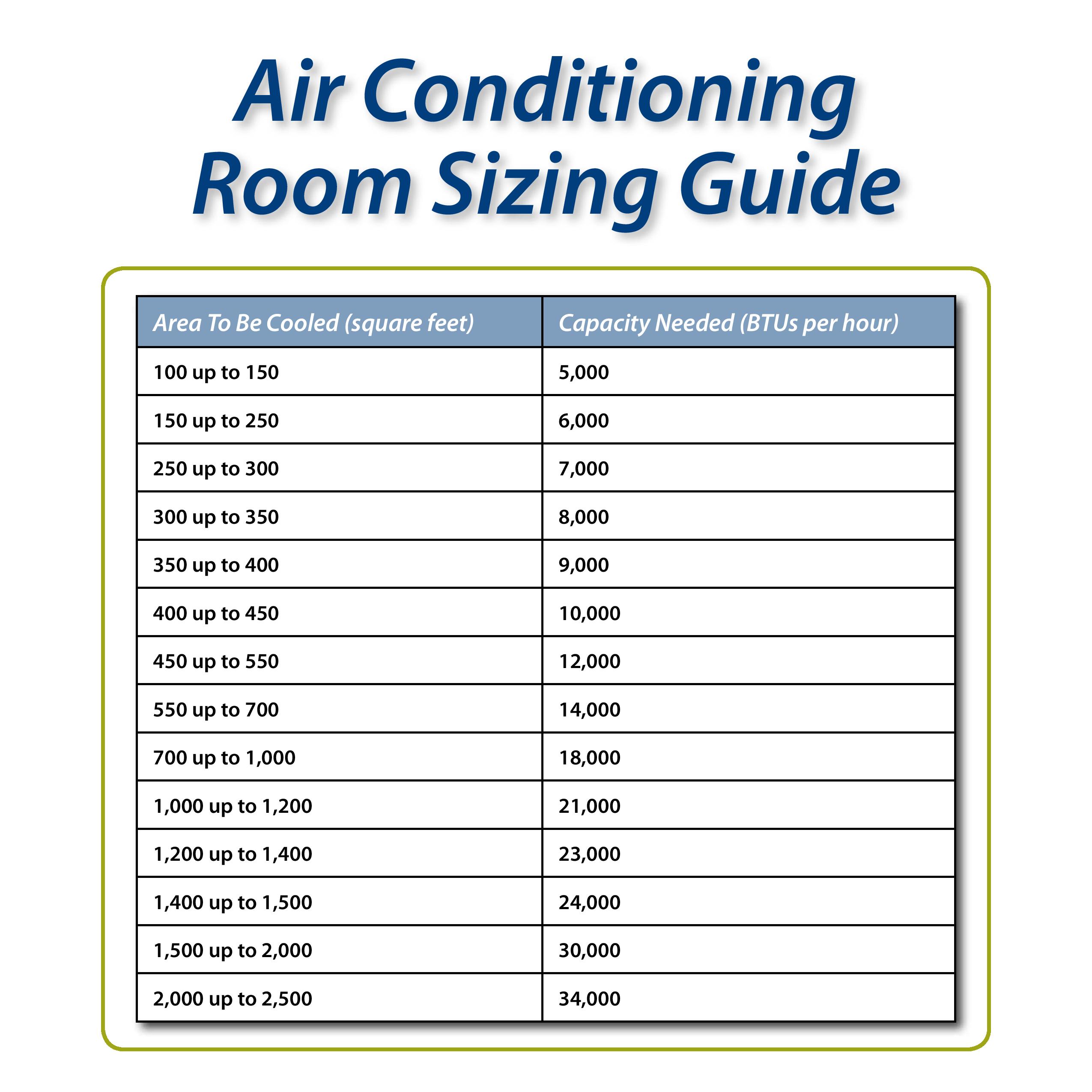
So, you've got your square footage. Now what? You need to translate that into BTUs (British Thermal Units), which is basically the measure of how much cooling power an AC unit has. A general rule of thumb is to use 20 BTUs per square foot. So, for our 180 square foot living room, you'd need an AC with approximately 3,600 BTUs (180 x 20 = 3600). However, remember those extra factors we talked about? Adjust that BTU number upwards for sunny rooms, kitchens, or if you have lots of people hanging out in the space.

Think of BTUs as the "horsepower" of your AC. More horsepower means more cooling power. But just like with a car, you don't want to get something ridiculously overpowered if you don't need it.
When in Doubt, Ask a Pro
Look, this is a pretty straightforward guide, but if you're feeling overwhelmed or just want to be absolutely sure you're getting the right size AC, don't hesitate to consult with a professional HVAC technician. They can assess your specific needs and recommend the perfect unit for your space. It's like going to a tailor to get a suit perfectly fitted – it's worth the investment to get it right!
So, go forth and conquer that square footage! With a little measuring and some basic math, you can ensure that your home stays cool and comfortable all summer long. And remember, a happy AC means a happy you! Stay cool!
