How To Calculate Kwh From Watts

Ever gazed at an appliance label, spotting a number followed by "W" or "Watts," and then pondered how that relates to the mysterious "kWh" on your electricity bill? It might sound like a riddle from a science class, but understanding how to calculate kWh from Watts is actually a pretty cool superpower to possess! It's not just for engineers; it's a wonderfully practical bit of knowledge that can make you feel more in tune with the energy swirling around your home.
The main purpose of this little calculation is to help us translate instantaneous power (Watts) into total energy consumed over time (kilowatt-hours). Think of Watts as how hard an appliance is working right now, like the speed of a car. Kilowatt-hours (kWh), on the other hand, measure how much work it has done over a period, like the distance the car has travelled. The benefits of knowing this go beyond just curiosity. You can actually start to demystify your electricity bill, make smarter purchasing decisions for energy-efficient gadgets, and even pinpoint those sneaky energy hogs that might be silently draining your wallet and the planet’s resources. It's about gaining control and becoming a more informed energy consumer.
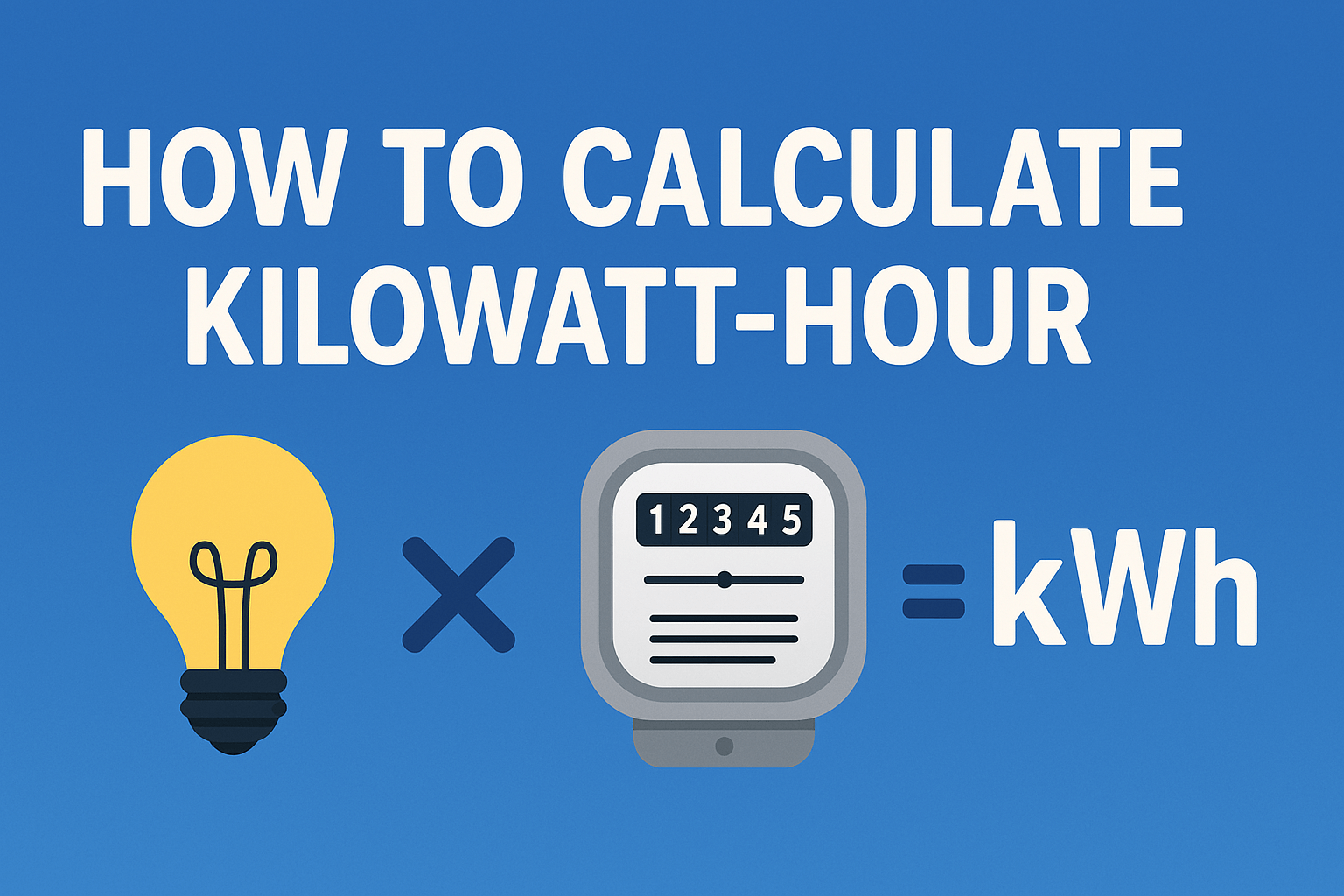
So, how do we perform this magical conversion? It's surprisingly straightforward! You just need two pieces of information: the appliance's wattage (how many Watts it uses) and the number of hours it's in operation. The basic formula looks like this:
(Watts × Hours Used) ÷ 1000 = kWh
Must Read
Why divide by 1000? Because "kilo" literally means 1000! So, we're converting Watt-hours into kilowatt-hours. For example, if your trusty coffee maker uses 1000 Watts and you brew coffee for 0.5 hours (30 minutes) each day, it would be (1000 W × 0.5 h) ÷ 1000 = 0.5 kWh per day. Multiply that by 30 days, and you've got 15 kWh a month for your morning caffeine fix!

This knowledge isn't just for theoretical exercises; it has real-world applications everywhere! In daily life, you can use it to estimate the running cost of your gaming console during a weekend marathon, figure out if leaving your phone charger plugged in all day really matters (spoiler: it's usually minimal, but still!), or compare the energy appetite of a new LED TV versus your old plasma screen. In education, it’s a fantastic way to bring math and science to life. Imagine a school project where kids calculate the total energy used by their classroom over a week, or a practical lesson in home economics about budgeting for utilities!
Ready to put your newfound superpower to the test? Here are some practical tips to start exploring:
- Grab an appliance and look for its wattage rating – it's usually printed on a sticker or etched into the device itself.
- For even more precise readings, consider investing in an inexpensive kill-a-watt meter. You plug your appliance into it, and it tells you exactly how many Watts it’s currently drawing, or even its total kWh over time!
- Start small. Pick one appliance you use frequently, like a lamp or a fan, and calculate its daily or weekly kWh.
- Challenge yourself to find an "energy vampire" – an appliance that uses power even when turned off (this is called "phantom load").