How To Calculate How Many Solar Panels You Need
Ever looked up at a roof shimmering with solar panels and wondered, “How did they figure out how many to put up there?” It’s a question that's becoming increasingly relevant (and honestly, pretty cool!) as more and more people explore renewable energy. Thinking about solar isn't just about saving the planet (though that’s a huge perk!); it’s also about potentially saving money, increasing your home's value, and gaining a little energy independence. So, let's demystify the process of calculating your solar panel needs.
The purpose of figuring out the right number of solar panels is simple: to generate enough electricity to meet your energy demands. The benefits are equally clear: reduced electricity bills, a smaller carbon footprint, and perhaps even selling excess energy back to the grid (depending on your local regulations). It's about achieving a balance between your energy usage and the power your solar system produces. Too few panels and you'll still be reliant on the grid; too many and you might be generating more power than you need, which, while possibly profitable, represents an initial over-investment.
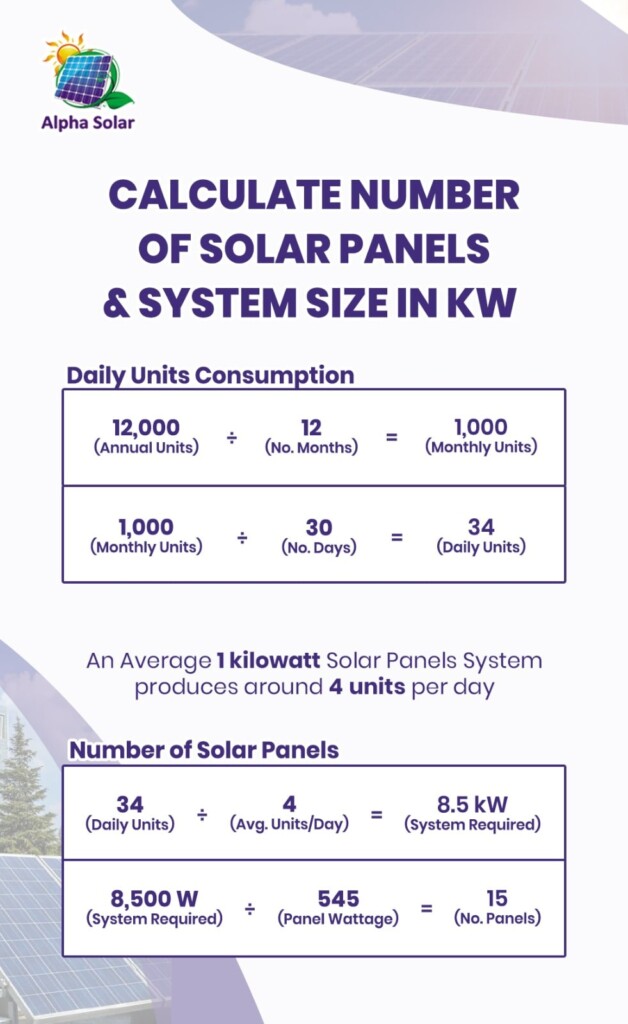
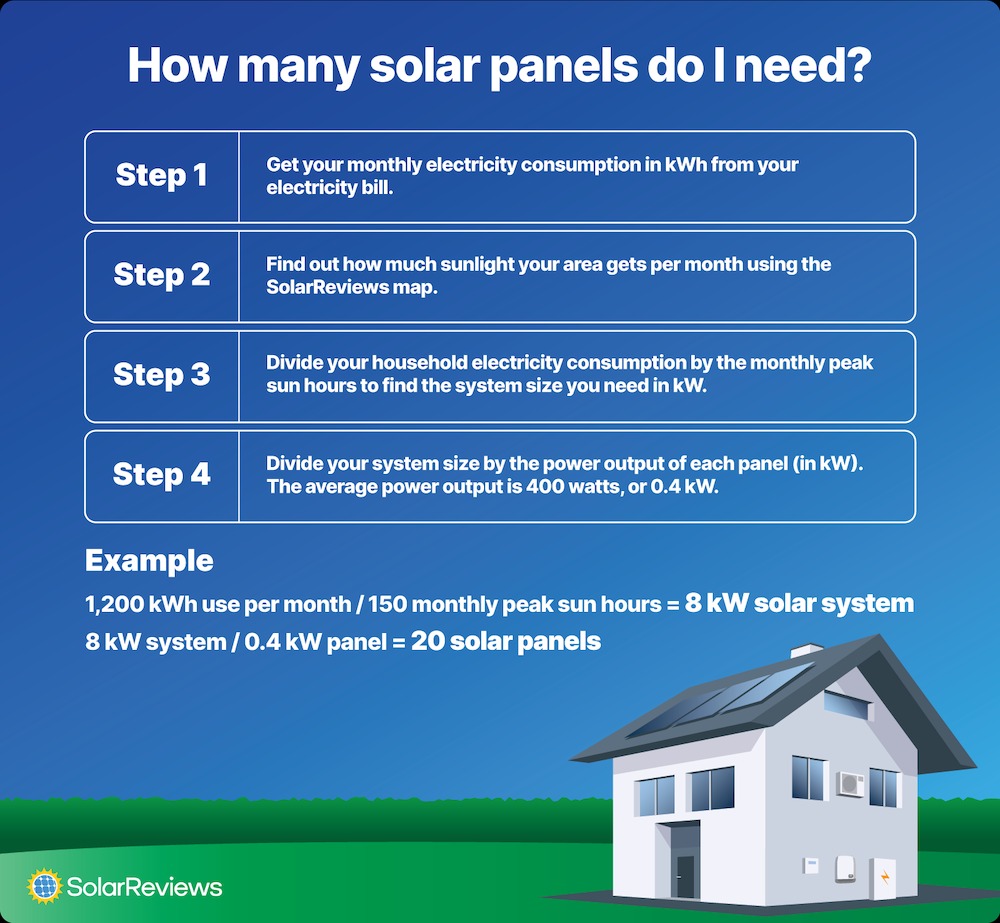
So, where do you start? It might sound intimidating, but the basic calculation involves a few key pieces of information. First, you need to determine your average daily energy consumption. This is usually measured in kilowatt-hours (kWh) and can be found on your electricity bill. Most utility companies provide a detailed breakdown of your energy usage over the past year.
Must Read
Next, you need to consider your location and the amount of sunlight it receives. This is referred to as "solar irradiance" and varies depending on where you live and the time of year. Websites like the National Renewable Energy Laboratory (NREL) offer tools to estimate solar irradiance data for specific locations. You'll want to find out the "peak sun hours" for your area – essentially, the number of hours per day your panels will receive the equivalent of full sunlight.
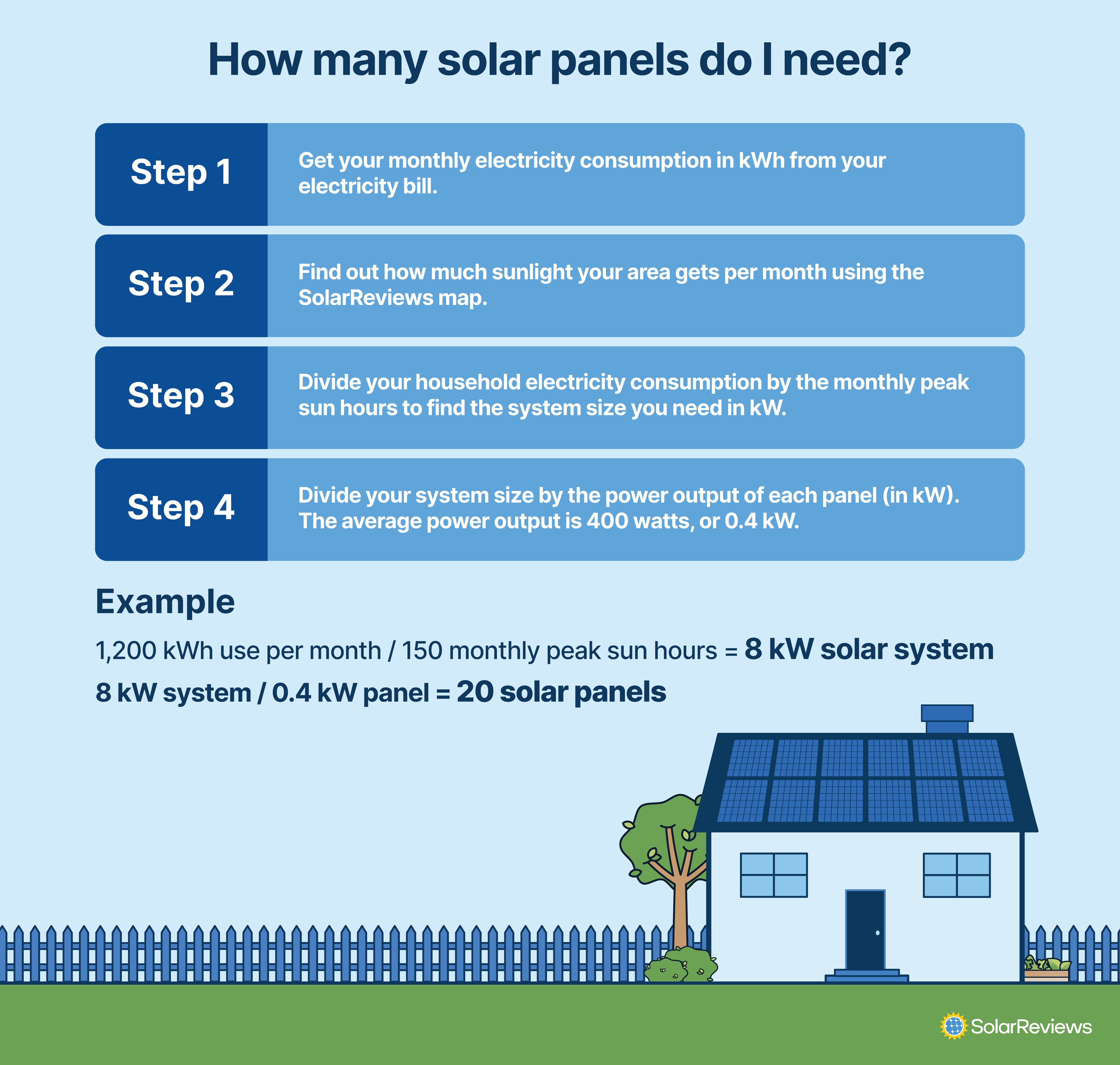
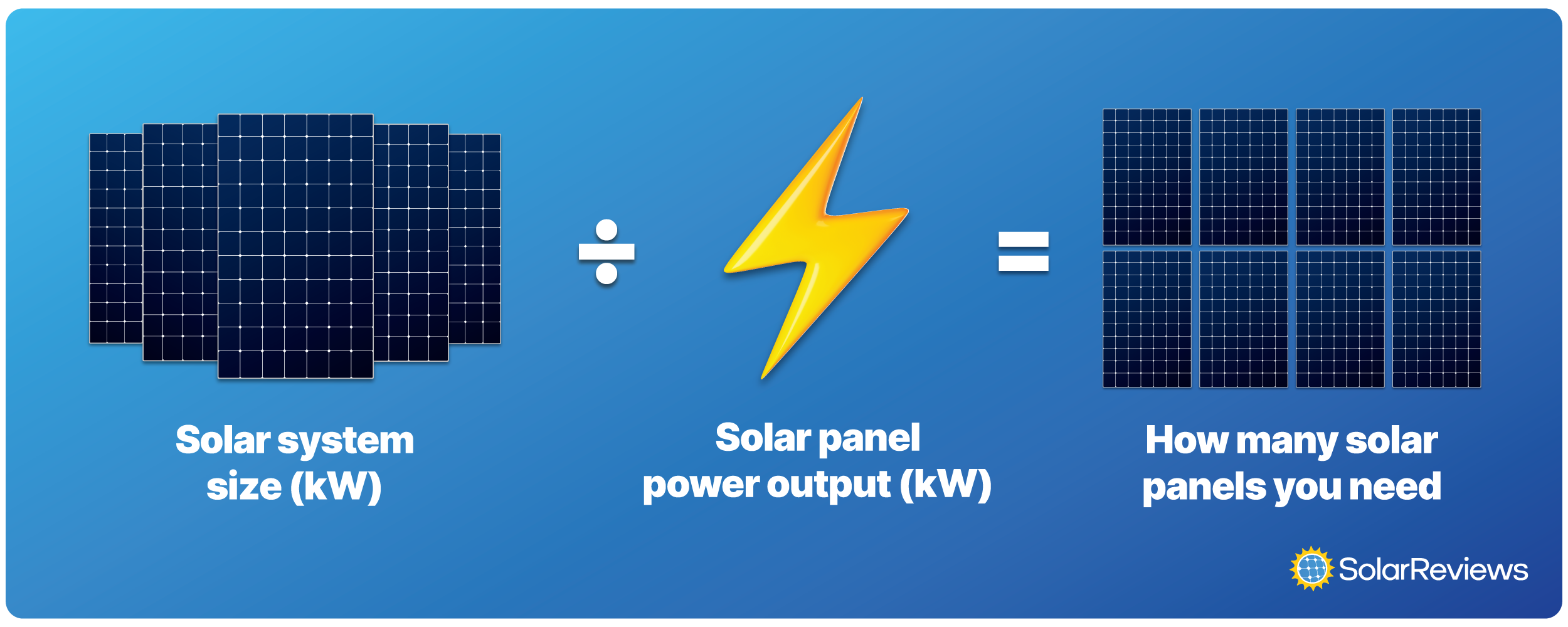
Finally, you need to know the power output of your chosen solar panels. This is usually specified by the manufacturer in watts (W). A typical residential solar panel might produce between 300 and 400 watts.
Here's a simplified (very simplified!) example: Let's say your average daily energy consumption is 20 kWh, and your location gets 5 peak sun hours per day. You're using 400-watt panels. To estimate the number of panels needed, you would first convert your energy consumption to watt-hours (20 kWh * 1000 = 20,000 Wh). Then, divide that by the product of the panel wattage and peak sun hours (20,000 Wh / (400 W * 5 hours) = 10 panels). So, in this highly simplified scenario, you'd need roughly 10 panels.

This is a very basic calculation. It doesn't account for factors like panel efficiency, shading, system losses (due to wiring and inverters), and the angle of your roof. For a more accurate assessment, it's always best to consult with a qualified solar installer. They can perform a detailed site assessment and provide a personalized quote.
But even without going full-solar, you can explore these concepts in everyday life! For example, you can use this math to calculate how long it would take to charge a portable power station using a small, portable solar panel. It’s a fun way to get a sense of how solar energy works on a smaller scale. You could also try tracking your home's energy usage for a week and comparing it to estimates provided by online solar calculators. The more you explore, the more you'll appreciate the power and potential of the sun!