How To Adjust A Pressure Switch On A Water Pump

Hey there, fellow DIY enthusiasts! Ever wondered how that magical box attached to your water pump, the one that keeps your water flowing smoothly, actually works? I'm talking about the pressure switch. It's like the conductor of your home's water orchestra, making sure everything plays in tune. And guess what? You can actually adjust it yourself!
Now, before you freak out and think you're about to mess up your entire plumbing system, relax. Adjusting a pressure switch isn't rocket science. Think of it more like tuning a guitar. A little tweak here and there can make all the difference. Why is this cool? Well, because you're taking control of your water pressure, potentially saving energy, and becoming a total homeowner hero.
Why Bother Adjusting it Anyway?
Good question! Why mess with something that (presumably) already works? Well, sometimes things aren't quite right. Maybe your water pressure feels a little weak, like a timid shower instead of a refreshing deluge. Or perhaps your pump is cycling on and off too frequently, which is like a car constantly starting and stopping – not good for its lifespan (or your electricity bill!).
Must Read
Adjusting the pressure switch allows you to fine-tune the pressure range your pump operates within. Think of it like setting the volume on your TV. Too low, and you can't hear anything. Too high, and it's ear-splitting. The pressure switch lets you find that sweet spot for your water pressure.
The Anatomy of a Pressure Switch (Don't Worry, It's Simple!)
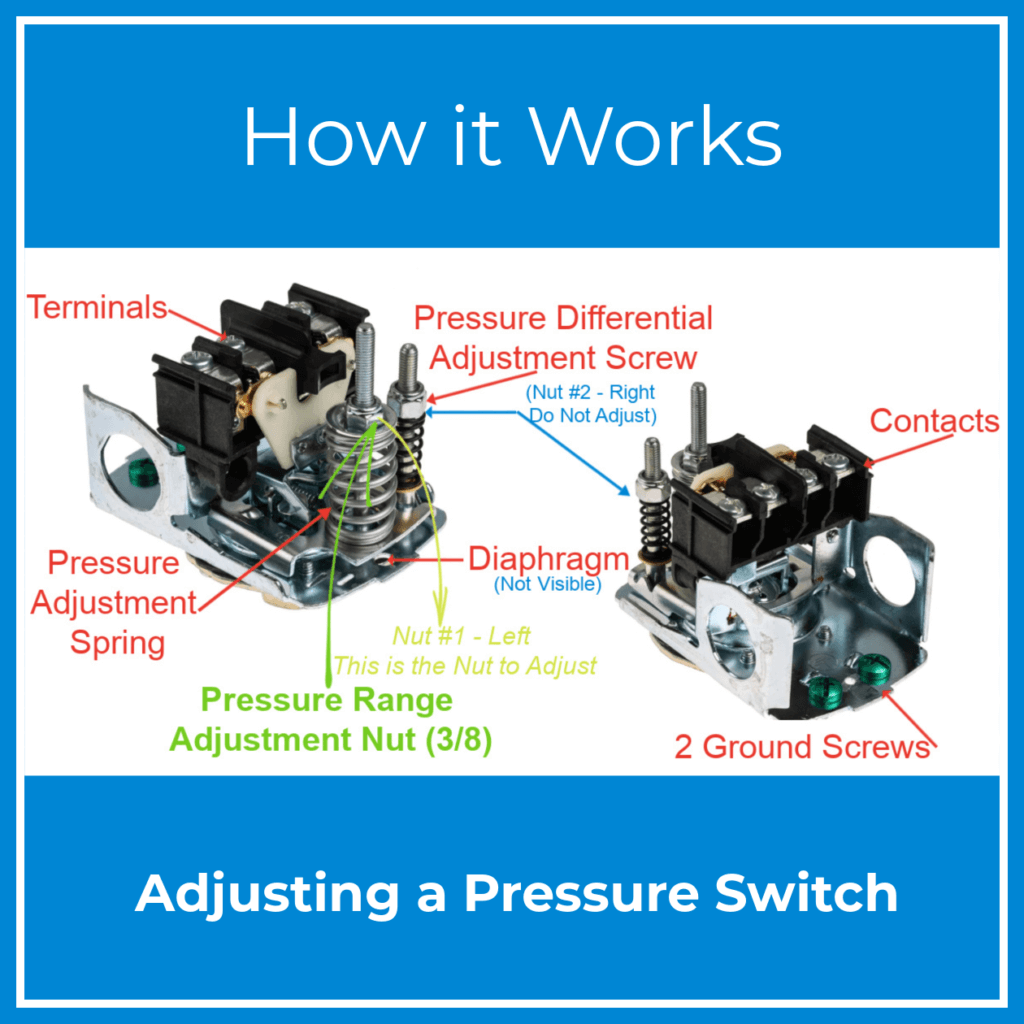
Okay, let's peek under the hood. A pressure switch is usually a small, rectangular box with a few wires coming out of it. Inside, you'll find a spring mechanism and typically two nuts that you can adjust. These nuts are the key to controlling the pressure settings.
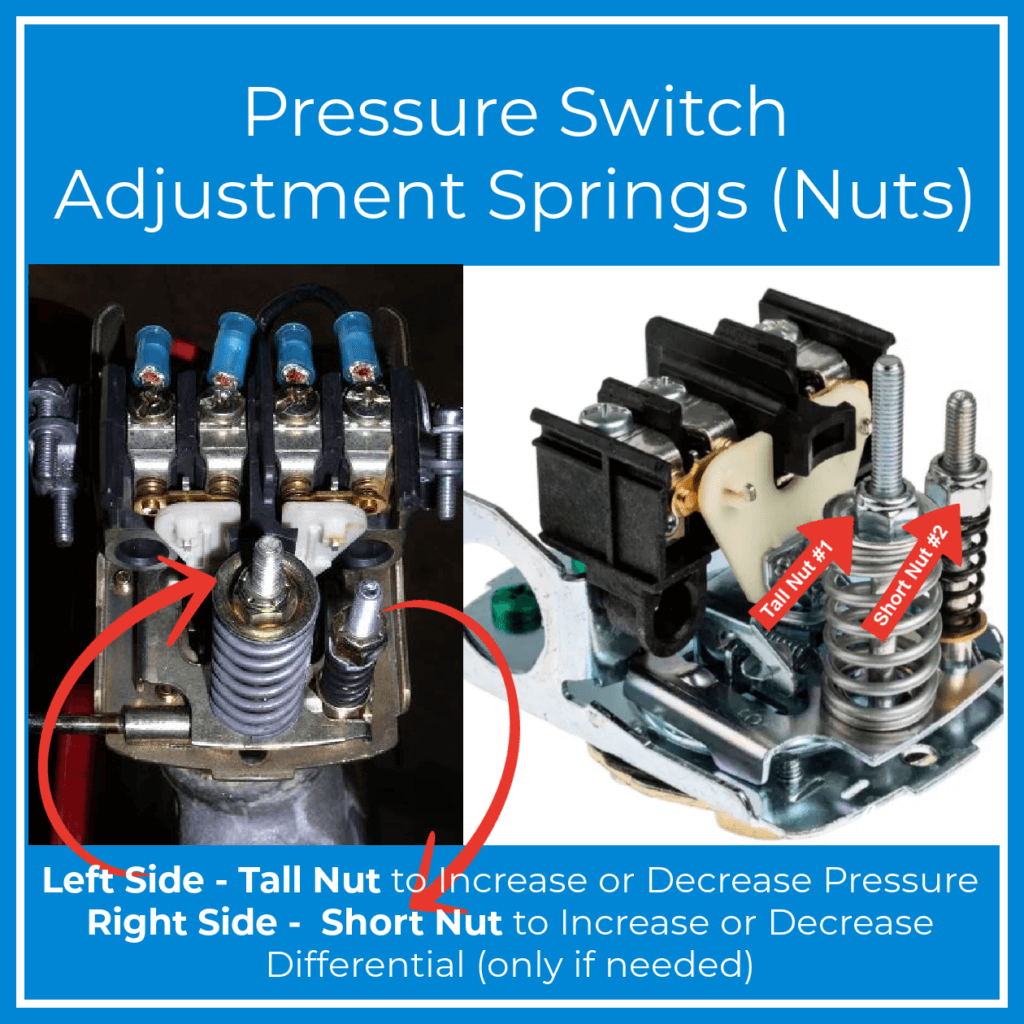
The larger nut usually controls the overall pressure range – the difference between when the pump kicks on (the cut-in pressure) and when it shuts off (the cut-out pressure). The smaller nut typically adjusts the differential, which is the difference between the cut-in and cut-out pressure. Think of the larger nut as adjusting the entire song's volume, and the smaller nut as tweaking the dynamics (the loud and soft parts) within that song.
The Adjustment Process: Step-by-Step (Keep it Safe!)
Safety first! Before you even think about touching anything, turn off the power to your water pump at the breaker box. Seriously, this is crucial. We don't want any accidental electrocution adventures.

- Locate the Pressure Switch: It's usually mounted near the pressure tank on your water pump system.
- Remove the Cover: Carefully unscrew or pop off the cover of the pressure switch.
- Identify the Adjustment Nuts: Remember, the larger nut usually controls the pressure range, and the smaller one adjusts the differential.
- Make Small Adjustments: This is where the finesse comes in. Use a wrench to make small adjustments to the nuts. Turning the nut clockwise typically increases the pressure, while turning it counter-clockwise decreases it. Think of it like a very sensitive volume knob.
- Test and Observe: After each adjustment, turn the power back on to your pump and observe how it behaves. Does it kick on and off at the pressures you expect? Is the water pressure in your house where you want it?
- Repeat as Needed: Keep making small adjustments and testing until you achieve the desired pressure range. This might take a few tries, so be patient!
- Replace the Cover: Once you're happy with the settings, turn off the power again, replace the cover, and you're done!
Important Considerations and Troubleshooting
Don't go overboard! Avoid drastically changing the pressure settings. Small adjustments are key. Overdoing it can damage your pump or plumbing.
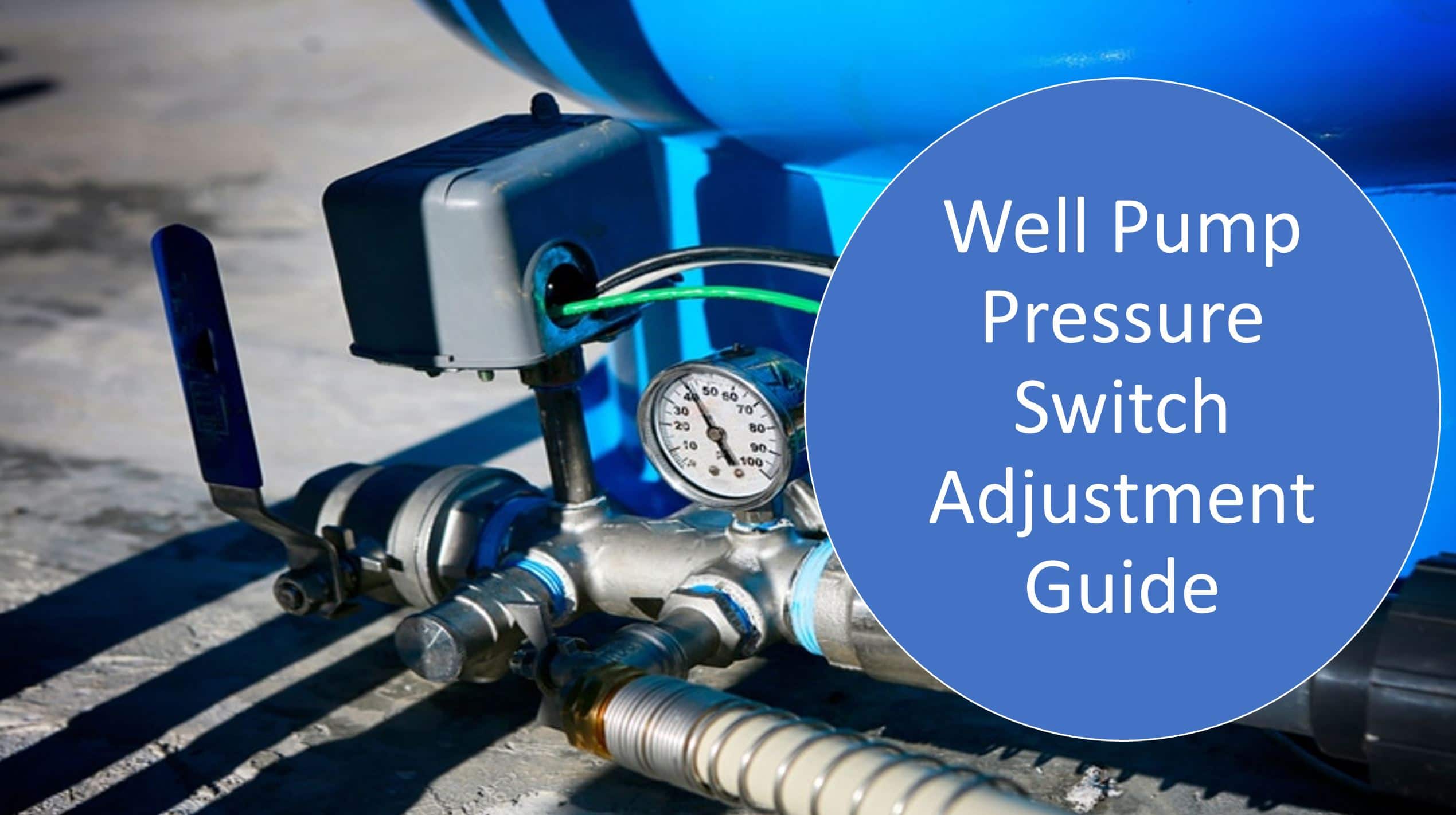
Watch the pressure gauge: Keep an eye on the pressure gauge on your pressure tank while you're adjusting the switch. This will give you a clear indication of the cut-in and cut-out pressures.
Pump still cycling too frequently? If your pump is still cycling on and off too often after adjusting the switch, you might have a leak in your system or a problem with your pressure tank. Time to call in a professional!
When in doubt, call a pro! If you're uncomfortable working with electrical components or plumbing, or if you're unsure about any part of the process, don't hesitate to call a qualified plumber or electrician. It's always better to be safe than sorry.
Final Thoughts: You've Got This!
Adjusting a pressure switch might seem a little intimidating at first, but with a little patience and careful attention, it's a task you can definitely tackle. Plus, knowing how to fine-tune your water pressure gives you a sense of control and ownership over your home's systems. So go ahead, give it a try (safely!), and enjoy the satisfaction of being your own water pressure maestro!