
How Solar Panel Works For Generate Electricity
Ever looked at a solar panel and wondered what magical secrets it holds? Turns out, it's not magic, but it's pretty darn close! Solar panels are like tiny electricity factories sitting on your roof, soaking up the sun's rays. It's an awesome way to create power!
Harnessing the Sun's Energy
The basic idea is simple: the sun shines, and the solar panel makes electricity. It's like a plant doing photosynthesis, but instead of making food, it makes power for your gadgets. Pretty cool, right?
But how does sunlight turn into electricity? That's where the fun, science-y stuff comes in. Get ready for a wild ride into the heart of solar energy!
Must Read
The Players: Photons and Semiconductors
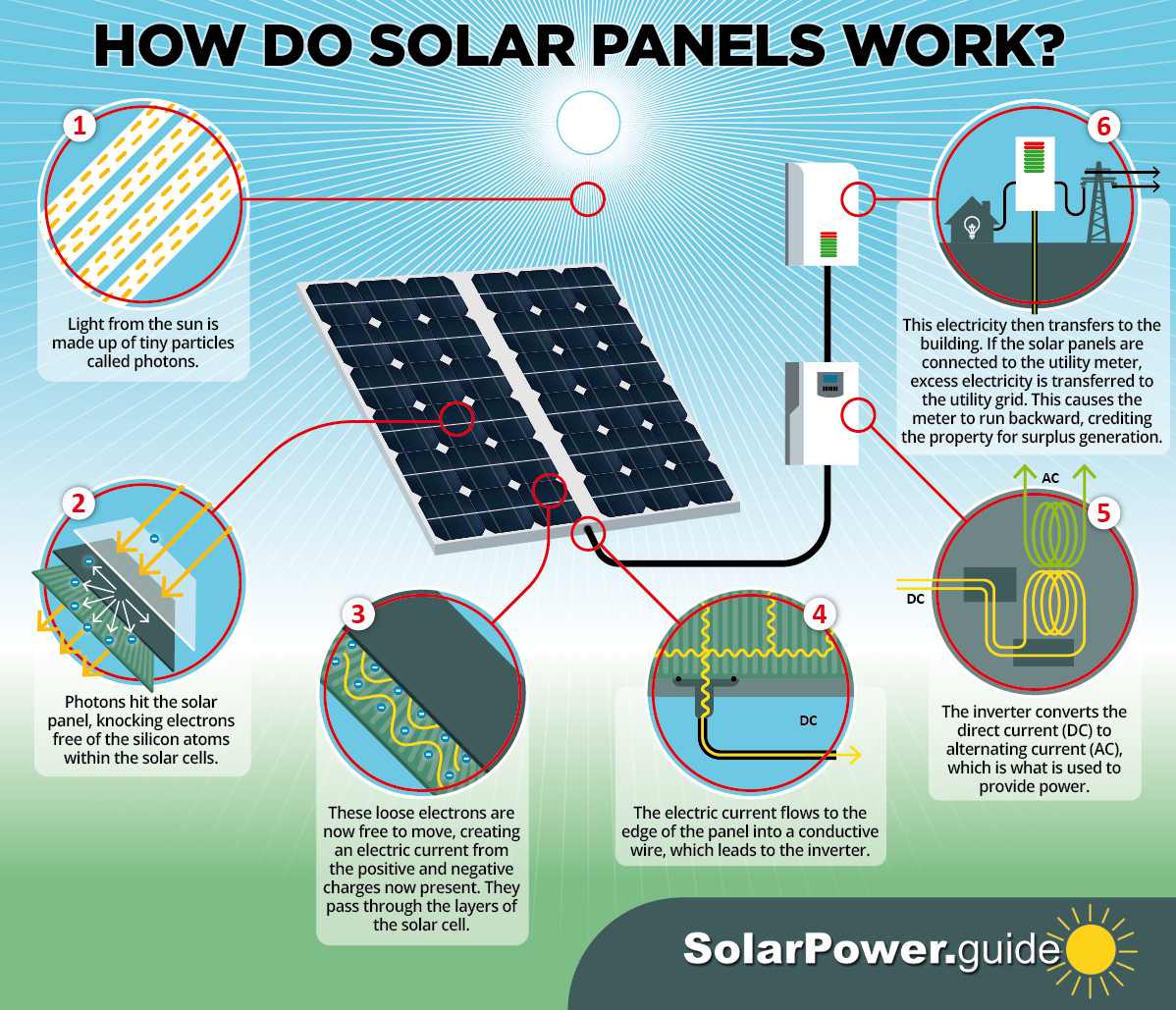
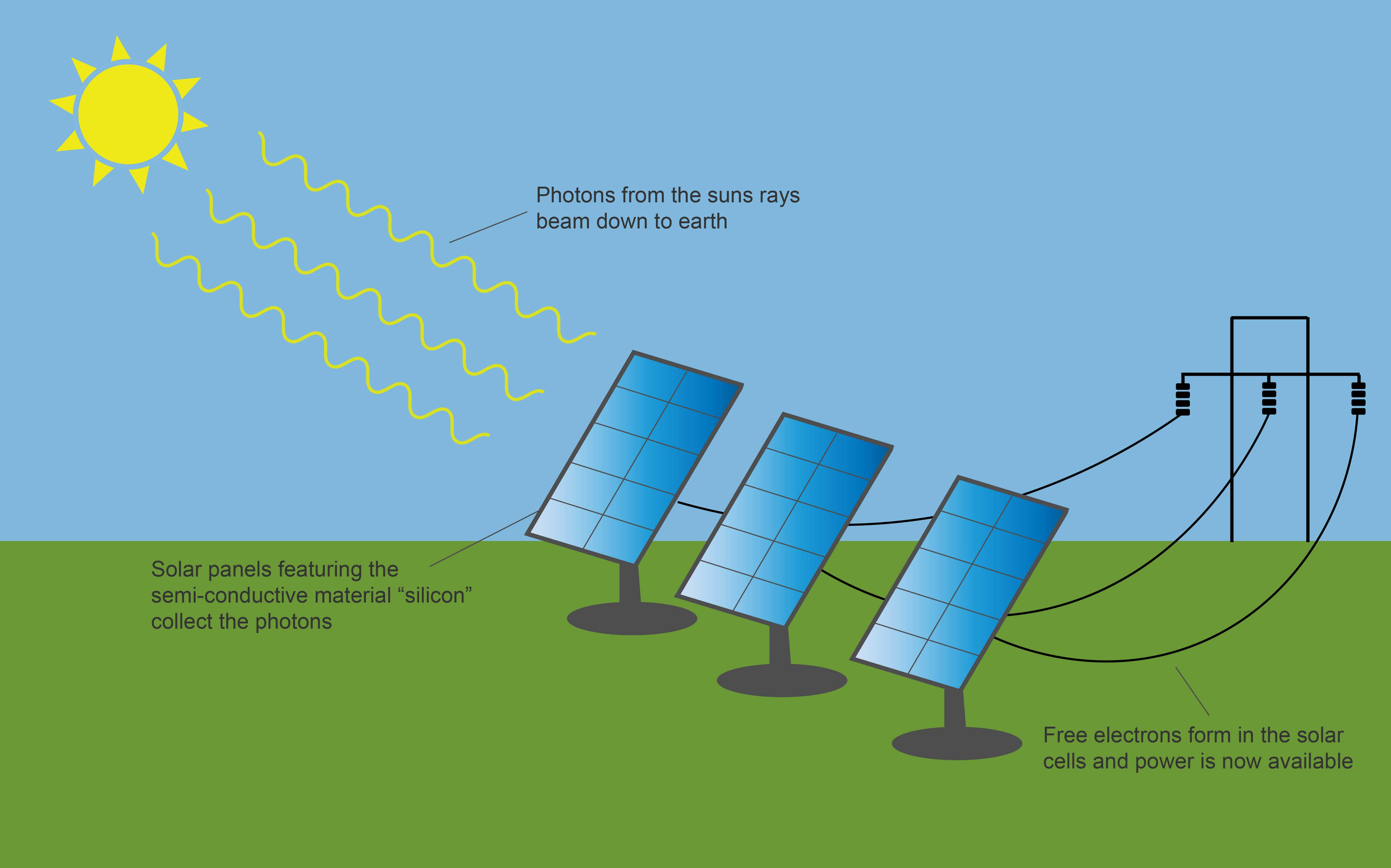
First, let's talk about the sun's rays. Sunlight is made up of tiny particles called photons. These photons are like little packets of energy zooming through space.
Next, we have the solar panel itself. It's mostly made of a special material called a semiconductor, often silicon. Think of silicon as a magical substance that can control the flow of electricity.
Semiconductors are cool because they're not quite insulators (like rubber) and not quite conductors (like metal). They're somewhere in between, which makes them perfect for this job.
The Dance: Photons Knocking Electrons Loose
Now, the exciting part! When sunlight hits the solar panel, the photons start bumping into the silicon atoms. It's like a tiny game of cosmic billiards.
When a photon hits an atom with enough energy, it can knock loose an electron. This electron is now free to move around.
These freed electrons are the key to generating electricity. We just need to give them a path to follow.
Creating an Electric Field
To create that path, solar panels are specially designed with two layers of silicon: a positive layer and a negative layer. These layers are created by adding tiny amounts of other elements to the silicon.

The negative layer has extra electrons, while the positive layer has spaces where electrons should be (called "holes"). This creates an electric field at the junction between the two layers.
The electric field acts like a one-way street for electrons. When a photon knocks an electron loose, the electric field forces it to move in a specific direction.
The Flow: Electrons Make Electricity
So, all these freed electrons are now flowing in the same direction, thanks to the electric field. And what is the flow of electrons? It's electricity!
The solar panel has metal contacts on the top and bottom. These contacts collect the flowing electrons and direct them into a circuit. It is like a river of electrons flowing through the circuit.
This electricity can then be used to power your lights, your TV, or even your entire house. All thanks to the amazing power of the sun!
From Sunlight to Power: The System
A solar panel is only one part of a solar energy system. You also need other components to make everything work smoothly.
The Inverter: Converting DC to AC
Solar panels generate electricity in the form of direct current (DC). This is the same kind of electricity you get from batteries.
But most homes and businesses use alternating current (AC). This is the type of electricity that comes from the power grid.
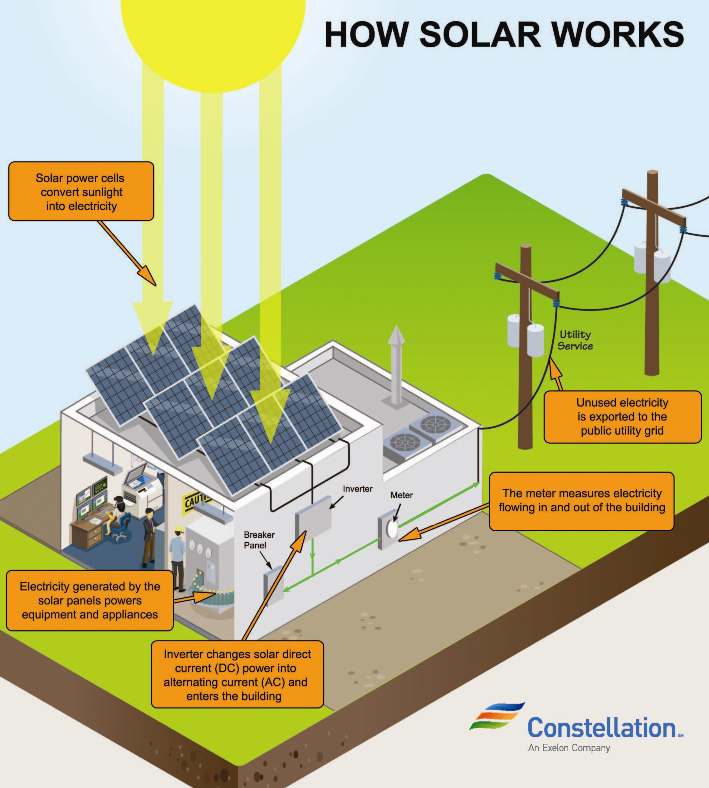
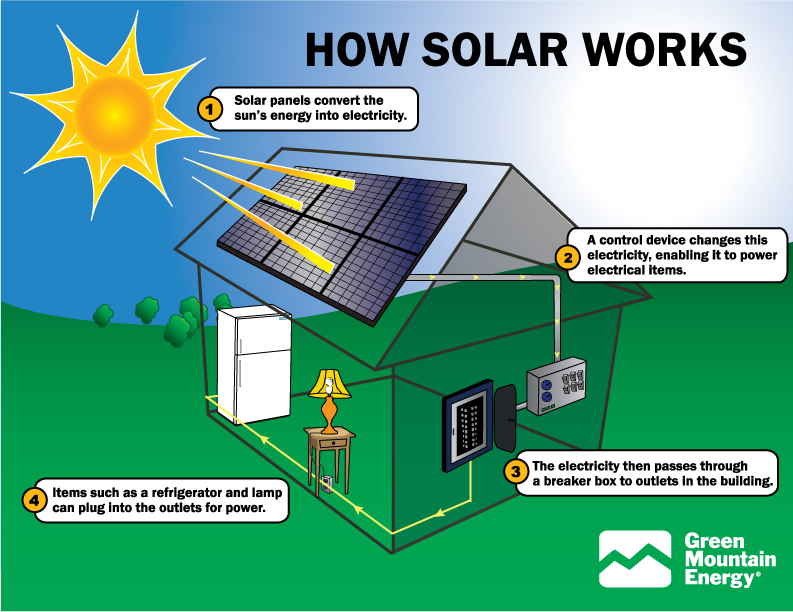
So, we need a device called an inverter to convert the DC electricity from the solar panels into AC electricity that we can use. The inverter is like a translator, changing the language of electricity.
The Grid: Sharing the Power
Once the electricity is converted to AC, it can be used to power your home. But what happens when you generate more electricity than you need?
That's where the power grid comes in. You can send your extra electricity back to the grid. Your electric company will often credit you for the electricity you send back.
This is called net metering, and it's like getting paid for helping the environment! It's a win-win situation.
Batteries: Storing Energy for Later
Sometimes, you might want to store the electricity you generate for later use. For example, you might want to use solar power at night, when the sun isn't shining.
That's where batteries come in. You can store excess solar energy in batteries and use it whenever you need it. Batteries are like energy banks, holding onto power for a rainy day (or a cloudy night).
Battery technology is improving all the time, making solar energy even more reliable and convenient.
Why Solar is Awesome
So, why is solar energy so great? There are tons of reasons! Here are a few of the highlights.
Clean Energy
Solar energy is a renewable energy source. The sun is constantly shining, so we'll never run out of it. It is unlike fossil fuels, which are finite and polluting.
Solar energy is also clean. It doesn't produce harmful emissions or greenhouse gases. It helps to protect our planet!
By switching to solar, you're helping to reduce your carbon footprint and create a cleaner future for everyone.
Cost Savings
Solar panels can save you money on your electricity bills. Once you've installed solar panels, you're generating your own electricity. You reduce your reliance on the power grid.
In some cases, you can even eliminate your electricity bill altogether! Imagine how much money you could save over the lifetime of your solar panels.
Plus, many governments offer incentives and tax credits for installing solar panels. This can help to offset the initial cost of installation.
Energy Independence
Solar energy can give you more control over your energy supply. You're less vulnerable to price fluctuations and power outages. Feel empowered when you generate your own electricity.
It's like having your own personal power plant on your roof. You are less dependent on large corporations.
With solar energy, you can become more energy independent and resilient.
Is Solar Right for You?
Solar energy is an amazing technology with the potential to transform the way we power our world. It is clean, cost-effective, and empowering.
If you're curious about solar, there are many resources available to help you learn more. Talk to solar installers, research online, and see if solar is right for you.
You might be surprised at how easy and affordable it can be to switch to solar. It's a bright idea for a brighter future!