
How Often Do Cats Get In Heat
:max_bytes(150000):strip_icc()/will-heat-cycle-end-after-mating-554846_V2-dfdd387c61594efab70d34e2f688b213.png)
Our feline friends are masters of mystery, aren't they? They stalk through our homes with a regal air, judging us silently, then suddenly demand cuddles with an intensity that could rival a tiny, purring tornado. We adore them for their quirky personalities, their independent spirits, and those moments when they curl up on our laps and melt our hearts. But beneath that calm, cool, and collected exterior lies a world of fascinating biology, especially when it comes to the question of… well, love. Or rather, the feline version of it: going "in heat."
If you’ve ever owned an unspayed female cat, you might have experienced what many lovingly refer to as the "cat opera" or the "midnight zoomies with a purpose." It’s a period that can leave even the most seasoned cat owner scratching their head, wondering, "Is she okay? What is she doing? And how often does this happen?!"
The Cat's Unique Love Life: Not So Random After All
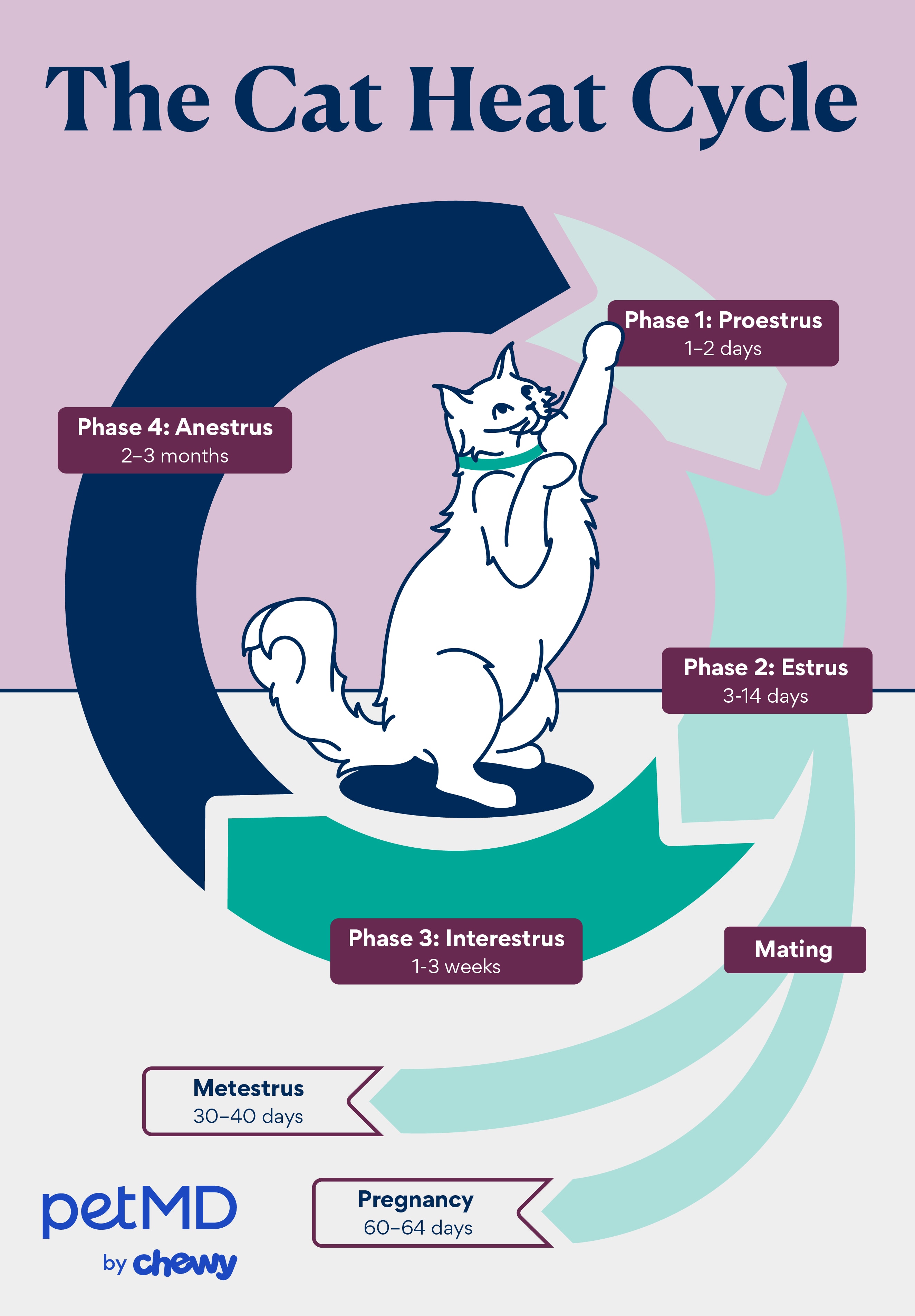
Here's where it gets interesting, and perhaps a little surprising. Unlike dogs, who often come into heat a couple of times a year, or humans with their monthly cycles, cats operate on a different schedule altogether. They are what biologists call seasonally polyestrous. Don't let the fancy word scare you; it just means they come into heat multiple times, but only during certain seasons.
Must Read
Think of it like this: When the days are longer and warmer – typically from early spring right through to late autumn – that's prime time for a queen (that's what we call a female cat) to be ready for romance. During these months, Mother Nature puts them on a fast track to potential parenthood.
And here's the kicker: If a female cat isn't mated during this fertile period, she can cycle back into heat incredibly quickly. We're talking every two to three weeks! Yes, you read that right. Not months apart, but just a couple of weeks. Imagine being on repeat like that! It's nature's ingenious way of ensuring that if the first attempt at finding a mate doesn't pan out, or if the conditions aren't right, there's another chance just around the corner, and another, and another, all within the favorable breeding season.
The Signs: More Opera, Less Opera House
So, how do you know your beloved furball is experiencing her own version of spring fever? Unlike some other animals, cats don't typically show obvious physical signs like bleeding. Instead, their "heat" is mostly about behavior – and oh, what behavior it can be!
You might notice your usually demure cat suddenly becoming the most vocal creature in your home. We're talking persistent, loud meows, howls, and even yowls that sound less like a happy greeting and more like a soul-stirring cry for a long-lost love. This can be quite alarming for first-time owners who might think their cat is in pain!
Then there's the extreme affection. She might rub against everything and everyone – your legs, the furniture, the doorframes – leaving her scent to announce her availability. You'll likely see her rolling on the floor with dramatic flair, perhaps even presenting her rear end with her tail held to one side, treading with her back paws in what’s known as the lordosis posture. This isn't just a playful wiggle; it's a clear signal to any nearby male cats that she's ready to mingle. And if there's an open window or door? Get ready for some serious escape attempts!

Why All the Rush? Nature's Master Plan
Why such a frequent, intense cycle? It all goes back to survival in the wild. In a world where kitten mortality can be high, and ideal breeding conditions (like longer daylight hours and abundant food) are seasonal, cats need to be incredibly efficient at reproducing. Their rapid cycling ensures multiple opportunities to conceive within that precious window. Plus, here's another fun fact: cats are induced ovulators. This means they only release eggs after mating. This makes every "date" super productive, maximizing their chances of pregnancy. Talk about efficient!
A Loving Choice: Spaying Your Queen
Understanding this intense, frequent reproductive cycle helps us appreciate our cats even more – and understand why spaying is such a common and loving choice for pet owners. When you spay your female cat, you not only prevent unwanted pregnancies (which contribute to the staggering number of homeless cats) but also completely eliminate these noisy, attention-demanding heat cycles.

A spayed cat is generally a calmer cat, less stressed by the constant hormonal urges and the drive to escape. Plus, spaying offers significant health benefits, drastically reducing the risk of mammary cancer and completely eliminating the possibility of uterine infections.
So, the next time your purring companion gives you that mysterious look, remember the incredible biological journey she's on (or has happily opted out of!). Our cats are truly remarkable creatures, full of surprising quirks and fascinating natural instincts, making them all the more endearing members of our families.
