
How Much Wind Energy Is Used In The United States

Okay, so picture this: I'm driving through West Texas, right? Nothing but wide-open spaces and tumbleweeds (okay, maybe I didn't actually see a tumbleweed, but you get the vibe). And then BAM! A forest of these massive, graceful wind turbines starts appearing on the horizon. It was kind of awe-inspiring, and also made me think, "Wow, we must be using a TON of wind energy in the US these days." Which got me wondering… how much exactly?
Well, buckle up, buttercup, because we’re about to dive into the whirlwind world (get it?!) of wind energy in the good ol' US of A.
Wind Power: Not Just Pretty Scenery
Let's get straight to the point: wind energy is becoming a big deal. And when I say big, I mean BIG. We're talking about powering millions of homes and businesses. Forget just seeing them on road trips, wind turbines are actually a serious player in our energy mix.
Must Read
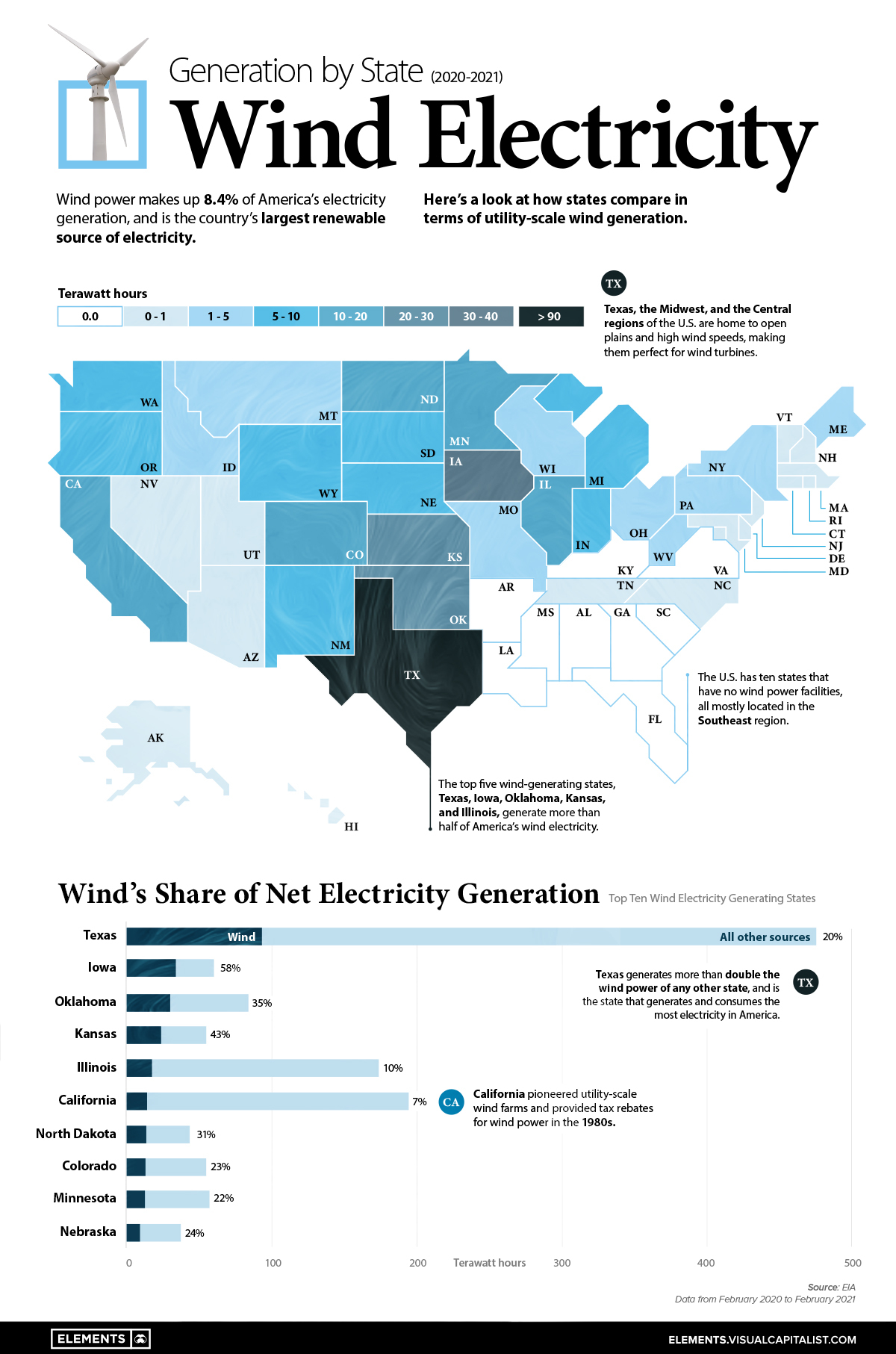
So, how much are we talking? Okay, official numbers can be a little dry, but I'll try to spice things up. In 2022, wind energy accounted for over 10% of the total electricity generated in the United States. That's more than hydropower, by the way! And guess what? That number has been steadily increasing.
Think about that: one-tenth of the electricity powering your phone, your fridge, your ridiculously oversized TV, might be coming straight from the wind. Pretty cool, huh? (And way less polluting than some of the other options, just sayin'.)

Where's All This Wind Comin' From?
Great question! (See? I knew you were smart.) The windiest states are where you'll find the majority of wind farms. We're talking Texas (everything's bigger in Texas, including their wind farms!), Iowa, Oklahoma, Kansas, and California. These states have the geography and climate that are just perfect for harnessing the power of the wind.
Side note: I always imagine those wind turbines thinking, "Finally, a purpose! I'm not just spinning around for fun!"
But it's not just the wide-open plains. We're also starting to see more offshore wind farms popping up along the coasts, which is pretty exciting. Imagine gigantic turbines standing tall in the ocean! Talk about a statement piece.

The Future's Blowin' in the Wind
Okay, cheesy pun alert, but I couldn't resist. Seriously though, the future of wind energy is looking bright – and breezy! The Department of Energy has ambitious goals to significantly increase wind power generation in the coming years.
Why? Well, for starters, it's a renewable resource. The wind isn't going anywhere (hopefully… climate change is a thing, after all). It also helps reduce our reliance on fossil fuels, which is a win for the environment. And, perhaps surprisingly, it's becoming more and more cost-competitive with traditional energy sources.
There are, of course, challenges. Like the fact that wind isn't always blowing consistently. (Wouldn't that be nice?). Or the concerns about the visual impact of wind farms (some people find them beautiful, others not so much). But scientists and engineers are working hard to overcome these hurdles and make wind energy an even more reliable and efficient source of power.
Bottom line: Wind energy is a growing and increasingly important part of the US energy landscape. So next time you see a wind turbine, take a moment to appreciate the fact that it's helping to power our homes, our businesses, and our future. And maybe even give it a little wave. I mean, it deserves it, right?
Now, if you’ll excuse me, I'm going to go outside and… well, not chase the wind, but you know, appreciate it. You should too!
