
How Much Power To Run A Fridge
Alright, so picture this: you walk into your kitchen, grab a snack, maybe a cold drink, and then you shut the door to that big, humming box. We're talking about your fridge, of course! It’s just… always there, always on, keeping your goodies perfectly chilled. But have you ever stopped to actually wonder: how much power does this essential kitchen buddy really use?
It’s one of those things we often take for granted, right? Unlike your TV or microwave, which you actively turn on and off, the fridge is a silent, constant worker. And because it's always on, even if it uses a little bit of power, that little bit can really add up. So, let’s peel back the layers of this frosty mystery and get curious about the energy behind our perfectly preserved leftovers!
The Invisible Power User
Your fridge is a bit of an enigma. It doesn’t have flashy lights or loud motors (usually!). But deep down, it’s constantly battling to keep the inside much colder than the outside, and that takes energy. Think of it like a tiny, domestic superhero fighting off the forces of warmth 24/7. 🦸♀️
Must Read
When we talk about power, we usually hear about watts. That's the immediate rate of power usage – like how fast a car is going at any given moment. A small LED light bulb might be 10 watts. A powerful hairdryer? Way more, like 1500 watts! But for your electricity bill, what really matters is kilowatt-hours (kWh). This is watts over time – essentially, how much total energy you've consumed, like the total distance that car has traveled over an hour.
Your utility company charges you for the "miles covered" (kWh), not just how fast you're going at any single second (watts). Understanding this distinction helps us grasp the fridge's constant, but often low, energy demand.
So, How Much Power Are We Talking? The Big Reveal!
Okay, let’s get to the juicy numbers! The answer, as with most things, is a bit nuanced and depends on a few factors, but here’s a good ballpark:

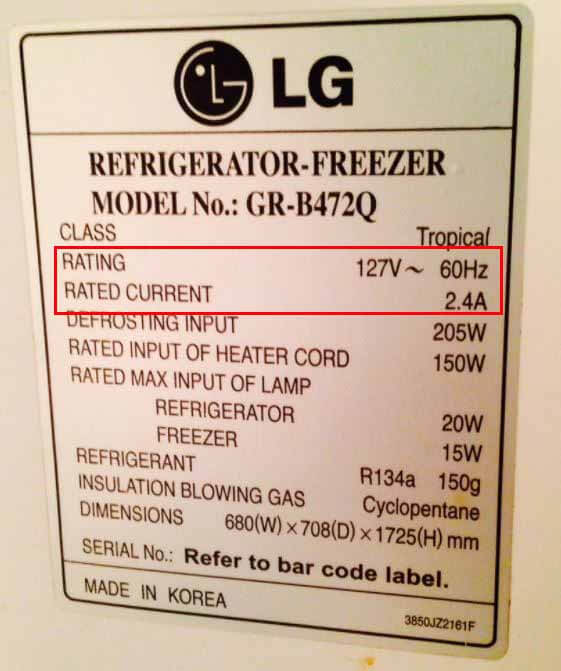
When your fridge’s compressor kicks on (that’s the engine that does the heavy lifting of cooling), it might use anywhere from 100 to 400 watts. But here's the cool part: it doesn’t run all the time! Modern fridges are pretty smart. They cycle on and off to maintain the temperature, only working when needed.
So, on average, a modern, energy-efficient fridge might use somewhere between 1 to 2 kilowatt-hours (kWh) per day. Yep, just one or two units of electricity to keep all your food fresh for 24 hours!
To put that into perspective, running your fridge for an entire day is often comparable to:
- Charging your smartphone about 30-40 times (a phone charger usually uses about 5-10 watts).
- Having a powerful gaming PC on for maybe 2-3 hours (which can easily pull 300-500 watts).
- Leaving just one old-school 60-watt incandescent light bulb on for about 20-30 hours.
- Or even running a standard microwave for only 10-15 minutes total throughout the day!
Pretty impressive for something so crucial and consistently working, right? It's not the dramatic power spike of a vacuum cleaner, but rather a slow, steady hum of efficiency.
What Makes a Fridge Thirsty for Power?
Like a curious detective, let's explore what makes some fridges sip power and others gulp it down:
Age and Efficiency
This is a big one! An older fridge from, say, the 90s could easily use three or four times the energy of a brand-new, sleek Energy Star certified model. Technology has come a long, long way in making these appliances incredibly efficient. If your fridge is older than you are (or close to it!), it might be a silent power guzzler, slowly draining your wallet.
Size Matters (Sometimes!)
Logically, a giant side-by-side fridge with an ice maker will generally use more power than a tiny dorm-room mini-fridge. More space to cool means more work for the compressor. It's just more air to keep chilly!
How Often Do You Open the Door?
Every single time you open the door, a wave of warmer, humid air rushes in, and your fridge has to work harder to cool things down again. So, those indecisive moments staring into the abyss for a snack? They add up! 😉 Try to know what you want before you open the door!
Temperature Settings
Setting your fridge to "arctic blast" mode when "perfectly chilled" will do, just makes it work harder than necessary. Most fridges are happy and efficient when set between 37°F (3°C) to 40°F (4°C).
Where It Lives
Is your fridge tucked away in a cool, shaded corner or baking in a sunny spot next to a heat-generating oven? The hotter the ambient temperature around the appliance, the harder your fridge has to labor to maintain its internal chill. Give it some breathing room!

Is It Full or Empty?
A surprising one! A well-stocked fridge (not overstuffed, just comfortably full) actually runs more efficiently. The food and drinks inside act as a kind of thermal mass. They absorb and hold the cold, helping to stabilize the internal temperature and reducing how often the compressor needs to kick in. An empty fridge means more air to cool down every time the door opens, which is less efficient.
The Takeaway: Your Fridge is a Quiet Achiever
While your fridge is constantly drawing some power, it’s actually a pretty lean, mean, chilling machine, especially modern ones. It’s often not the biggest power hog in your house, but because it operates 24/7, it does contribute consistently to your electricity bill. It’s a testament to clever engineering!
The next time you reach for that perfectly cold drink or marvel at your fresh produce, take a moment to appreciate the quiet efficiency of your refrigerator. It's a marvel of engineering, silently doing its vital job, day in and day out, often without us giving it much thought. And now, you know a little bit more about the cool science behind it!
Stay curious, and keep those drinks cold!