
How Much Power Does A Computer Use In Sleep Mode
Let's talk about sleep mode. You know, that magical state where your computer is "resting." But is it really resting?
I have a confession. I'm kind of a sleep mode skeptic.
The Phantom Power Drain
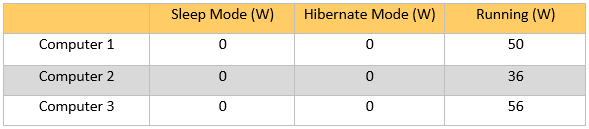
So, how much juice does your sleeping beauty actually sip? It's not zero, folks. Not by a long shot.
Must Read
Think of it like this: your computer is pretending to be asleep. Like a kid faking it to avoid chores.
It's still listening, still watching...okay, maybe not watching. But definitely listening for that magic tap to wake it up!
The Milliwatt Mystery
We're talking milliwatts here. Sounds tiny, right? Like the weight of a single feather.
But those little feathers add up. Over days, weeks, and years, those milliwatts become watts.
And watts, my friends, turn into dollars on your electricity bill. Boom.
My (potentially unpopular) opinion? It's sneaky.
The Appliance Analogy
Imagine leaving your TV on standby. It's not showing anything, but it's ready to spring to life with a button press.
Same deal with sleep mode. It's convenient, sure. But there's a price to pay.

It's the vampire of energy consumption. Sucking the lifeblood (electricity) from your wall socket.
The "Quick Start" Cost
The big argument for sleep mode? Speed. It's faster than a full shutdown and restart.
I get it. We live in a world of instant gratification. Waiting 30 seconds feels like an eternity.
But is that tiny bit of saved time worth the constant drain? I'm not so sure.
The Great Shutdown Debate
Here's where I plant my flag. I'm a shutdown kind of guy. Old school, maybe. But hear me out.
When my computer is off, it's off. No phantom drain. No sneaky milliwatts.
It's like saying goodnight and actually meaning it.
The Environmental Angle
Beyond the cost, there's the environmental impact. Every little bit helps, right?

Those saved watts translate to less demand on the power grid. Less coal burned (hopefully!). Fewer sad polar bears.
Okay, maybe I'm exaggerating about the polar bears. But still, it's something to consider.
The Laptop Limbo
Laptops are a slightly different beast. Battery life is a precious resource.
Sleep mode makes more sense here. It helps preserve that precious battery when you're on the go.
But even then, I'm a fan of shutting down completely when you're not using it for a while.
The Hibernation Option
Don't forget about hibernation! It's like a deeper sleep than sleep mode.
Your computer saves everything to the hard drive and then shuts down completely. No power drain!
It takes a little longer to wake up, but it's a great compromise.
The Power Strip Solution
If you're really worried about phantom power, consider a power strip.
You can flip a switch and cut off all power to your computer and peripherals. No more vampires!
It's a simple and effective solution. And you get the satisfaction of knowing you're in control.
The "Unplug and Conquer" Mentality
I'm a big believer in unplugging things when they're not in use.
It's a small habit that can make a big difference. Plus, it's kind of empowering.
You're taking charge of your energy consumption. You're saying, "I'm not going to let you drain my power, sneaky appliances!"
The Modern Standby Twist
Okay, things are getting complicated. Modern computers have something called "Modern Standby."
It's supposed to be even more efficient than regular sleep mode. But... is it?
The jury's still out, in my opinion. It feels like they're just renaming things to sound better.
The Constant Connection Conundrum
Modern Standby keeps your computer connected to the internet, even when it's "asleep."
This allows it to receive updates and notifications. But it also uses more power.
It's a trade-off between convenience and efficiency. And I'm leaning towards efficiency.
The Conclusion (Maybe)
So, how much power does a computer use in sleep mode? It depends.
It depends on your computer, your settings, and whether you're using regular sleep mode or Modern Standby.
But one thing is certain: it's not zero. And that's enough to make me a shutdown advocate.
The Final Thought
Maybe I'm wrong. Maybe I'm being overly paranoid about milliwatts.
But I like the peace of mind that comes with knowing my computer is really off when I'm not using it.
And hey, a few extra seconds to boot up is a small price to pay for energy independence. Right?