How Much Power Does A 400 Watt Solar Panel Produce
So, you're thinking about harnessing the sun's awesome power with a 400-watt solar panel? Excellent choice! You're basically on your way to becoming a sun-powered superhero. But before you leap tall buildings (powered by solar, of course!), let's break down just how much juice a 400-watt panel can actually produce. Forget complex equations, we're going for good vibes and clear explanations here!
The Sunny Secret: It's All About Sunlight Hours
The big secret, the thing that determines how much power you get, is sunlight. Imagine your solar panel is a tiny little sun-bathing lizard. The more time it spends soaking up those glorious rays, the more energy it gets! We measure this in "peak sun hours." Think of it like this: one peak sun hour is like an hour of the sun shining at its absolute brightest, like midday on a perfectly clear day. Obviously, you don't get that all day, every day. Cloud cover, the angle of the sun, and even the time of year can affect your peak sun hours.
Location, Location, Location!
This is where things get a little geography-dependent. Someone basking in the Arizona sunshine is going to get significantly more peak sun hours than someone in, say, Seattle (no offense, Seattle, you're beautiful in other ways!). A good rule of thumb is to research the average peak sun hours for your location. You can find this information online with a quick search! Generally, places with more sun (like the Southwest of the US) will have higher numbers.
Must Read
The Math (But Don't Panic!)
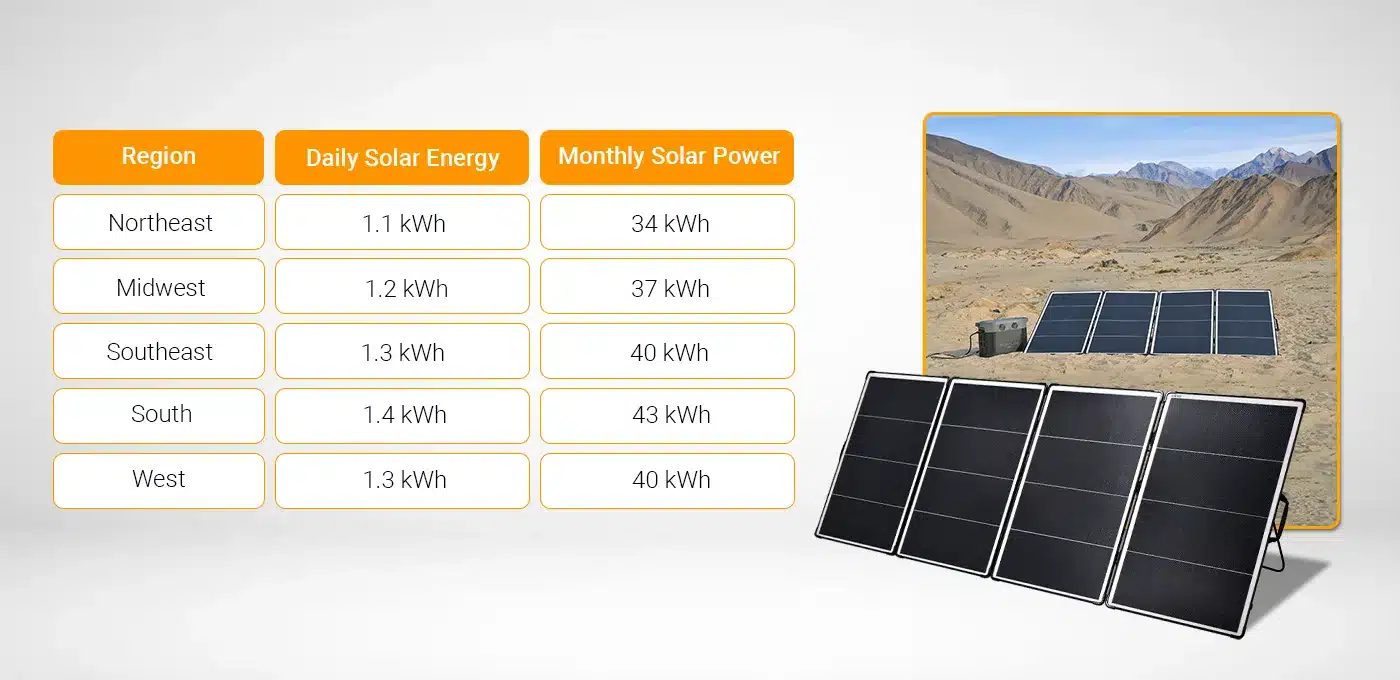
Okay, okay, I know I said no complex equations, but this is simple. Really! To figure out the approximate daily output of your 400-watt panel, you just multiply the panel's wattage by the peak sun hours. For example, let's say you live in a location that averages 5 peak sun hours per day:
400 watts x 5 hours = 2000 watt-hours, or 2 kilowatt-hours (kWh)

Boom! That's it! Two kilowatt-hours per day. Not so scary, right?
What Can 2 kWh Power? Let's Get Practical
Now for the fun part: figuring out what that 2 kWh actually does. This is where you can start feeling like a real solar wizard! Let's break down a few examples:
- Your Refrigerator: A typical refrigerator uses roughly 1-2 kWh per day. So, your single 400-watt panel could, on a sunny day, potentially cover your fridge's energy needs!
- Your Laptop: Laptops are pretty energy-efficient. You could easily power your laptop for several hours with the energy generated by your panel. Netflix binge, anyone?
- Lights: LED lights are incredibly efficient. You could power several LED lights for many hours with 2 kWh.
- Television: A standard television might use around 0.1-0.2 kWh per hour. So you can power your TV for about 10 hours.
Of course, this is a simplified view. Real-world energy usage can vary depending on the specific appliance, how efficiently it runs, and how much you use it. But it gives you a good idea of the potential impact!
Important Caveats (aka Reality Checks)
Before you start planning your off-grid paradise, remember a few important things:
![How much electricity do solar panels produce? [UK, 2024]](https://images.prismic.io/sunsave-website/ZnxEJZbWFbowe4jR_graphic-Solarpaneloutput.jpg?auto=format,compress?auto=compress,format)
- Panel Degradation: Solar panels degrade slightly over time. Their output will slowly decrease, usually by a fraction of a percent each year.
- Inverter Losses: If you're using the solar panel to power AC appliances (like most things in your house), you'll need an inverter to convert the DC power from the panel to AC power. Inverters have some efficiency losses, typically around 10-15%.
- Weather is Unpredictable: Some days are sunny, some days are cloudy. Production will vary, so planning for average conditions, or getting battery backup, is usually a good idea.
The Bottom Line: 400 Watts is a Great Start!
A 400-watt solar panel can be a fantastic way to dip your toes into the world of renewable energy! It's perfect for powering small appliances, offsetting some of your electricity bill, or even as part of a larger off-grid system. With a little research and some sunshine, you'll be well on your way to becoming a solar-powered energy champion! And remember to enjoy the process! Embrace the sun, and let it power your life.
So, go forth and harness the power of the sun! Your 400-watt solar panel awaits!