
How Much Is A Solar Panel Cost
Ever found yourself gazing up at a sunny sky, perhaps while sipping your morning coffee, and wondering, "Hey, how much would it really cost to slap some of those sleek solar panels on my roof?" You're not alone! It's a question on the minds of many eco-conscious (and bill-conscious!) homeowners these days. While the idea of harnessing the sun's endless energy is undeniably cool, the price tag can feel a bit like reading hieroglyphics. But fear not, future solar superstar, we're here to demystify it all with a relaxed, modern vibe.
Think of it like planning a fabulous road trip. You know you want to get to your destination (energy independence!), but the cost depends on the car, the route, and how many snack stops you make. Solar panels are similar – there's no single, one-size-fits-all answer, but we can definitely give you the lay of the land.
The Big Question: What's the Ballpark?
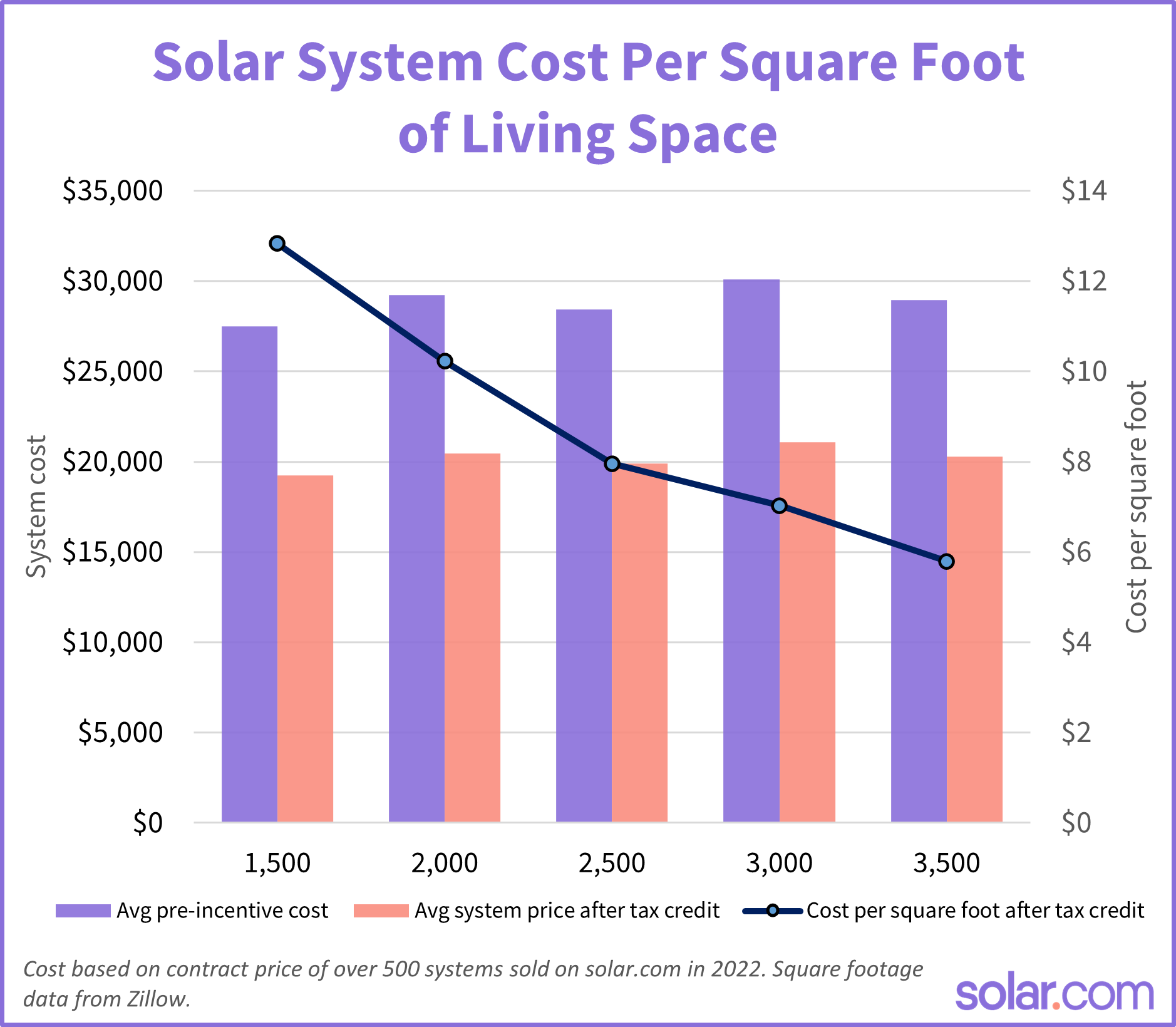
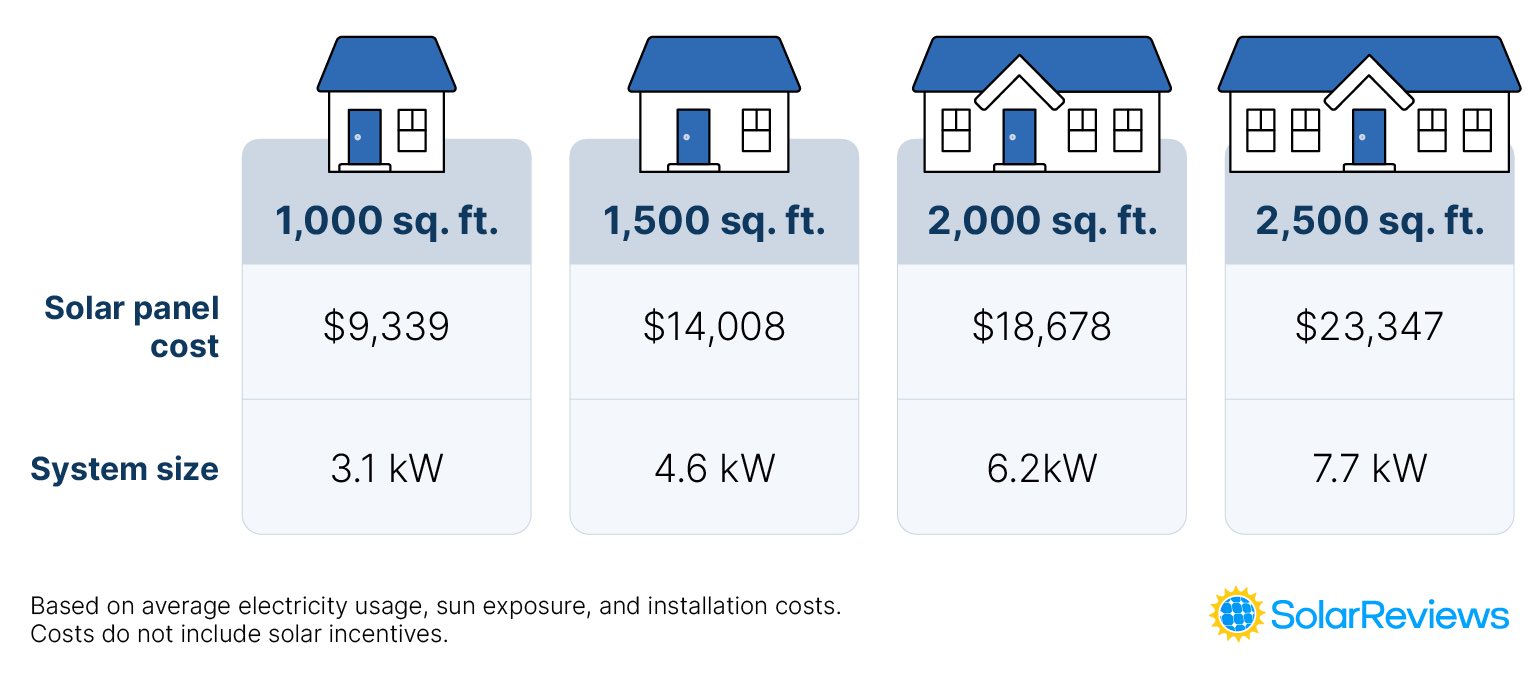
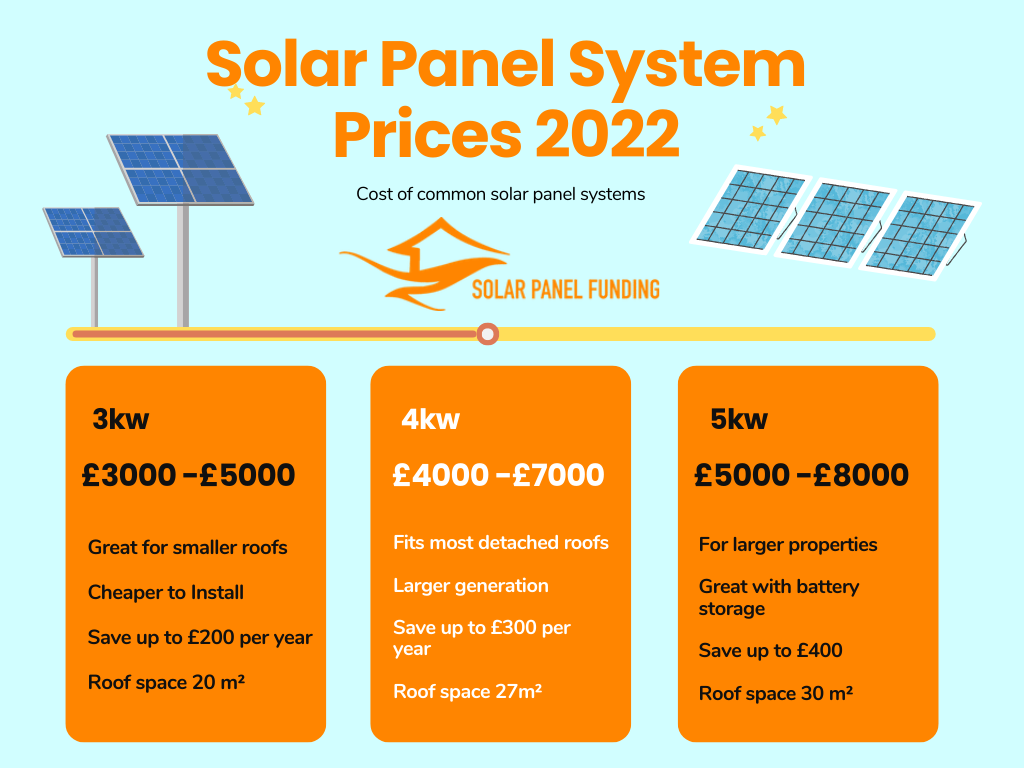
Let's get straight to the numbers, shall we? For a typical U.S. home (think a family of four with average energy consumption), a complete solar panel system usually falls somewhere in the range of $15,000 to $30,000 before any incentives kick in. Yes, that's a range, but it gives you a solid starting point. Don't let that initial figure make your jaw drop too far; the real magic happens when we talk about what comes next.
Must Read
What Makes That Price Tag Tick?
A few key factors play a starring role in your solar setup's final cost:
1. System Size: The More Power, The More Panels.
This is probably the biggest influencer. A larger home with higher electricity consumption will need more panels (a bigger system, measured in kilowatts, or kW) to offset its usage. It's like needing a bigger umbrella for a bigger picnic – more coverage equals more material.
2. Panel Type & Efficiency: Not All Panels Are Created Equal.
Just like cars, there are different models of solar panels. More efficient panels (often monocrystalline) can produce more power from a smaller footprint, which might mean fewer panels overall but a higher per-panel cost. Less efficient options (like polycrystalline) might be cheaper per panel but you'll need more of them. Think of it as choosing between a super-fast espresso machine and a reliable drip coffee maker.
3. Installation Complexity: Roofs Have Personalities.
Is your roof a simple, south-facing dream? Or does it have multiple angles, skylights, or a tricky pitch? Installation labor costs can vary based on how complex it is to get those panels up there safely and securely. Plus, if you need electrical upgrades to handle your new solar power, that's an additional consideration.
4. Equipment & Add-ons: Batteries, Oh My!
Beyond the panels themselves, you'll need an inverter to convert the sun's DC power into usable AC power for your home. You might also choose to add a solar battery storage system (like a Tesla Powerwall or similar) to store excess energy and use it when the sun isn't shining, or during power outages. While batteries add to the upfront cost, they offer amazing energy independence and peace of mind.
5. Location, Location, Location.
Labor costs, local regulations, and even the amount of sunshine your region receives can slightly tweak the overall price.
Here's Where It Gets Exciting: Incentives & Savings!
This is the part where you often breathe a sigh of relief. The initial cost is rarely what you actually pay out of pocket, thanks to some pretty sweet perks:

The Federal Solar Tax Credit (ITC): A Big Win!
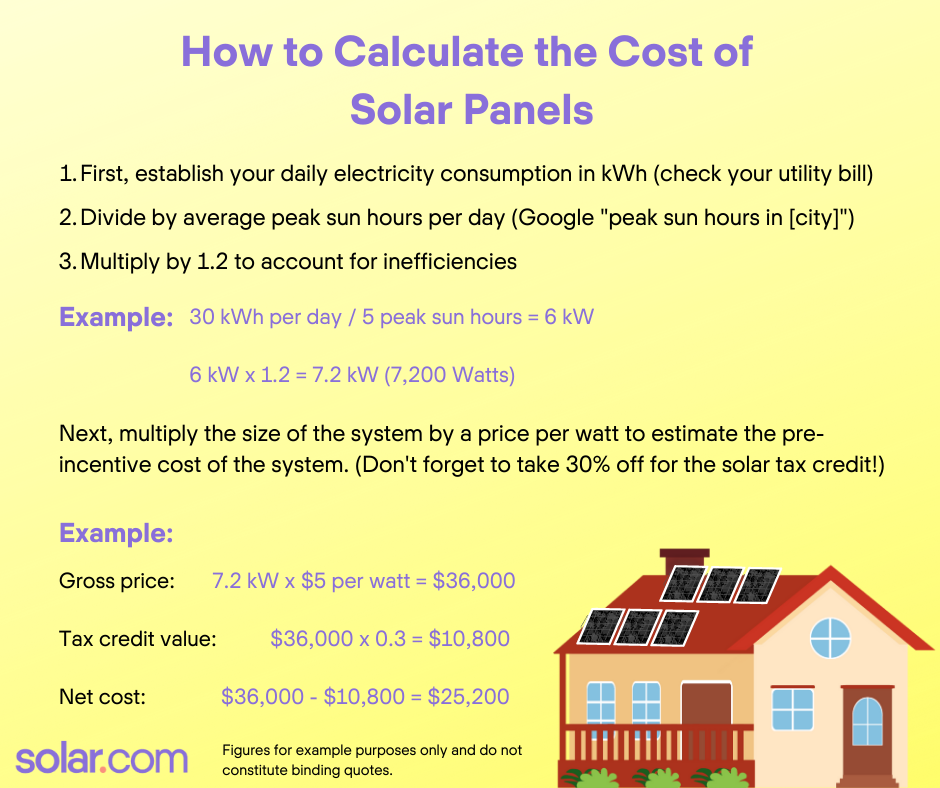
This is perhaps the biggest incentive for U.S. homeowners. Currently, it allows you to claim 30% of your total solar system cost as a credit on your federal income taxes. That's a direct reduction, not just a deduction! So, if your system cost $25,000, you could get $7,500 back at tax time. This alone changes the game!
State & Local Programs: More Goodies!
Many states and even local municipalities offer additional rebates, property tax exemptions, or performance-based incentives (like Solar Renewable Energy Credits, or SRECs, where you get paid for the clean energy your system produces). Net metering, where your utility company credits you for excess energy you send back to the grid, is also a huge financial benefit.
Long-Term Savings: The Gift That Keeps On Giving.
Beyond incentives, the real long-term cost-saving comes from dramatically reducing or even eliminating your monthly electricity bill. Over 20-25 years (the typical lifespan of panels), these savings can easily add up to tens of thousands of dollars, making your initial investment truly pay off. It’s like buying a really good, reusable coffee cup that eventually pays for itself in avoided disposable cup costs (and a cleaner planet!).
Practical Tips for Your Solar Journey:
- Get Multiple Quotes: Don't just go with the first company you talk to. Shop around, compare bids, and ask questions.
- Understand Your Usage: Look at your past electricity bills to determine how much energy you use. This helps in sizing your system accurately.
- Research Local Incentives: Check with your state energy office or a reputable solar installer about all available local programs.
- Consider Financing: If paying upfront isn't an option, explore solar loans, leases, or Power Purchase Agreements (PPAs) which can make solar accessible with little to no upfront cost.
- Think Long-Term: Solar adds value to your home, locks in your electricity rates, and significantly reduces your carbon footprint. It's an investment in your future and the planet's.
Going solar isn't just about saving money; it's about joining a movement. It’s about the quiet satisfaction of knowing your lights are powered by the same sun that helps your garden grow, or that makes your morning walk so pleasant. It's a modern way to live, connecting you directly to one of the most ancient and powerful forces in the universe.
So, while the initial cost might seem like a big number, when you factor in the incredible incentives, long-term savings, and the sheer coolness of generating your own clean power, the question often shifts from "How much does it cost?" to "How soon can I get started?" It’s an investment in comfort, sustainability, and a brighter, more independent future, one sunbeam at a time.