How Much Gas Does A Car Ac Use
Ah, summer! The sun is beaming, the birds are singing, and you’re probably melting just a little bit. What’s the first thing most of us do when we hop into our cars on a sweltering day? Blast that air conditioning, right? It’s a modern marvel, turning a sweaty sauna into a frosty oasis with the flip of a switch. But have you ever paused, even for a second, to wonder what’s actually happening under the hood when you hit that AC button?
That glorious blast of cool air doesn’t come from nowhere. It's not magic, as much as it feels like it sometimes! It’s the result of some pretty clever engineering, and like most things that require work, it demands a bit of energy. The big question, the one that probably pings in the back of your mind every time gas prices creep up: How much gas does a car AC actually use? Let’s dive into this cool mystery with a chill, curious vibe.
The Engine's Little Helper (or Demander)
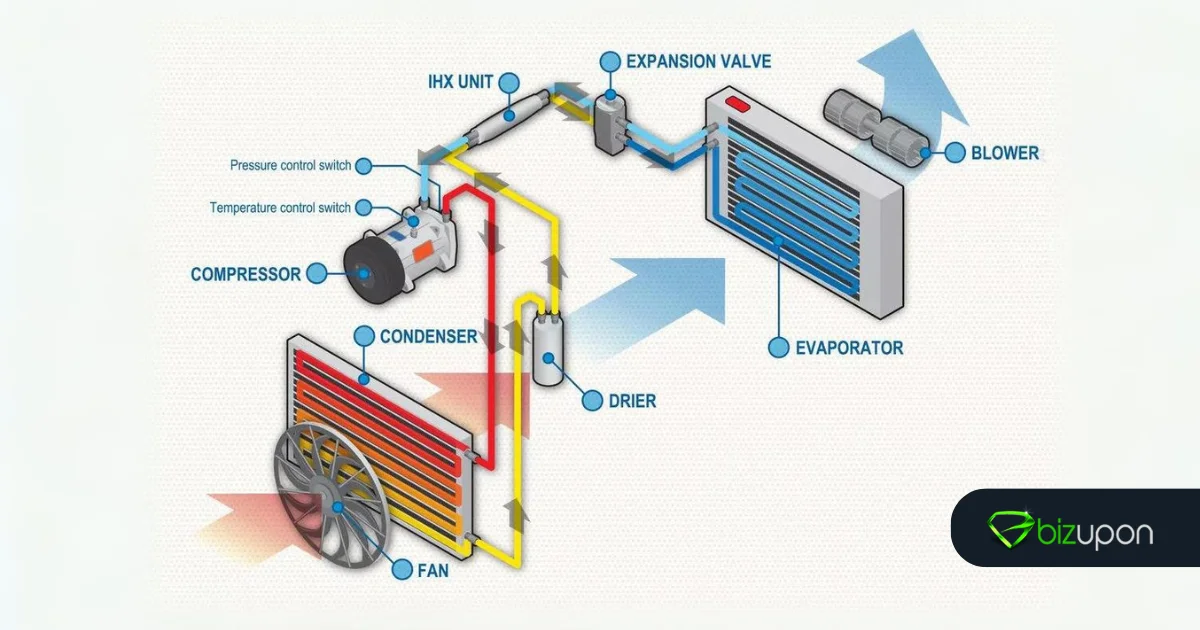
To understand the gas usage, we first need a super simplified peek at how your AC works. At its heart, your car’s air conditioning system has a component called the compressor. Think of the compressor as the AC’s mighty little engine. It's the muscle that pressurizes the refrigerant (the special liquid that does the actual cooling) and gets the whole heat-exchange party started. And here’s the kicker: this compressor doesn’t run on wishes and dreams. It's powered directly by your car's main engine.
Must Read
Imagine your car's engine is like a really strong personal trainer. Most of the time, it's busy doing its main job: making the car go forward. But when you switch on the AC, it's like that trainer suddenly has to juggle an extra set of weights. It has to divert some of its power to spin the AC compressor. And what does your car’s engine need to produce more power? You guessed it: more fuel.
Ever notice a slight dip in power or a momentary increase in engine noise when you first crank up the AC? Especially if you have a smaller car? That’s your engine subtly saying, "Okay, boss, I’m putting in some extra effort here!"
So, How Big Is This "Sip" of Gas?
This is where it gets a little fuzzy, but in a fun, "it depends" kind of way. There's no single, universal answer because several factors play a role:
- Your Car's Engine Size: A tiny four-cylinder engine will feel the AC's demands much more acutely than a beefy V8. For a smaller car, the AC might be a noticeable drain; for a larger one, it might be just a blip on the radar. It's like asking a fly to carry a backpack versus asking an elephant!
- The Outside Temperature: This is a big one. On a scorching 100-degree day, your AC has to work way harder to cool down your car than on a mild 75-degree day. The harder it works, the more power it needs, and thus, the more gas it consumes.
- Your AC Settings: Are you blasting it on max fan speed, lowest temperature, and fresh air intake? Or are you running it on a gentler setting, recirculating the cooler air already inside the cabin? Recirculation is far more efficient because the system isn't constantly trying to cool scorching outside air.
- Driving Conditions: Idling in traffic with the AC on can be less fuel-efficient than driving on the highway. When you're moving, the engine is already working at an optimal speed, and the airflow helps the AC system dissipate heat.
- Your AC System's Health: An old, leaky, or poorly maintained AC system will naturally be less efficient and require more energy to do its job.
Okay, enough with the factors! Let’s talk numbers. Generally, experts estimate that running your AC can reduce your car's fuel efficiency anywhere from 1 to 5 miles per gallon (MPG). In some extreme conditions, or with older, less efficient systems, it might even be a bit more. Think of it as your car taking a small, consistent sip from its fuel tank, rather than a giant gulp.
For most modern cars, on an average hot day, you're probably looking at a 2-3 MPG reduction. So, if your car normally gets 30 MPG, it might drop to 27 or 28 MPG with the AC on. Is that a lot? Well, that depends on your perspective and how often you use it. For a 300-mile road trip, that could mean an extra gallon or two of gas.
The Comfort vs. Cost Equation
So, we know the AC uses gas. But here's the cool part: it's an incredible feat of engineering! Think about what it does: it takes hot, humid, miserable air and transforms it into cool, dry, comfortable air. It makes long commutes bearable, road trips enjoyable, and those summer errands a little less dreadful. For many of us, the small amount of extra gas used is a price we’re more than willing to pay for that sweet, sweet relief.
Modern AC systems are also constantly getting smarter and more efficient. Many cars now have "eco" modes that can automatically adjust the AC to use less power, or even "smart" systems that only cool the areas where occupants are detected.

If you're curious about maximizing efficiency (while still staying cool, of course!):
- When first getting into a hot car, roll down the windows for a minute to let the super-hot air escape before turning on the AC.
- Once the car is cool, switch to the recirculate setting. It’s a game-changer for efficiency.
- Keep your AC system maintained; a healthy system runs better and uses less fuel.
The Takeaway: A Small Price for a Big Comfort
So, next time you're enjoying that blissful cold air on a scorching day, remember the silent, hard work happening under your hood. Your AC compressor is a little powerhouse, borrowing energy from your engine, and yes, using a bit of extra gas. But it's typically not a budget-breaker, more like a small, continuous investment in your personal comfort and sanity.
Isn't it fascinating how something we use every day has such a complex, yet elegant, hidden mechanism? So go ahead, enjoy your cool ride. Now you know the curious story of how much gas your car's AC sips to keep you comfortable!