
How Much Energy Does A Small Chest Freezer Use

Okay, let's talk freezers. Not the giant, industrial kind that could store an entire woolly mammoth, but the cute, compact chest freezers that are popping up in basements, garages, and even (dare I say it?) kitchens across the country. We're here to answer the burning question: how much energy do these little guys actually use?
Why should you even care? Well, think of it like this: Every watt used is a tiny little coin being plucked from your wallet and handed over to the electric company. And those tiny coins can add up surprisingly fast! So, knowing how much energy your chest freezer is sipping away is like knowing where your spare change is going – empowering and potentially wallet-saving!
The Energy Equation: It's Not Rocket Science (Promise!)
The energy consumption of a small chest freezer depends on a few key factors. Think of it like baking a cake – the ingredients (factors) all contribute to the final product (energy bill). Here's what matters:
Must Read
- Size Matters (Kinda): Generally, a smaller freezer will use less energy than a larger one. But it’s not always a direct correlation. A super-efficient larger model can sometimes outperform a less efficient smaller one. It's like a tiny, fuel-guzzling sports car versus a slightly larger, but incredibly eco-friendly sedan.
- Age and Efficiency: Older freezers are energy hogs! Seriously. Technology has come a long way. A freezer from the 1980s or 90s could be costing you a small fortune compared to a modern, Energy Star certified model. It's like comparing a rotary phone to a smartphone. Both make calls, but one uses a lot more energy (and is way less cool).
- How Full Is It?: Counterintuitively, a full freezer is actually more efficient than an empty one! All that frozen food acts like thermal mass, helping to maintain a consistent temperature. Think of it like a crowd huddled together for warmth – they all stay warmer than a lone person. A fuller freezer doesn’t have to work as hard to stay cold.
- Location, Location, Location!: Where you put your freezer matters. Avoid placing it near heat sources like ovens, furnaces, or even in direct sunlight. A hot environment makes the freezer work overtime to stay cold. It’s like asking a marathon runner to run uphill in the desert. Not ideal!
- How Often You Open It: Every time you open the door, you let cold air out and warm air in. The freezer then has to expend energy to re-cool the interior. It's like leaving the door to your house open in the winter – your furnace will be working non-stop! Be quick, efficient, and plan your freezer raids wisely!
Ballpark Figures: What to Expect
So, what's the bottom line? A small chest freezer (think 5-7 cubic feet) typically uses anywhere from 200 to 400 kilowatt-hours (kWh) per year. Now, what does that actually mean?
Well, let's say your electricity costs $0.15 per kWh (the national average is around this amount, but check your bill!). That means your freezer could be costing you anywhere from $30 to $60 per year.

That might not sound like much, but remember, it's a constant draw. And if you have an old, inefficient model, you could be paying significantly more. Think of it as a small but steady stream of money flowing out of your bank account. Wouldn't you rather keep that money for something fun, like... ice cream? (Stored in your efficient freezer, of course!).
Easy Ways to Save Energy (and Money!)
Okay, so you know how much your freezer might be costing you. What can you do about it? Here are a few simple tips:
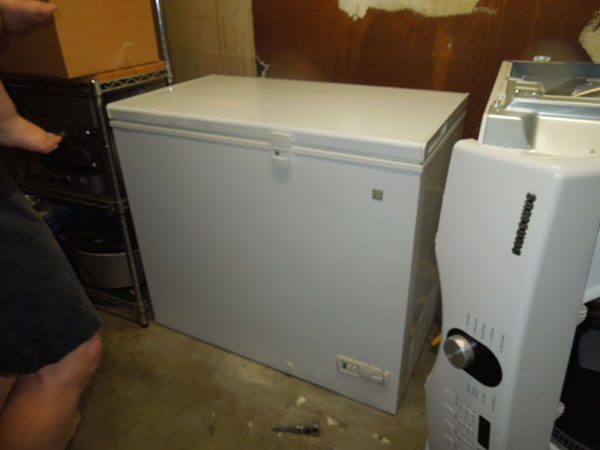
- Consider Upgrading: If you have an old freezer, seriously consider upgrading to an Energy Star certified model. The savings over time can be substantial. It's an investment that pays off!
- Keep It Full (But Not Too Full): As we mentioned, a full freezer is more efficient. So, stock up! But don't overcrowd it, as that can restrict airflow.
- Defrost Regularly: Frost buildup makes your freezer work harder. Defrost it regularly to keep it running efficiently. Think of it as giving your freezer a little spa day.
- Check the Seals: Make sure the door seals are tight. If they're cracked or damaged, cold air can escape. A simple test: close the door on a piece of paper. If you can easily pull the paper out, the seal needs replacing.
- Be a Speedy Freezer Diver: Minimize the time the door is open. Plan ahead and grab what you need quickly. It's like a ninja freezer raid!
So there you have it! Understanding how much energy your small chest freezer uses is the first step to saving money and being a more energy-conscious consumer. Now go forth and freeze with confidence (and savings!).
Bonus Tip: Use a Kill-A-Watt meter to get a precise reading of your freezer's energy consumption. It's a fun and informative way to geek out about energy efficiency!

