
How Much Energy Does A Light Use
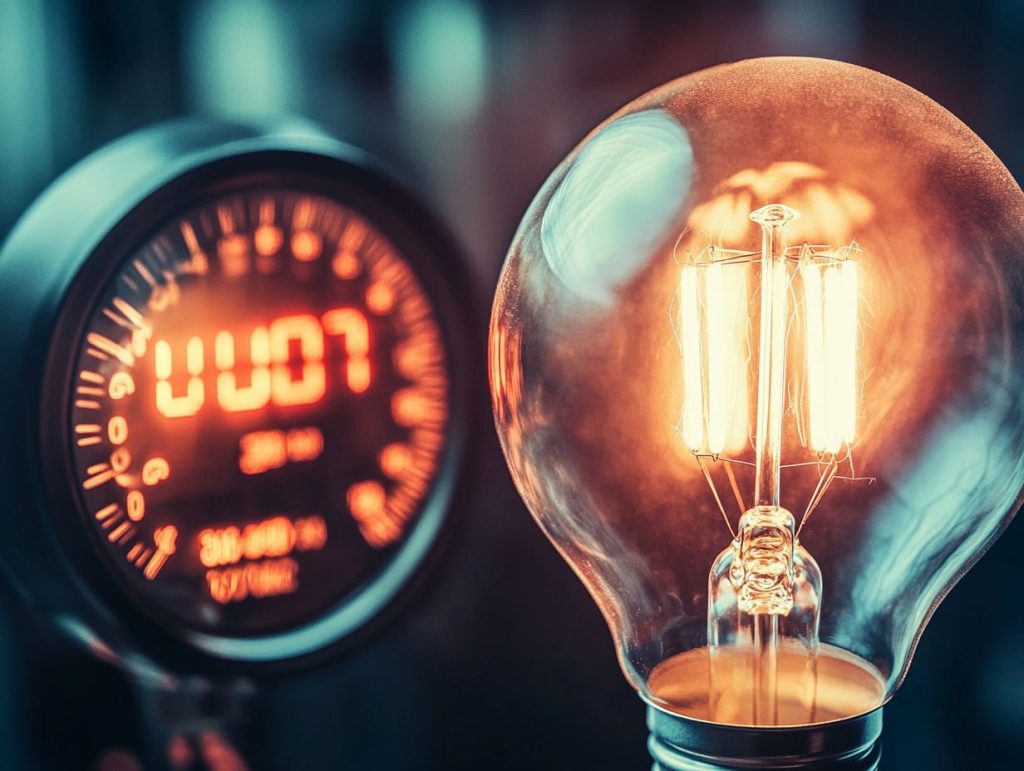
Hey there, ever just kick back, look up at the lamp in your room, and wonder: "How much energy is that little glowing thing actually sucking up?" It's a pretty cool question if you think about it! We flip switches without a second thought, but there's a whole invisible dance of energy happening to give us that precious light. Let's dive in and unravel this everyday mystery, shall we?
The Mighty Watt: Your Light's Energy Footprint
When we talk about how much energy a light bulb uses, the first word that usually pops up is watts. You’ve seen it on the packaging, right? 60W, 100W, 9W… But what does it mean?
Think of watts like the speed limit for energy. It tells you how much power the bulb uses at any given moment. A higher wattage means it’s drawing more power. But here’s the kicker: it’s not just about the watts on the box anymore. The world of light bulbs has gotten a whole lot smarter!
Must Read
The Old Guard: Incandescent Bulbs
Remember those classic, pear-shaped bulbs with the curly wire inside? Those were incandescent bulbs, and they were the kings of light for over a century. They worked by running electricity through a tiny wire (the filament), which would get so hot it would literally glow!
The fascinating (and also kind of inefficient) thing about incandescents is that they spent most of their energy trying to heat things up. Imagine trying to make a toast with your light bulb! About 90% of the energy they used was turned into heat, and only a tiny 10% actually became visible light. It's like buying a fancy sports car, but 90% of the fuel just makes loud noises and only 10% actually moves you forward. A bit wasteful, right?

So, a traditional 60-watt incandescent bulb was quite the energy guzzler by today's standards.
The New Kids on the Block: LEDs and CFLs
Fast forward to today, and we've got some real energy superheroes: LEDs (Light Emitting Diodes) and CFLs (Compact Fluorescent Lamps). These guys are the marathon runners of the light world, designed to give you a lot more light for a lot less energy.

An LED bulb, for example, might only use 9 watts to produce the same amount of light (or even more!) as an old 60-watt incandescent. That’s a huge difference! How do they do it? Without getting too technical, LEDs convert electricity into light much more directly, producing very little heat in the process. They're incredibly efficient.
CFLs are also great, though LEDs have largely overtaken them in popularity due to even better efficiency and instant full brightness. But both are vastly superior to incandescents.
Putting it Into Perspective: Fun Comparisons!
Okay, so 60 watts vs. 9 watts – that's a number. But what does it feel like?

- Charging your phone: Leaving your phone plugged in all night typically uses about 5-10 watts. So, an old 60-watt incandescent bulb could be using roughly the same energy as keeping six to twelve phones charging simultaneously! Whereas a modern 9-watt LED is more like charging just one or two phones. Suddenly, that light bulb feels a bit more substantial, doesn't it?
- Boiling Water: An electric kettle, used to boil water for your tea, might draw anywhere from 1500 to 3000 watts. While your light bulb isn't in that league, consider this: if you left ten old 100-watt incandescent bulbs on, you'd be using 1000 watts – getting pretty close to a small kettle's energy draw! A single LED, however, is barely a whisper in comparison.
- The Fridge Light: Ever noticed how dim the light inside your fridge is? It’s usually a very low wattage bulb, perhaps 10-25 watts (if it's an old incandescent type) or just a couple of watts if it's an LED strip. It doesn't need to light up the whole house, just enough for you to find that midnight snack!
Why Does All This Matter, Anyway?
Understanding how much energy a light uses isn't just for science buffs (though it is pretty neat!). It actually has a direct impact on two big things:
First, your wallet! Every watt-hour of energy your light bulb consumes costs money. Switching from old, power-hungry bulbs to efficient LEDs can shave a surprising amount off your electricity bill over time. Think of it as a silent, continuous money-saver.

Second, the planet! Most of our electricity still comes from power plants that burn fossil fuels, which contributes to carbon emissions and climate change. The less energy we use to light our homes, the less demand there is on these power plants, and the smaller our environmental footprint becomes. So, that tiny LED bulb is doing a little bit of good for everyone.
The Cool Factor of Being Aware
It’s genuinely cool to realize that something as simple as a light bulb holds so much hidden energy action. Next time you flick that switch, maybe you’ll think about it a little differently. You’re not just turning on light; you're engaging with a fundamental force of the universe, and with a modern bulb, you’re doing it with surprising efficiency.
So, go ahead, illuminate your world. And now, you know a little more about the energetic ballet happening right above your head. Pretty neat, huh?