How Much Electricity Does Wind Turbine Produce
Hey friend! Ever looked up at those giant windmills – I mean, wind turbines – and wondered just how much juice they're squeezin' out of the wind? It’s a fair question! We're talking about some pretty serious hardware up there, after all. So, let’s dive into the fascinating world of wind turbine electricity production, shall we?
First things first, let's get the basics down. A wind turbine's job is to convert kinetic energy (the wind blowing) into electrical energy. Simple, right? Think of it like a giant, super-powered pinwheel attached to a generator. Okay, maybe that’s oversimplifying it just a tad. But the principle is the same!
It's All About the Size (and the Wind, Duh!)
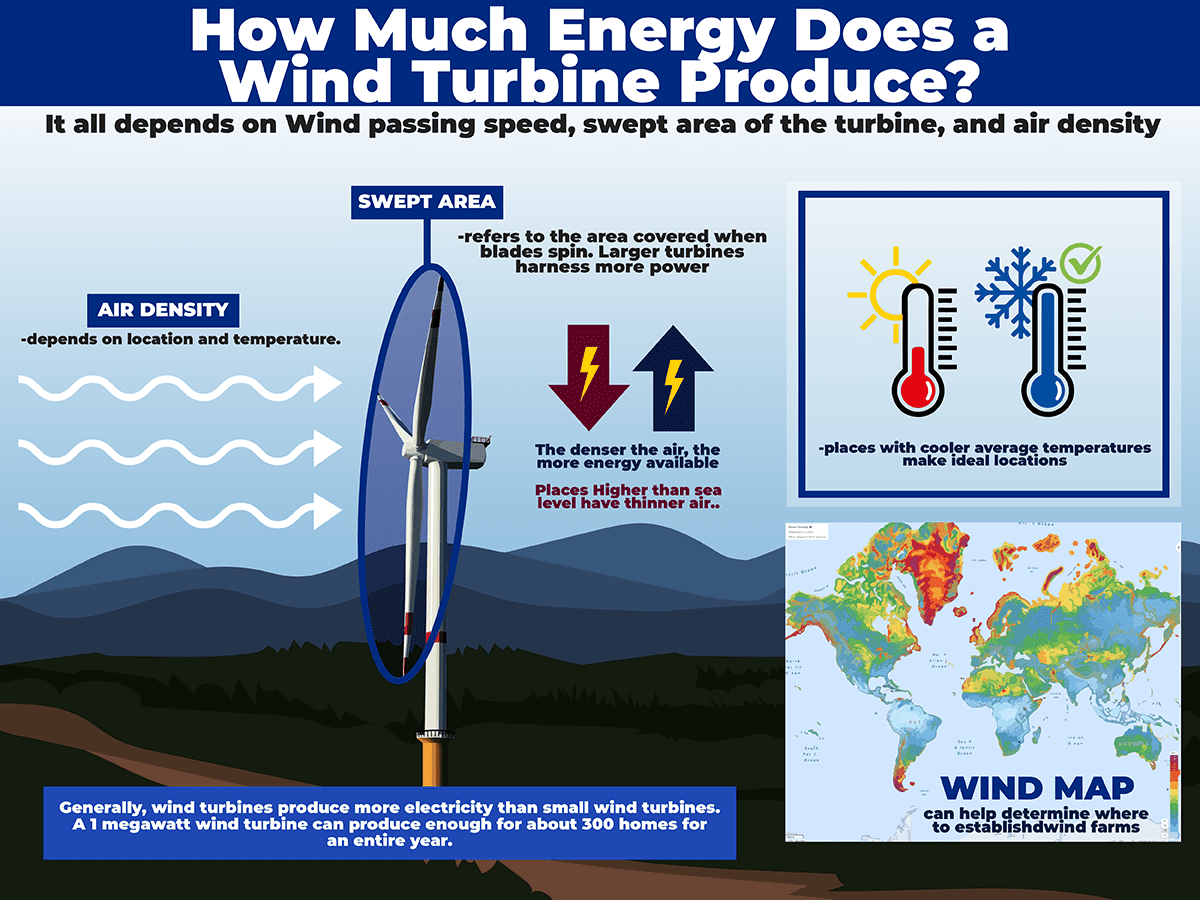
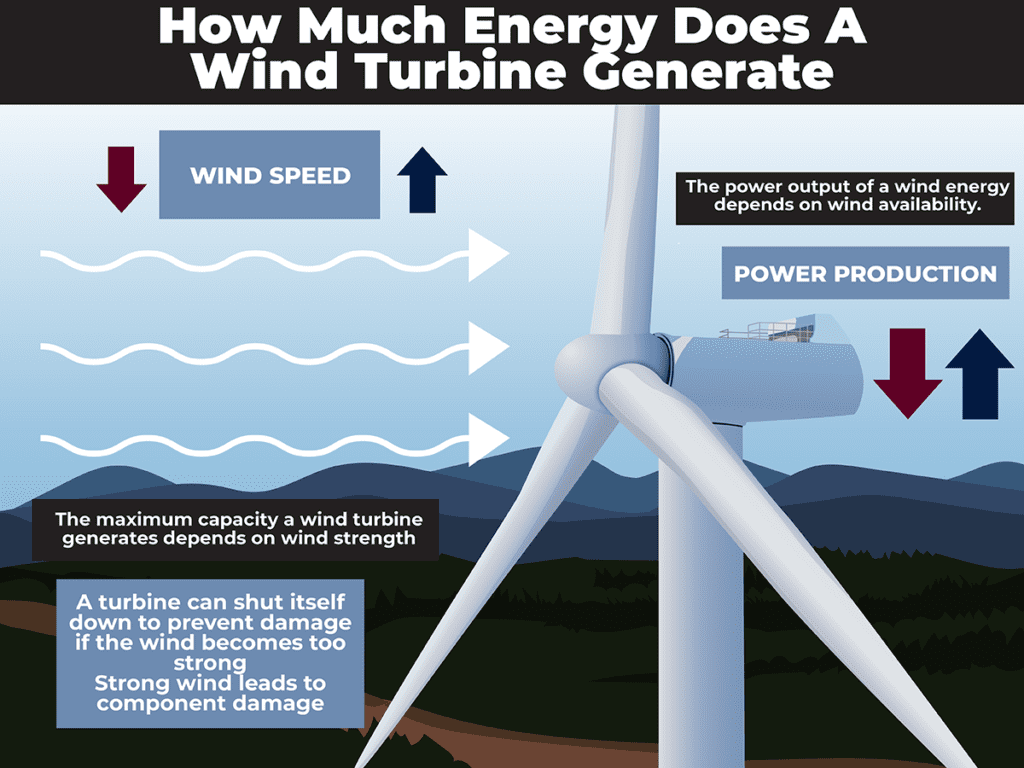
Now, how much electricity a wind turbine produces depends on a few key factors. I'm not going to bore you with technical jargon (unless you really want me to – but trust me, you don't). The two most important things are: size and wind speed.
Must Read
Think of it like a bicycle. A bigger wheel (longer blades on a turbine) captures more wind, just like it captures more road per rotation. And faster you pedal (stronger winds) the more power you generate. See? Cycling is basically green energy training!
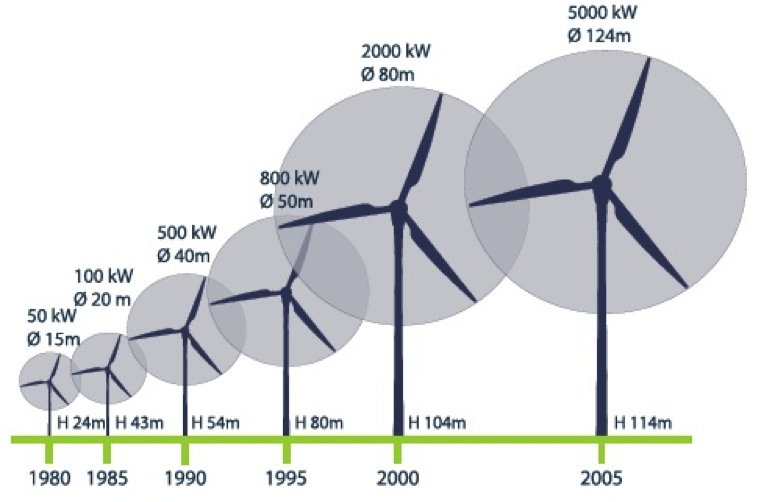
Modern wind turbines can vary wildly in size. Small turbines might power a single home or farm, while gigantic utility-scale turbines are used in wind farms to power entire communities (and maybe even the office where someone’s reading this!). These big boys can have blades longer than a football field! Imagine trying to mow your lawn with one of those things. Talk about getting the job done fast... and completely flattening everything.

So, Numbers, Numbers, Numbers!
Okay, let's get down to some actual figures. A typical modern utility-scale wind turbine, the kind you'd see in a large wind farm, has a capacity of around 2-3 megawatts (MW). That's a lot! One megawatt is enough to power roughly 750 homes, so a single turbine could potentially power between 1,500 and 2,250 homes. That’s a whole lotta Netflix and chill.
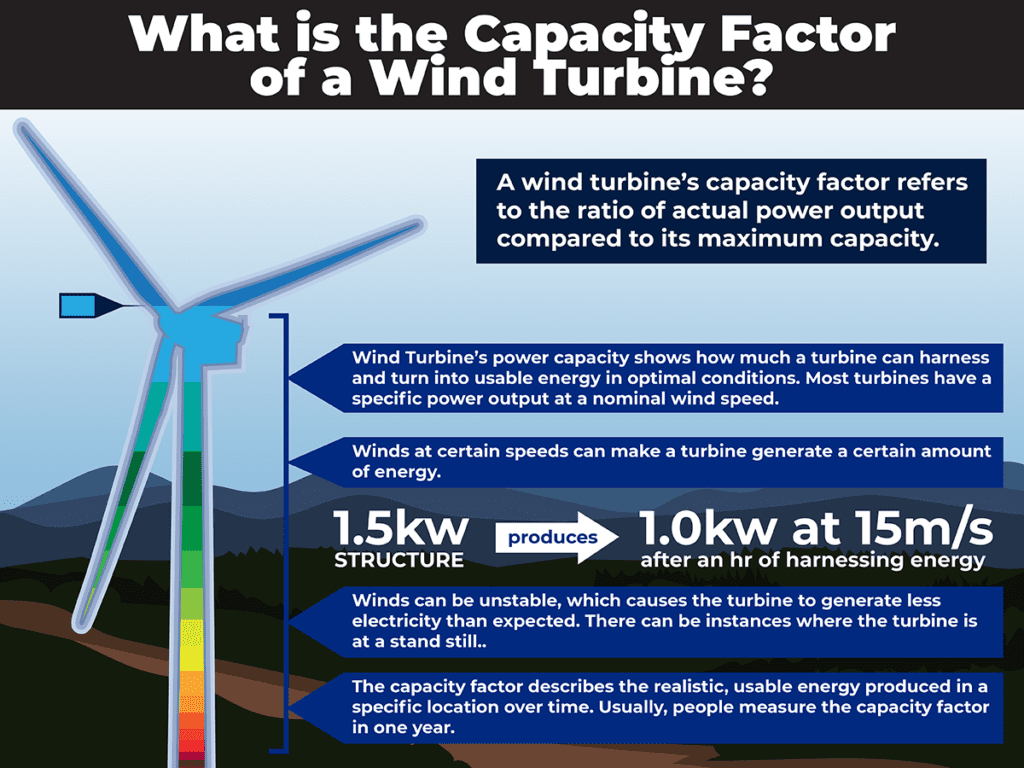
However, it's important to remember the wind doesn't blow constantly at optimal speeds. Turbines don't always operate at their full capacity. We use something called the "capacity factor" to account for this. The capacity factor is the actual energy produced over a period of time compared to the maximum possible energy it could have produced. For wind turbines, the capacity factor is typically around 30-50%.
In other words, if a 2 MW turbine operates at a 40% capacity factor, it will generate an average of 0.8 MW of power over time. Still, that's enough to power a significant number of homes!
Location, Location, Location!
Another critical factor is the location. Some places are just windier than others. Coastal areas, mountain passes, and open plains are usually prime spots for wind farms. You wouldn't put a wind farm in a valley surrounded by tall trees, would you? That would be like trying to sail a boat in a swimming pool. Silly, right?
Companies use sophisticated data analysis to choose the best sites for wind farms, considering things like average wind speed, turbulence, and even bird migration patterns. They want to generate as much electricity as possible while minimizing any negative impacts on the environment. It’s a balancing act, like trying to carry a stack of pancakes and a cup of coffee without spilling anything. Tricky, but doable!
In a Nutshell…
So, to sum it all up: a modern wind turbine typically produces between 2-3 MW, but the actual amount of electricity generated depends on the size of the turbine, the wind speed, the location, and the capacity factor. It's not an exact science, but wind energy is a seriously powerful (and clean!) way to generate electricity.
Think about it: every time the wind blows, these magnificent machines are silently spinning and turning that invisible force into usable energy. It's like magic, but with better engineering!
And that, my friend, is how wind turbines help us power our world. It's a renewable, sustainable, and increasingly efficient source of energy that's helping us move towards a greener future. Doesn’t that just make you want to go fly a kite? I know I do! Keep looking up, and keep believing in the power of innovation!