How Much Electricity Does A Wind Turbine Make
Hey there! Ever looked up at those giant windmills – I mean, wind turbines – and wondered just how much juice they’re actually making? Yeah, me too! It's kind of a head-scratcher, right? Let's break it down, nice and easy, like we're catching up over a latte.
First things first: it's not a simple answer. Sorry to disappoint! It's kinda like asking "How much fruit does an apple tree produce?" Depends on the tree, the weather, if squirrels are being total jerks and stealing all the apples... you get the idea.
Factors, Factors Everywhere!
So, what does affect how much electricity a wind turbine cranks out? A bunch of stuff, actually.
Must Read
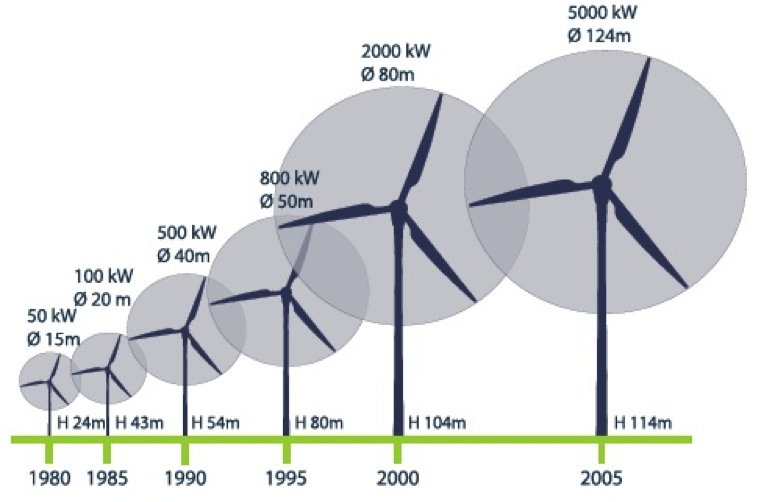
- Turbine Size: This is the obvious one. Bigger turbine, bigger blades, bigger... everything! Think of it like a tiny teacup versus a giant soup bowl. Which one holds more liquid (aka, electricity potential)? Duh!
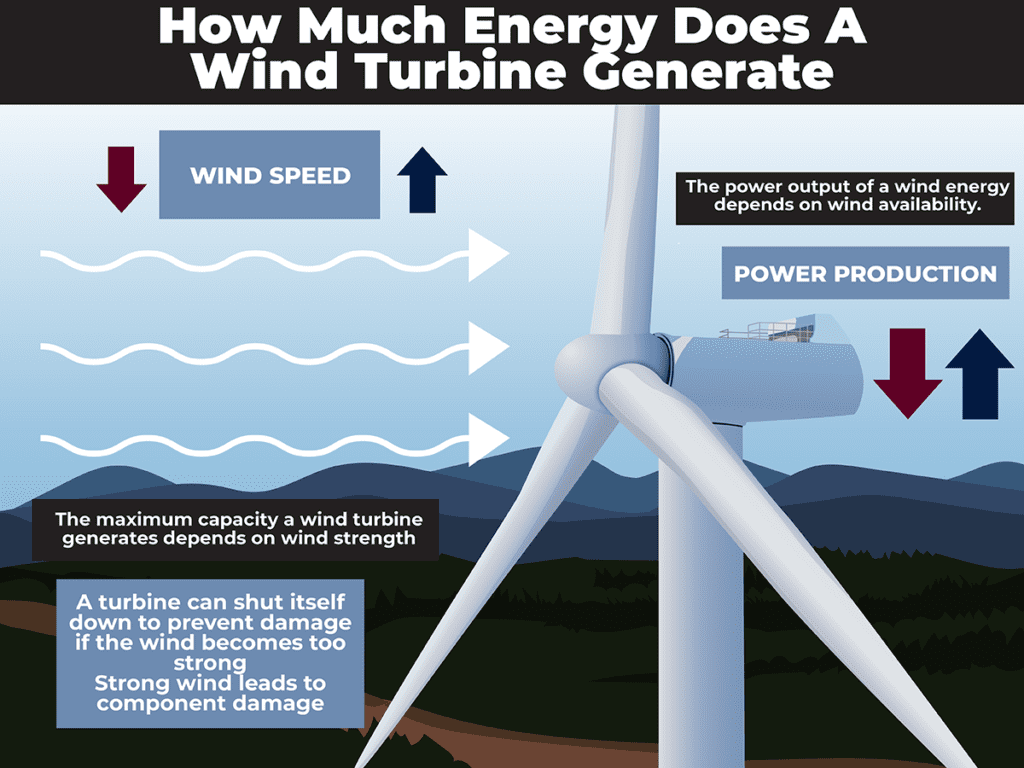
- Wind Speed: No wind, no spinning. Simple, right? But it's not just about having some wind. The faster the wind, the more power they generate... up to a point. There’s a sweet spot, and after that, they actually have to slow down to avoid damage. Safety first, always!
- Location, Location, Location: Is your turbine perched on a windy hilltop or nestled in a valley where the air is still? Makes a HUGE difference. It's all about finding the perfect wind-catching spot. Prime real estate for wind farms, basically.
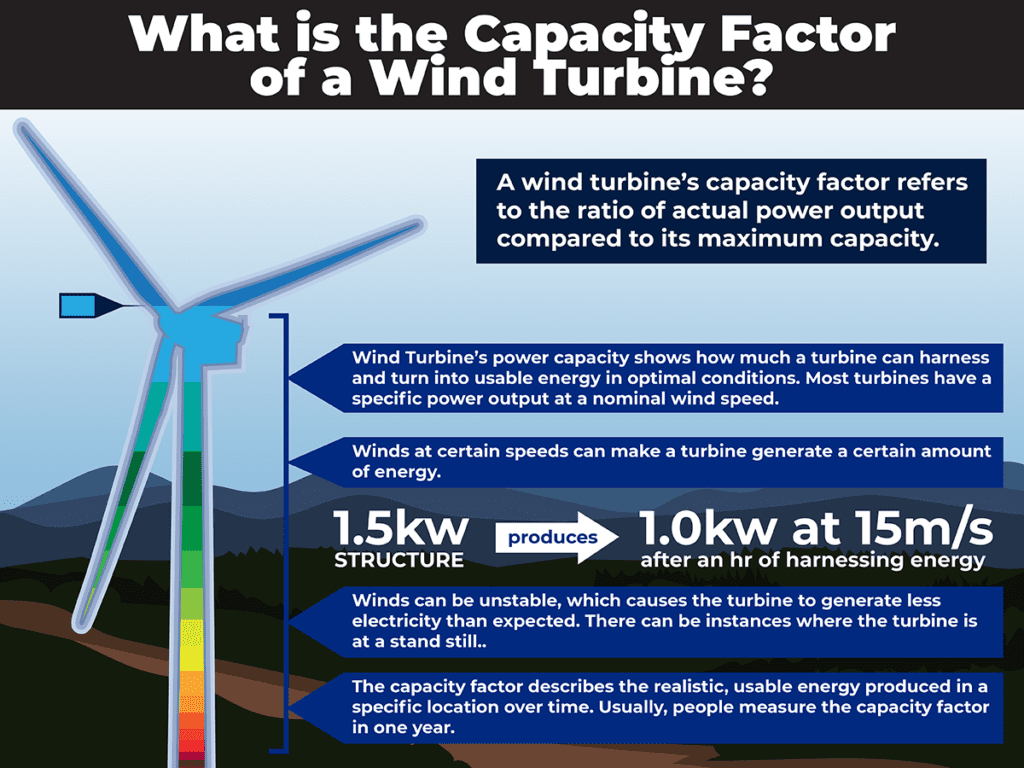
- The "Capacity Factor": Okay, this one's a little techy, but stick with me. It basically means how often the turbine is running at its maximum potential. Turbines aren't always spinning at full speed, sadly. Think of it like a musician who can shred a guitar solo but spends most of their time tuning it. The average capacity factor for a wind turbine is around 30-50%.
Numbers, Numbers, Glorious Numbers!
Alright, let's get down to brass tacks. A typical modern wind turbine – the kind you see in wind farms – can have a capacity of around 2-3 megawatts (MW). That's… a lot. But what does that actually mean?
Well, let's say a 3 MW turbine is operating at a 35% capacity factor (a pretty reasonable estimate). That means it's producing around 1 MW on average. Over a year, that works out to roughly 8.76 million kilowatt-hours (kWh) of electricity. Whoa!

Okay, so how many homes can that power? Again, it depends! (I know, I know, annoying, right?) But on average, a US household uses around 10,000 kWh per year. So, that one 3 MW turbine could potentially power… drumroll please… around 876 homes! That's a whole lotta Netflix and chill.
But remember, that’s an average. Some homes use way more electricity (think electric cars, big TVs, constantly running AC), and some use way less.
So, Are Wind Turbines Worth It?
That's the million-dollar question, isn't it? (Or, you know, the 8.76 million kWh question!) They definitely have their pros and cons. They're clean energy, which is fantastic. They don't produce greenhouse gasses while operating. But they also require space, can be noisy (a little whooshing sound), and some people think they're an eyesore. Plus, they rely on the wind, which isn't always reliable.
Still, when you think about those hundreds of homes powered by just one turbine, it's pretty impressive, right? Maybe they’re not perfect, but they’re definitely a powerful tool in the fight for a cleaner energy future. Just imagine a world powered by the breeze! Pretty cool, huh?
So next time you see one of those giant windmills spinning, you'll have a much better idea of just how much work it's doing! And hey, maybe you'll even impress your friends with your newfound wind turbine knowledge. 😉