How Much Electricity Does A Tv Use Per Hour

Ever wondered if your TV is secretly plotting against your wallet, draining your electricity and turning you into a champion bill-payer? Well, grab your remote and let's dive into the electrifying world of TV power consumption! It's not as scary as it sounds, promise!
Decoding the TV's Energy Appetite
First things first, we need to understand that TVs aren't all created equal. A massive, wall-sized OLED screen is going to slurp up more juice than a tiny, ancient TV that probably plays reruns of black and white sitcoms (though those are classics!). But fear not, we can still get a good ballpark estimate.
Think of your TV's energy consumption like ordering pizza. A personal pan pizza (small TV) is going to cost you less than a giant, supreme pizza with extra everything (massive TV). Makes sense, right?
Must Read
Watts Up With Watts?
The key to understanding a TV's energy usage is the watt. It's a measure of how much power an appliance uses. You can usually find the wattage listed on a sticker on the back of your TV, often near the power cord. Don't worry, you don't need a magnifying glass, it's usually pretty visible.
Let's say your TV is rated at 100 watts. That means it uses 100 watts of power for every hour it's switched on. Now, 100 watts might sound like a lot, but it's actually fairly reasonable for a modern TV. Older TVs, especially those bulky CRT monsters from decades past, could easily guzzle down 200 watts or more! Those were the days when TVs were practically power plants in disguise!
If you can't find the wattage on your TV, a good rule of thumb is to consider the screen size and type:
- Small LED TV (under 32 inches): Around 30-50 watts
- Medium LED TV (32-55 inches): Around 50-100 watts
- Large LED TV (over 55 inches): Around 100-200 watts
- OLED TV (any size): Generally higher than LED, often 100-300+ watts
- Old CRT TV: Prepare for a shock! (100-300+ watts)
From Watts to Cents: The Money Talk
Okay, so we know the watts. But how does that translate into actual money leaving your pocket? That's where kilowatt-hours (kWh) come in. A kilowatt-hour is simply 1,000 watts used for one hour.
To calculate the kWh your TV uses per hour, divide the wattage by 1,000. So, for our 100-watt TV, that's 100 / 1000 = 0.1 kWh per hour.

Now, check your electricity bill. You'll see a price per kWh. Let's say it's 15 cents (or $0.15) per kWh. To find out how much it costs to run your TV for one hour, multiply the kWh usage by the price per kWh: 0.1 kWh x $0.15 = $0.015. That's just one and a half cents per hour! Not bad, right?
But wait! Don't get too comfortable. If you're binge-watching your favorite show for, say, 8 hours a day (we've all been there!), that's 8 x $0.015 = $0.12 per day. Over a month (30 days), that adds up to $3.60. It might not seem like much, but it's still money you could be using to buy more snacks for your binge-watching sessions!

Power-Saving Superhero Tips
So, how can you become a power-saving superhero and reduce your TV's energy consumption? Here are a few tips:
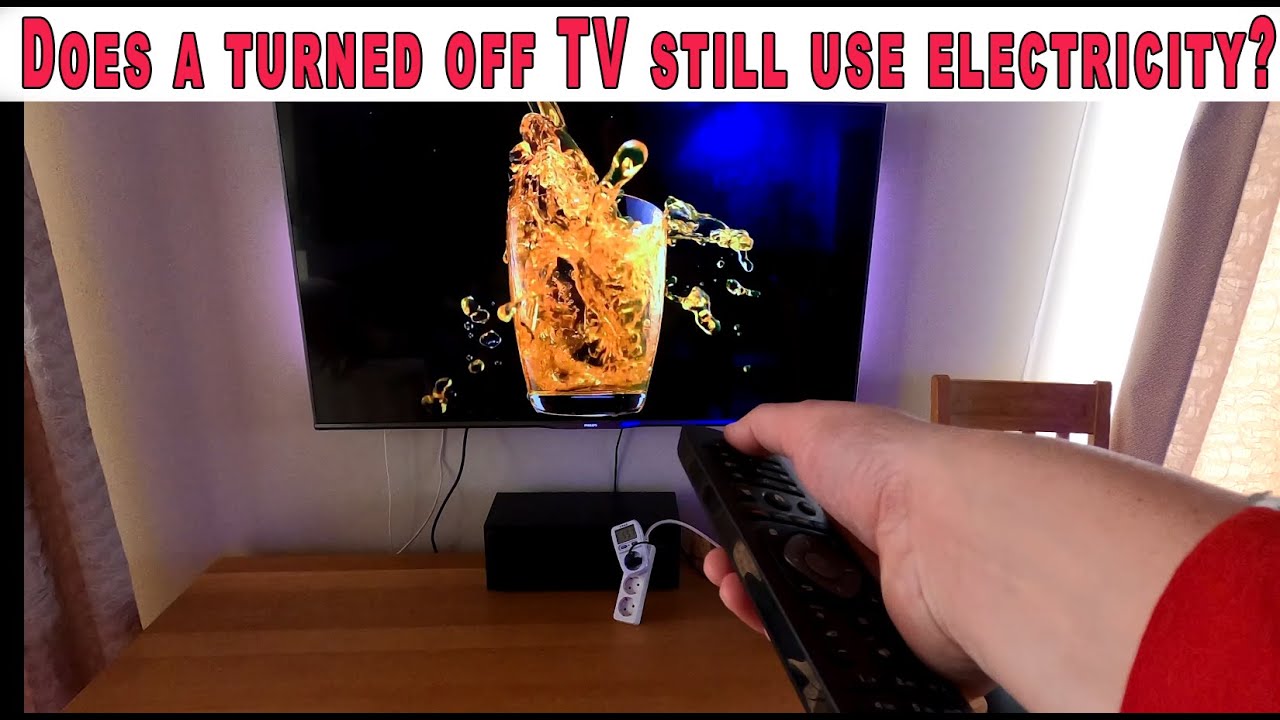
- Turn it off! Seriously, when you're not watching, switch it off completely. Standby mode still uses power! It's like a tiny vampire, slowly sucking the life out of your wallet.
- Adjust the brightness. A super-bright screen is nice, but it also uses more power. Dim it down a bit, especially in a dark room. Your eyes (and your electricity bill) will thank you.
- Consider an energy-efficient TV. When it's time for a new TV, look for models with the Energy Star label. These TVs are designed to use less power.
- Unplug when on vacation. If you're going away for a while, unplug your TV (and other electronics) to prevent "phantom load" – power being used even when the device is off.
Ultimately, your TV isn't going to bankrupt you. But by being mindful of its energy consumption, you can save a little money and do your part for the environment. So, go forth, binge-watch responsibly, and may your electricity bills be ever in your favor!
Remember to check the Energy Star rating when purchasing a new television. This rating indicates the energy efficiency of the device.