
How Much Electricity Does A Mini Fridge Use Per Month
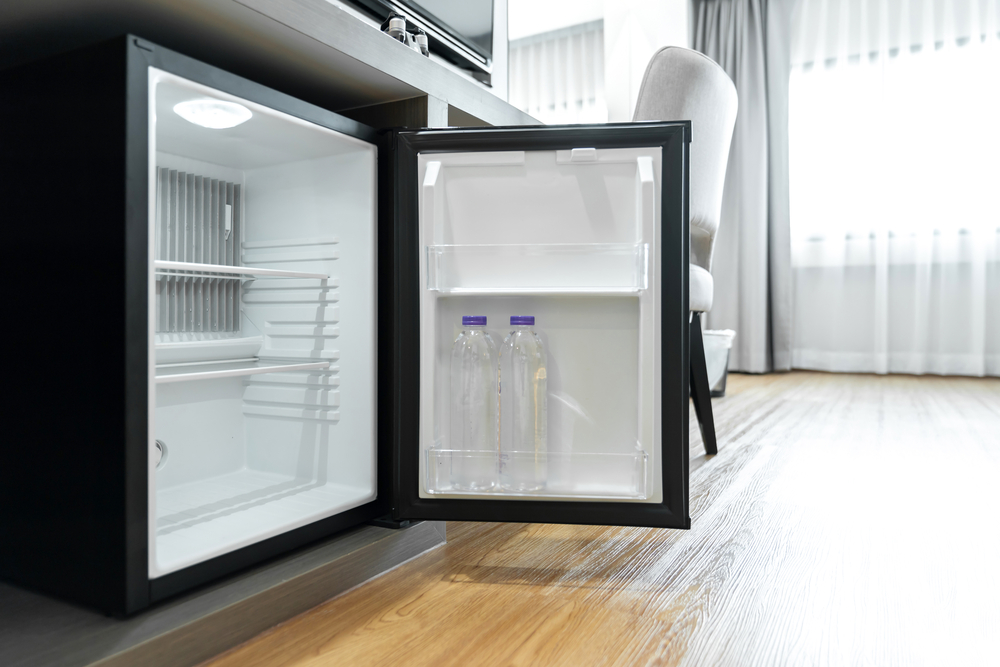
Ever stared longingly into that compact, chilled haven – your trusty mini fridge? We've all been there, debating the merits of a late-night snack or a perfectly cooled beverage. But have you ever paused to wonder, what's the electricity cost of this little luxury?
The Mini Fridge Energy Mystery: Unveiled!
Let's crack the code on mini fridge energy consumption. It's not as scary as you might think! We're talking about a device significantly smaller than its full-sized cousin, so naturally, it sips power rather than gulps it.
Generally, a mini fridge uses between 50 to 150 watts. Imagine a really bright lightbulb, but instead of light, it's keeping your soda icy cold. That's the kind of power we're dealing with!
Must Read
Calculating the Monthly Cost: Math Time (But Don't Panic!)
Ready for a little bit of math? Fear not, it's super simple. We'll use a hypothetical mini fridge that uses 100 watts as an example.
First, we need to figure out how many hours a day your fridge is running. Let's assume it's running constantly (24 hours). Some mini fridges will cycle on and off, but for simplicity's sake, we are going with 24 hours. It's the "better to be safe than sorry" approach when figuring out expenses.
So, 100 watts multiplied by 24 hours equals 2400 watt-hours. To make that a little easier to work with, let's convert it to kilowatt-hours (kWh). Just divide by 1000, so we get 2.4 kWh per day.
Now, let's figure out the cost per month. We multiply 2.4 kWh per day by the number of days in a month (let's say 30). That's 72 kWh per month.
Finally, let's bring in the cost of electricity! This varies wildly depending on where you live. Let's use a national average of $0.15 per kWh.
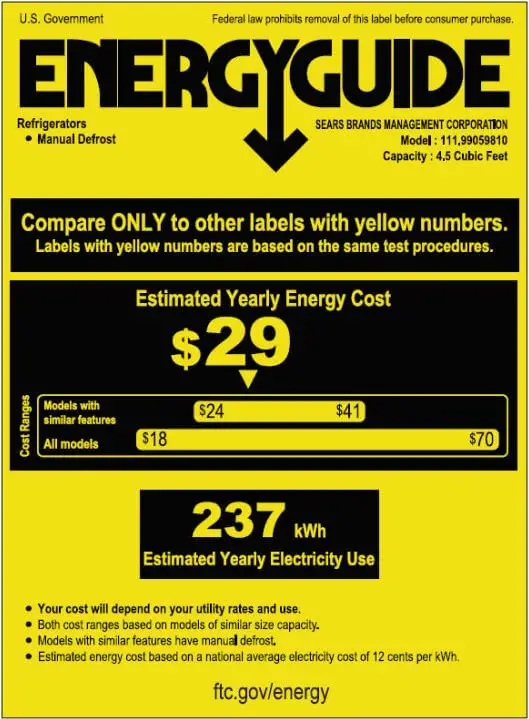
Therefore, we multiply the 72 kWh by $0.15 and the answer is $10.80 per month! Not bad, right? That's less than a fancy latte from that coffee shop that spells your name wrong!
Factors That Can Change the Equation: It's Not Always Simple!
Okay, so that's the simplified version. Several factors can influence how much electricity your mini fridge actually consumes. Here's a peek at some of the usual suspects.
Size Matters: A larger mini fridge, naturally, requires more power than a smaller one. Think of it like needing a bigger engine to power a bigger car.
Thermostat Settings: The colder you set your fridge, the more energy it'll use. Crank it down to "Arctic Blast" and your energy bill will reflect that frosty ambition.
How Often You Open It: Every time you open the door, cold air escapes, and your fridge has to work harder to cool down. Think of it like letting the heat out of your house in the winter; the furnace has to kick into overdrive.
Age and Efficiency: Older models are often less energy-efficient than newer ones. Technology marches onward, and appliances get smarter about saving energy.
How Full It Is: Believe it or not, a full fridge is more energy-efficient than an empty one! The contents help maintain the temperature, reducing the workload for the compressor. It's like having a crowd of friends huddling together for warmth!
Ambient Temperature: If your mini fridge is in a sweltering garage, it'll have to work a lot harder than if it's in a cool, air-conditioned room. Location, location, location!
Tips to Tame Your Mini Fridge's Energy Appetite
Want to keep those electricity costs down? Here are some tried-and-true methods to make your mini fridge a more energy-conscious companion.
Choose Energy Star: Look for mini fridges with the Energy Star label. These models are specifically designed to be more energy-efficient, saving you money in the long run. It's like buying a car with excellent gas mileage.
Keep It Cool (But Not Too Cool): Set the thermostat to the warmest setting that still keeps your drinks and snacks adequately chilled. You don't need to freeze your grapes to enjoy them!

Strategic Placement: Position your mini fridge away from heat sources like direct sunlight, ovens, or radiators. Give it some breathing room to avoid overworking the compressor.
Defrost Regularly: If your mini fridge isn't frost-free, defrost it regularly. Ice buildup makes the fridge work harder and less efficiently. Think of it like clearing snow from your driveway; it makes everything run smoother.
Keep the Door Closed: Resist the urge to constantly peek inside! Every time you open the door, you let out cold air and force the fridge to use more energy to cool back down.
Seal the Deal: Check the door seals regularly to make sure they're airtight. If the seals are cracked or damaged, replace them. A leaky seal is like throwing money out the window!
Fill It Up: As mentioned earlier, a full fridge is more energy-efficient. So stock it up with your favorite snacks and drinks!

The Verdict: Is a Mini Fridge an Energy Hog?
The answer is a resounding no! Compared to full-sized refrigerators, mini fridges are relatively energy-efficient. The cost is usually very manageable.
With a little bit of attention and some smart habits, you can enjoy the convenience of a chilled snack or beverage whenever you desire, without sending your electricity bill into orbit.
So, go ahead, embrace the mini fridge life! Just be mindful of your energy consumption, and you can enjoy the cool comfort without any financial guilt. Now, if you'll excuse me, I'm going to grab a refreshing beverage from my mini fridge!
Don't forget to check with your electricity provider for accurate pricing. Rates can vary significantly depending on your location and energy plan.
Remember, energy efficiency is not just about saving money; it's about being a responsible citizen of our planet. So, let's chill responsibly!
Keep an eye on the Energy Star rating to make your fridge a beacon of efficiency.
Consider comparing the cost of a new Energy Star mini fridge against the potential energy savings over its lifespan. You might be surprised at the return on investment!