How Much Electricity Do Christmas Lights Use
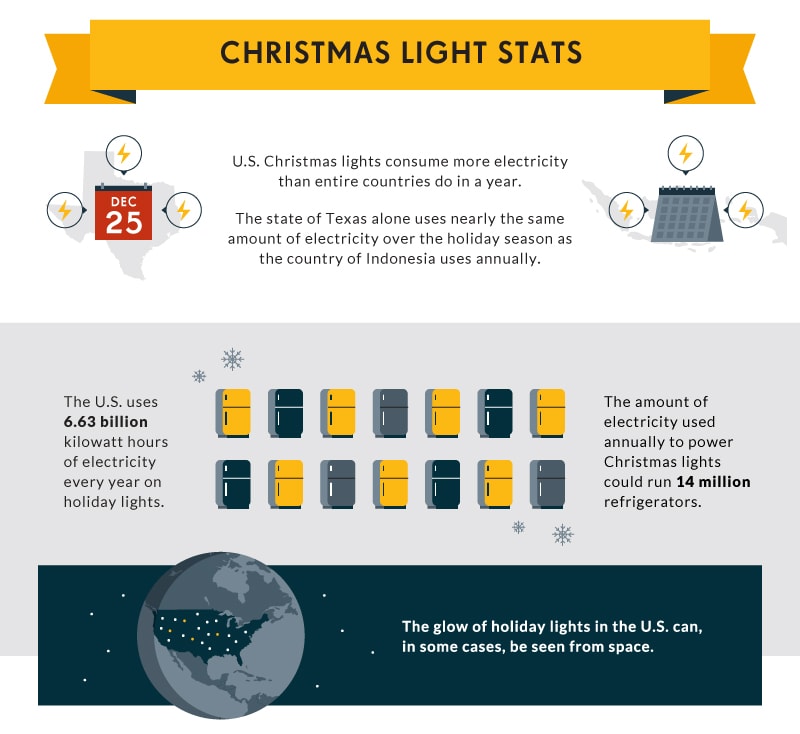
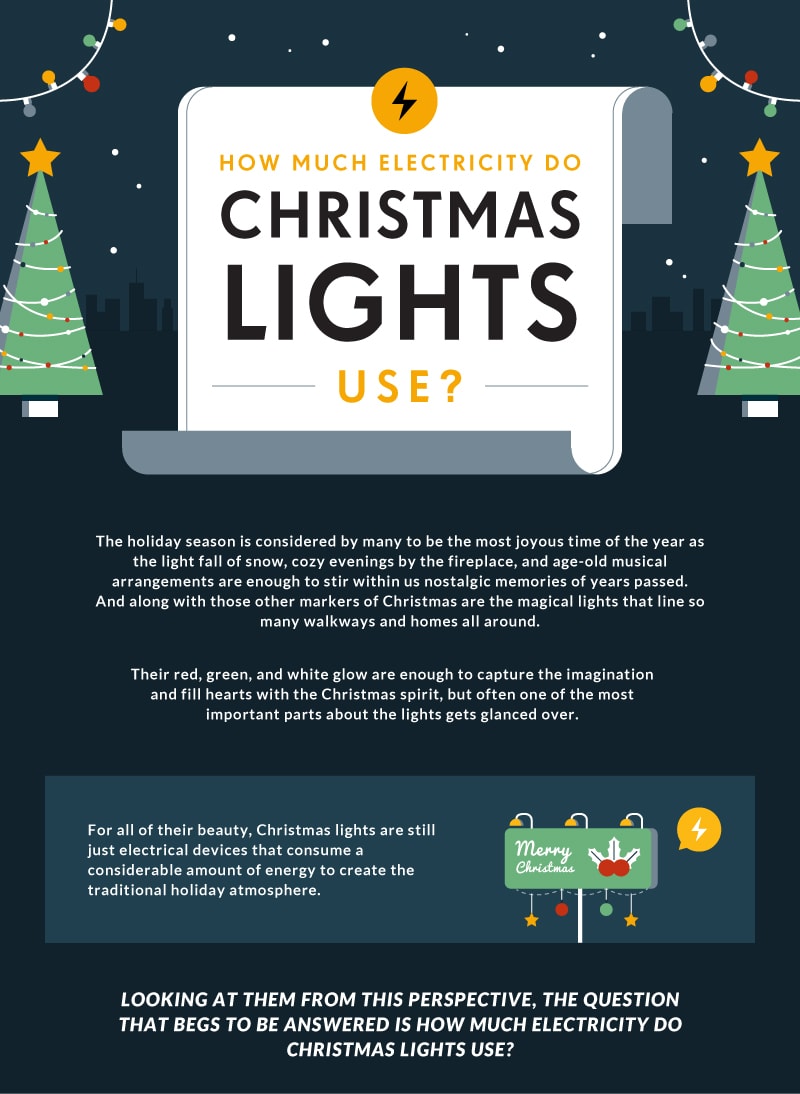
Alright, folks, let's talk about something near and dear to all our hearts (and electricity bills!): Christmas lights! We all love 'em. They turn our houses into sparkling gingerbread wonderlands, radiating festive cheer that can be seen from space (okay, maybe a slight exaggeration, but you get the picture!). But a nagging question often lurks beneath the twinkle: Just how much juice are these little guys sucking up?
The Great Christmas Light Energy Drain: Fact vs. Fiction
First, let's bust some myths. You might be picturing your meter spinning so fast it's about to launch itself into orbit, powered solely by your dazzling display of reindeer and snowmen. The truth is, unless you're literally lighting up a small city, the impact on your electricity bill is probably less dramatic than you think.
Now, that's not to say they use no electricity. They do. We just need to understand how much, and then you can decide if that inflatable Santa is worth it (spoiler alert: he probably is!).
Must Read
Old School vs. New School: The Bulb Breakdown
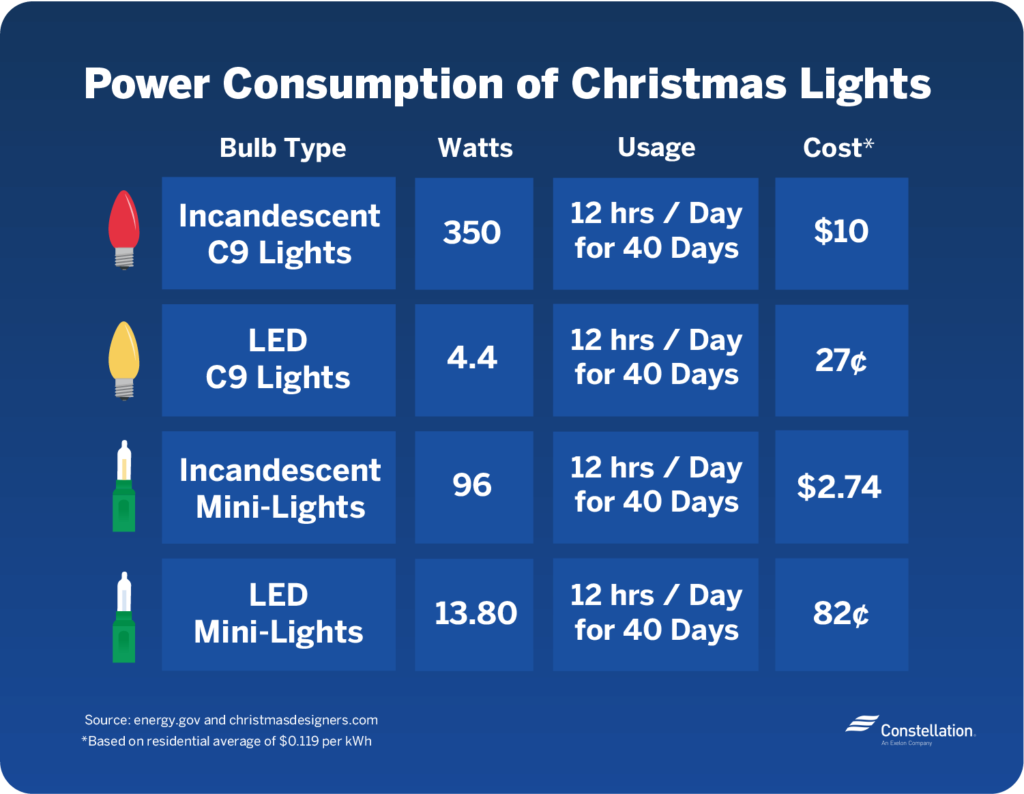
The biggest factor in determining how much electricity your Christmas lights use is the type of bulb they have. We're talking about a classic battle here: incandescent vs. LED.
Incandescent bulbs, those traditional little guys, are the energy hogs of the Christmas light world. Think of them as tiny, adorable little space heaters. They generate a lot of heat, which is why they get so toasty to the touch. But that heat is wasted energy! It means they're using a whole lot of electricity to produce a relatively small amount of light.
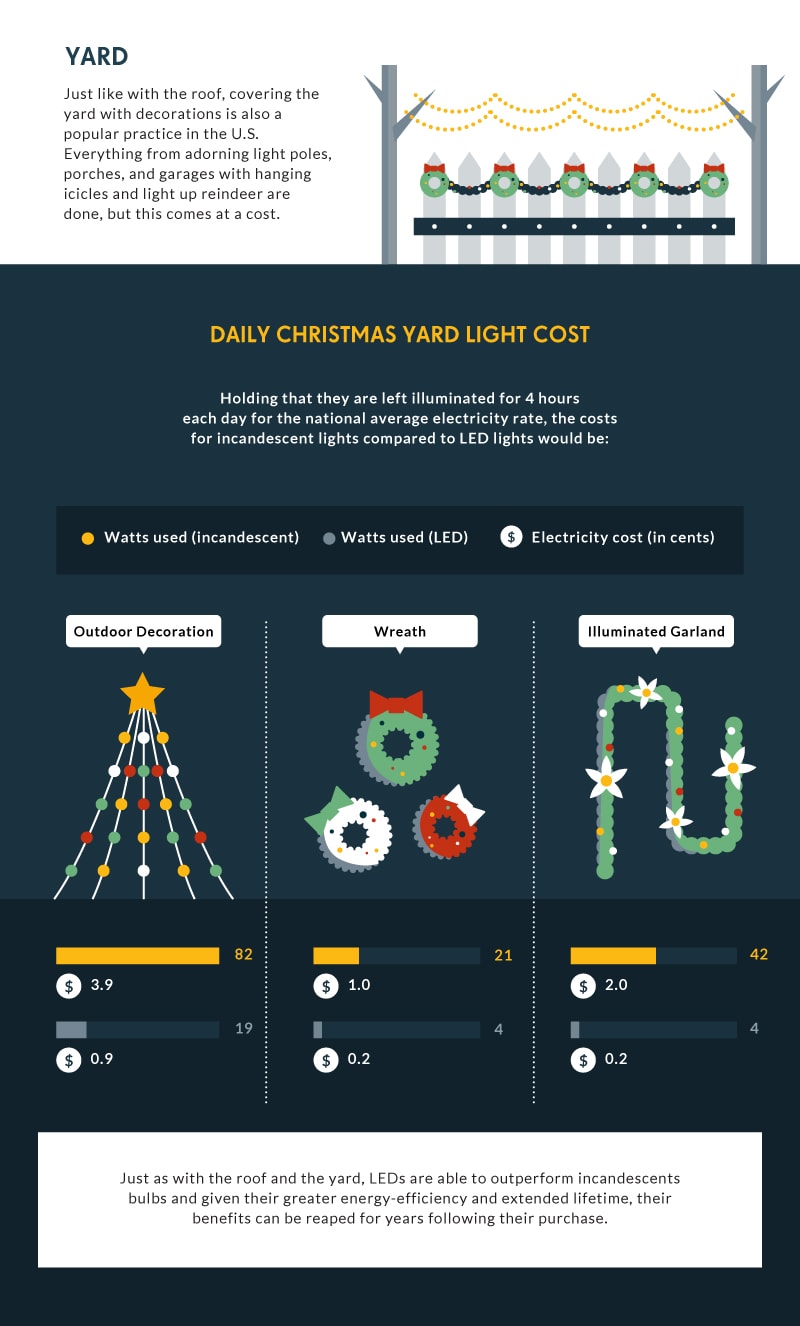
LEDs, on the other hand, are the superheroes of energy efficiency. They're like the electric cars of the Christmas light world – sleek, modern, and incredibly stingy with power. They use a tiny fraction of the electricity that incandescent bulbs do to produce the same amount of light. We're talking up to 75% less! That's like swapping out your gas-guzzling SUV for a super-efficient hybrid. The difference in your wallet is significant.
Numbers Don't Lie (But They Can Be Fun!)
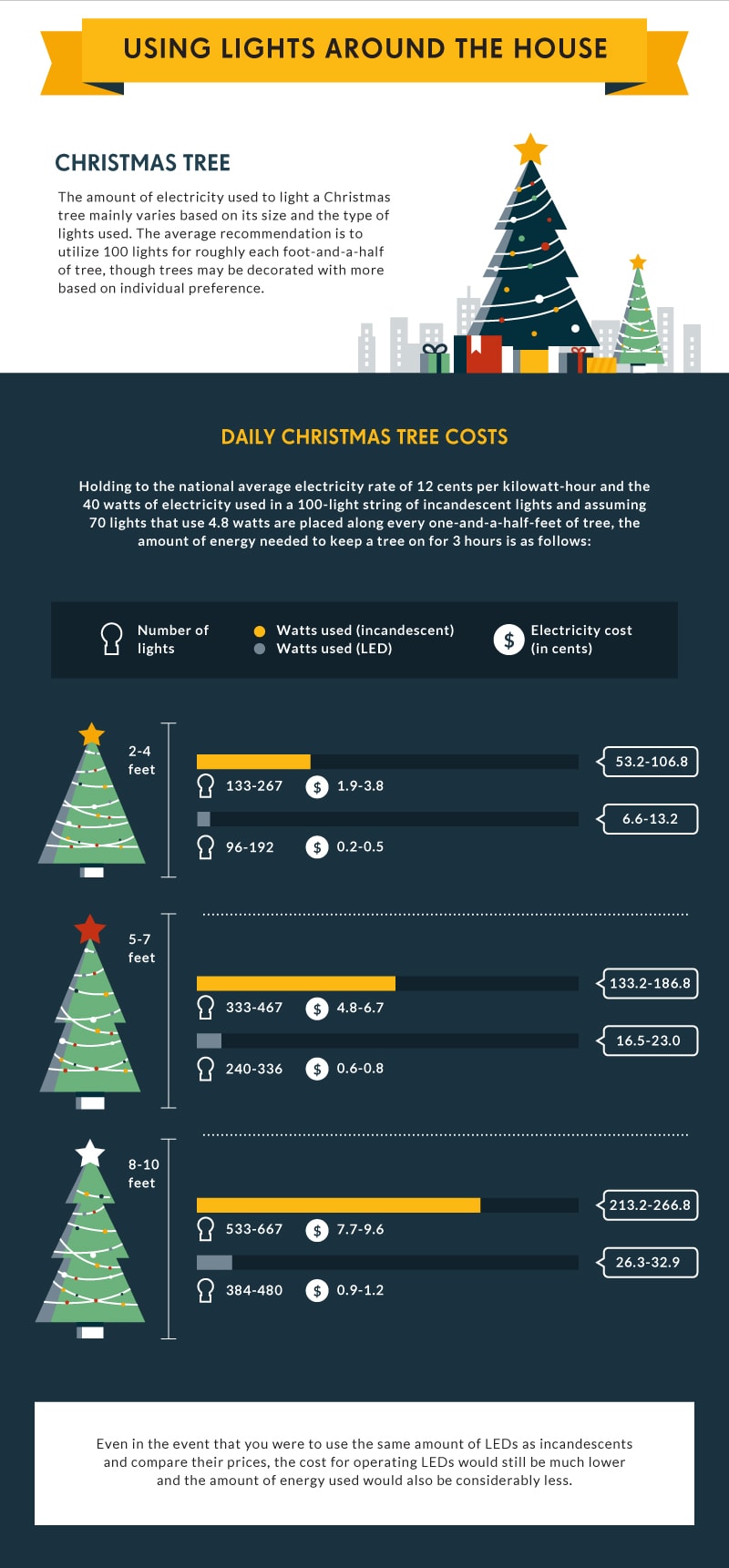
So, let's get down to brass tacks. A string of 100 incandescent mini-lights can use around 40 to 60 watts. Let's say you run that string for 6 hours a day for a month. That's roughly 7.2 to 10.8 kilowatt-hours (kWh). At the average U.S. electricity rate of around 17 cents per kWh, that's about $1.22 to $1.84 per string.
Now, let's compare that to a string of 100 LED mini-lights. These typically use only around 2 to 5 watts! Using the same calculations, that's a measly 0.36 to 0.9 kWh over the month, costing you just 6 to 15 cents per string! See the difference? It's like finding a twenty dollar bill in your old winter coat!
Quick Tip: Check the packaging of your lights! It will tell you the wattage. Then, you can easily calculate the approximate cost.
“A penny saved is a penny earned… especially when it comes to powering your inflatable snowman!” – Benjamin Franklin (probably)
Tips for a Brighter (and Cheaper!) Holiday
So, how can you maximize your Christmas cheer without maxing out your credit card? Here are a few simple tips:
- Switch to LEDs: Seriously, do it. Your wallet (and the environment) will thank you.
- Use a timer: Do you really need your lights on all night? Set a timer to turn them on at dusk and off at bedtime.
- Unplug when away: If you're going out of town, unplug your lights. It's an easy way to save energy and a potential fire hazard.
- Go solar: Consider using solar-powered Christmas lights for your outdoor decorations. They're a great way to save energy and reduce your carbon footprint.
Ultimately, the amount of electricity your Christmas lights use depends on the type of lights you have, how long you run them, and how many strings you use. But with a little planning and some smart choices, you can enjoy a dazzling holiday display without breaking the bank. So go ahead, deck the halls (and the lawn, and the roof!), and spread some holiday cheer! Just remember to be mindful of your energy consumption. Happy holidays!